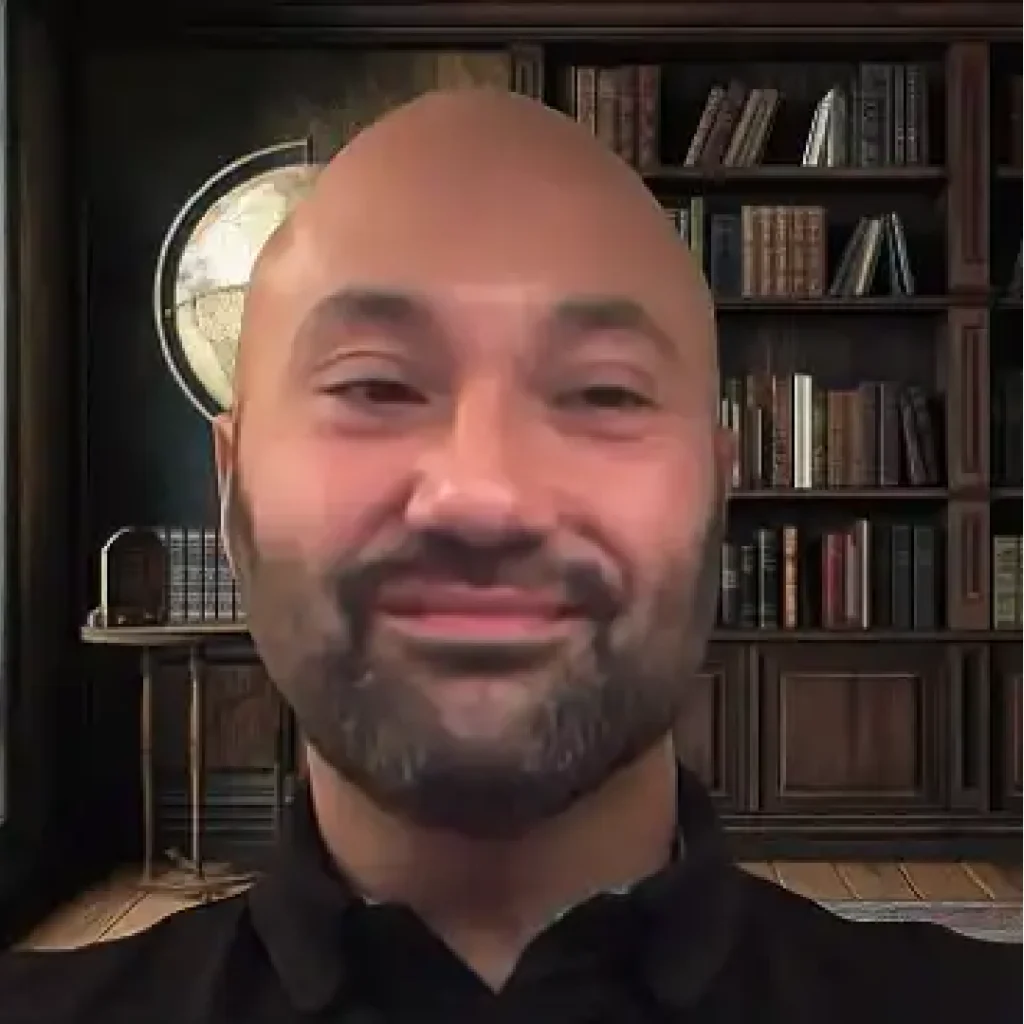
Ep13 JeremyShorr
===
Brett Roer: [00:00:00] All right. Welcome everybody to the AmpED to 11 podcast. My name is Brett Roer, CEO, and founder of Amplify and Elevate Innovation. Joined by my amazing co-host, Rebecca Bultsma. We are here today with Jeremy Shorr, a man who needs no introduction, and yet we’re gonna do it anyway. Jeremy, welcome to today’s AmpED to 11 podcast.
Jeremy Shorr: Thanks Brett.
Brett Roer: Jeremy, I know everything about you because I’m fortunate that I’ve had the chance to work alongside you, but for those at home listening around the world, could you let everyone know in your own words, who is Jeremy Sho and what is the amazing work you’re leading in AI education and innovation?
Jeremy Shorr: I. Sure. I, uh, I, I refer myself as a dancing monkey a lot because that’s a, a big part of what I do. I like, I like those situations, Brett, where people say, Jeremy, go do this dumb thing, or figure out this problem and solve it. Those are my favorites. But I was, uh, public education for 16 years in two different districts in [00:01:00] Ohio.
Jeremy Shorr: For the past nine years, I’ve been, uh, doing consulting in the emerging technology stem. Space mostly for an organization called Ties and the STEM Ecosystems and I, that work is around STEM school design and engineering. Design thinking, blended learning, computational thinking in cs. And, and as you might imagine, just like everybody else these days, seems to be about 95 to a hundred percent AI helping schools think about both how they should be implementing AI systems to improve their own work and how they’re preparing students for a future that that is pretty dramatically impacted by AI and AI technologies.
Brett Roer: That was very well done. You always start with the dancing monkey thing, but then you really bury the lead of how much incredible work you’re leading, uh, across the country, and especially there in Ohio. For folks that don’t know, could you just expand a little bit more about, when you talk about like ties and these ecosystems you’re leading, what does that look like?
Brett Roer: How are you supporting schools and districts and organizations worldwide?
Jeremy Shorr: Here’s what I can tell you, Brett, is that when I was in a school district, in [00:02:00] my second school district, I was lucky enough to be a part of some work that got a bunch of national press and we had, you know, wall Street Journal out in New York Times and, you know, all these countries and blah, blah, blah.
Jeremy Shorr: And when that happens, those of you in schools have been in that situation, you know, that the, the consulting companies start coming to, you know, try to poach people. And I said no for a long time. The reason why I eventually jumped is because. Ties, which again is where, where I do the, the bulk of my work has a a little bit different philosophy around consulting and the STEM ecosystems follow that same, same principle.
Jeremy Shorr: And that principle is that it’s ludicrous for some guy in Ohio to have any idea what you need in New York or Canada, in your rural school, in your inner city school and anything. That’s not my direct experience. So Ty’s philosophy is that number one, we come in, we do a lot of listening. A lot of talking, a lot of research around what the specific problems and strengths are in a region, and then we use all of the partners that we’ve met globally to, to sort of create [00:03:00] solutions.
Jeremy Shorr: We don’t have a solution that we hand. You and I, I at least would’ve a really hard time working for an organization that did because. I’ve been the guy hiring, I’ve been the guy hiring the, these consulting groups and I’ve seen those products and they’re great and they’re research based, but they’re not always actually practical to, to implement in a situation, uh, depending on, you know, money and time and availability and staff and all of these things.
Jeremy Shorr: The STEM ecosystems were born out of ties. STEM ecosystems we’re sort of an, uh, and I get in trouble for saying this, but, but kind of an answer to the question of, you know, what is STEM and, and why is it sort of. Failed its original promise. A long time ago when STEM was sort of first developed as a concept, there was a lot of talk around how it was gonna improve workforce pipelines and economies and all of these outcomes and, and we didn’t really see that.
Jeremy Shorr: So the STEM ecosystems were born as a way to address that. And the concept is relatively simple. Ecosystems are designed and run totally independently. Their geography is decided [00:04:00] by the people who create them as well as their focus areas. But they do have to be bringing together seven pretty disparate groups, K 12 education, higher education business, and industry funders and foundations, out of school time, state, local, federal government, and youth voice.
Jeremy Shorr: It’s the only organization that I know that brings all of those folks together and their job is to kind of determine what the STEM education, workforce development needs are in a region. And then more importantly, to figure out what those verticals can do in combination that individual verticals have no, no possibility of actually accomplishing.
Brett Roer: Well said Jeremy. Great job there.
Jeremy Shorr: I’ve, I’ve said it a couple of times here and there, Brett.
Brett Roer: We saved the best for this podcast and I appreciate that. Alright, just to dig in a little more, ’cause you mentioned all the amazing work. I love the fact that you said, you know. First of all, in Jeremy’s LinkedIn, I think it still says some guy from Ohio, but you actually have traveled, you know, literally around the world in support of education and bringing the work you [00:05:00] lead to, um, you know, sometimes marginalized communities.
Brett Roer: You mind sharing a little bit, like I know you work with in Digitize, what are some of the really unique places that you are in conjunction with the organizations you serve? Really bringing innovation to areas that typically aren’t associated with that. What here in the United States and beyond. We’d just love to hear what’s, what’s going on in the world that most people wouldn’t know about.
Brett Roer: But you’re right on the front lines.
Jeremy Shorr: There’s a couple things. So the, the first is a story that, that I tell a lot and it’s not a, it’s not a recent story. It’s from about seven years ago and still incredibly applicable, but I was lucky enough to keynote and work with some schools in Beijing at this, this sort of Chinese innovation conference.
Jeremy Shorr: The story that I tell a lot is that one of the other keynotes at this, this event was, and I don’t remember his title, but, but essentially the Minister of Education for China and his green room, I had my little green room that was like a, like a dingy closet. And then he had this sort of. Beautiful green room across the hall with these two enormous, you know, military guys standing out front.
Jeremy Shorr: [00:06:00] Um, and I could see ’em, you know, in there. And at some point those two guys walked away. I don’t know why, like coffee break, I’m not sure why. And being the, the obnoxious American that I am, I just sort of walked into that room in very short order. I was. F physically lifted and taken out of the, the room and almost the country.
Jeremy Shorr: But for a minute I had the opportunity to talk to, to the minister, and I said, uh, and I’m paraphrasing, but, but I said, you know, why are you doing this? You meaning China are always crushing us, meaning America on things like test scores and, and you know, things of that nature. Why are you doing the, this conference sort of focused on innovation and what he said to me.
Jeremy Shorr: Scared the crap outta me then still does now. And, and I think it’s sort of an, an important thing. ’cause what he said to me was, you know, you Americans are never gonna beat us in test scores. We have fewer standards. We have sort of cultural norms around success. We have, you know, single languages. [00:07:00] There are all sorts of reasons why you’re never gonna broadly beat us in test scores, but right now we need you.
Jeremy Shorr: The ideas come out of America and then we can make them cheaper, more efficient. We have distribution networks. We rely on you for the initial ideas, but if we can crack that, then we don’t need you anymore. And that’s been sort of the, the major rallying crime. My work, even pre AI for a very long time is, you know, our, our core competencies in, in, you know, sort of the, the core standards and core subject areas really critical.
Jeremy Shorr: Absolutely. I’m not diminishing them, but I think that our focus on them has taken away from our ability as a country. To see a problem, to find a problem, to realize the thing could be fixed or improved, and then to have the skills to fix or improve it instead, uh, we’re, we’re losing our drive on innovation when other countries are really kind of picking up the, the mantle there.
Jeremy Shorr: And that’s really been [00:08:00] my driver. It’s my driver. Even more so now that we’re, we’re in the AI space.
Rebecca Bultsma: Such a good, interesting segue into some of the things I wanna talk about, especially since you know, the release of Deep Seek and some of those things that we’re starting to see catch up and kind of pivoting a little bit to generative AI specifically.
Rebecca Bultsma: This is just sheer personal curiosity because we were talking in the pre-show about your stack there of your great headphones and your podcast. Mike. I’m wondering what’s in your generative AI stack right now that your go-to tools that you’re using all the time?
Jeremy Shorr: I, I think, my guess is I’m similar to the, the two of you and, and a lot of people on OurSpace, which is.
Jeremy Shorr: I don’t have one because it’s changing constantly. I don’t expect the teachers, the schools that I work with to touch and use every single tool they can possibly find because they don’t have the time for that. Um, they don’t have the, you know, maybe the interest level at that level. So it’s my job in, in your job and, and everyone in this space [00:09:00] to really be, be kind of changing and moving around and, and trying everything.
Jeremy Shorr: I’ll tell you that I do end up using probably chat GPT more than anything else. Not because it’s necessarily the best at anything, but because it’s in, in my mind, sort of the, the, the best, the best of everything. It’s the, it’s the best single package. So it’s what I use with, with teachers more than anything else.
Jeremy Shorr: I’ve been using, uh, notebook LM a lot lately, particularly when talking about large data sets or kind of specific unique situations with schools that, that we can talk about if you want to later. I’m really crazy high on sesame dot com’s voice models. Um, if, uh, if, if anybody listening hasn’t played around with them yet, they have two voice models, miles and Maya Miles is the best AI voice model I have ever heard in my life.
Jeremy Shorr: It is the first time I think that we are out of the uncanny valley. To the level that I’ve put miles on a phone call with, I don’t know, 12, 15 friends and colleagues, and not one of them [00:10:00] except for somebody who’d used it the day before, not any other person realized they weren’t talking to a real person, even after about 10 minutes of conversation.
Jeremy Shorr: I, I’m really kind of high on, on that model too. But, but I think that the big thing is the, the, the constant shifting of what we’re trying and. I, I, to me, the real skillset that everybody needs to be thinking about isn’t any of the tools. Rather, it’s what are the problems that you’re facing on a regular basis in your life that might be solvable or shiftable or made easier through the use of an AI tool.
Jeremy Shorr: So anything to do with, with language, with conversation, with information, and then finding a tool that does that pretty well is, is relatively easy.
Brett Roer: I’m often not speechless on here. That was very. Very thorough and I really want you to push a little more on, I’m agreeing with you in the fact that like certain tools like a Chat, GPT are very like utilitarian, right?
Brett Roer: They can help you do a lot of things really [00:11:00] well. But as you said, there’s these nuance, like one of ones that might be like perfect at this one thing and then kind of not so useful in others. Would love to hear, you know, your perspective on. Are there tools out there that do one of two things, and so you can take this question however you like.
Brett Roer: One is what’s some tools out there that are actually opening up people’s minds about how school could be reimagined or redesigned? So big picture, like what’s a tool you’re like, wow, that’s incredible. Or what are some really unique one-off tools where you’re like, you wanted something really cool with ai.
Brett Roer: This will be the best way to do that one thing. So I’ll let you, I’ll let you take it whatever direction you want. ’cause you’re gonna go whatever direction you want anyway.
Jeremy Shorr: Yeah. I’m actually gonna go in a totally different direction than either of those because, but related, still related. It’ll, it’ll dovetail in there somewhere.
Jeremy Shorr: The reason why I, I why I’m gonna slightly pushback on your pushback. Is, I really think that the phase [00:12:00] that we’re in right now, both the, the phase of the evolution of ai, but also AI more specifically than any other technology that’s come around should and needs to be, particularly in schools, a problem first situation.
Jeremy Shorr: That’s a big part of how we address things like ethical and moral implications. It’s a big part of how we actually make tools really useful. And I’ll, and I’ll give you a quick example. So ever since, so, you know, the, I I, I mentioned earlier that I was lucky enough to have some work that got a lot of press years ago.
Jeremy Shorr: That work was in the blended learning space back when that was, you know, the hot thing, whatever that was, 15 years ago. And the, the push back in that time was, you know, everything should be blended. Everything should be digital and human, you know, and I. Sort of had a big problem with that because, you know, lecture became a dirty word.
Jeremy Shorr: Well, the, the fineman lectures are still some of the most beautiful pieces of learning that, that have ever been created. And I know of teachers who are still doing a [00:13:00] lecture that like leaves kids crying and that they remember forever. So instead, what I used to say to teachers is, if you’ve got something you’d love, like don’t touch it.
Jeremy Shorr: It, it’s good. What I want you to do is come up with a two lists list. Number one is, you know, what are the parts of your job? What are the, the, the concepts? What are the standards that you just don’t like teaching that you’re bored with, that you’re tired of? The other is what are the things, whether you like ’em or not, that your students struggle with?
Jeremy Shorr: Um, what learning concept do they not always master even after going through your content? Ideally, I want you to find something that’s on both of those lists, and that’s what I want you to work to, to, you know, to, to create a new solution for, that’s where we’re starting. So I carry this forward in the, in the AI space.
Jeremy Shorr: And in my recent example of this is, um, uh, I was working with an administrative team in a district. I had a particular administrator, a special ed director, who was just really hesitant on using AI tools in general and just didn’t wanna bother with it. So I said to her, you know, what’s the. What are these lists [00:14:00] for you?
Jeremy Shorr: What is it that you don’t like doing or that’s constantly a problem? And the thing that she came up with is she said, you know, I spend about an hour or two every single day, five days a week, so five to 10 hours a week answering a variation of this email. I have a student with accommodations A, B, and C. I have created intervention X.
Jeremy Shorr: Does this intervention meet the spirit and the letter of, of policy and law for, for these accommodations? So we use, I use Notebook. We use Notebook LM, and we put in there, you know, all of the state revised code, all of the title laws that govern special ed. Uh, just a bunch of, of high, high quality documents and purchased.
Jeremy Shorr: Purchased books, not illegally downloaded books. Purchased books that on, on the topic, you know, of creating interventions. Um, we put all of the district policies in there and we created a tool so that it’s a teacher could say, I have created [00:15:00] accommodations, A or I assume accommodations A, B, and C have created intervention X.
Jeremy Shorr: Does this meet this? And it would spit out and say, yes it does because of this, or no, it doesn’t because of this. The way notebook is structured, notebook element is structured. It links everything back to source materials. So they were able to see, okay, this is the portion of revised code that doesn’t allow this as an intervention, or this is a really great intervention because it meets all of these best practices.
Jeremy Shorr: And I talked to that, that that special ed director, oh, probably three or four weeks ago, and she said, you know already that those, it’s gone from five to 10 hours of those emails a week to two or three hours of those emails a week. That’s, I think the key is what is it that that stinks in your life? If we do this right, and I don’t necessarily think we will, but if we do this right, we are hopefully gonna enter, you know, the, the greatest age of teaching in, in the modern era where all of the [00:16:00] administrative nonsense that teachers have to do on a regular basis is offloaded.
Jeremy Shorr: And instead they can spend all of their time working with students, building relationships and act actually making a human difference.
Rebecca Bultsma: I love that, and that’s the ideal, but I also share your, um, skepticism for us doing it right. Uh, as somebody who kind of lives in the, what if it all goes wrong? Space. I, I like thinking about what if it all goes right.
Rebecca Bultsma: So in your mind, I. What does that look like specifically? Like what do we have to do as individuals at an organization level, at a sector level, at a government level to make sure it all goes right? And where do you think we’re gonna fall short? Not to be the doom and gloom. Just curious on your thoughts.
Jeremy Shorr: I think we’ll be in one of two futures. In 10 years, and I think that fork is, is happening, right? That we don’t, you’re not seeing as a, as a fork yet, but that fork is happening right now in 10 years. I think that people will point back to 2024 to 2026 as where the pathway started, and I think it could be really bad with, [00:17:00] with pretty massive job displacement and no fix for that with wealth inequality that makes current wealth inequality look like.
Jeremy Shorr: Nothing at all. I think that the good future is a future. You know, it’s Star Trek, not the outer space part. It’s the part where people, you know, work in the areas they wanna work. There isn’t really poverty, and I think that future, I think AI is the enabling technology that could allow for that future.
Jeremy Shorr: The problem is, you know, and you kind of alluded to this, number one, I don’t know that I think that governments. State, federal, local, international, uh, laws, regulations have the power to shift it. This is a, a, a highly decentralized, you know, piece of technology, and I’m not sure if something is banned, it is still gonna be very easy to use.
Jeremy Shorr: So I don’t think they’ve got the ability, I don’t think corporations in general, um, there’s some great corporations doing really great work, but broadly, I don’t think corporations have the incentive to push us towards that future. I think that the only group of [00:18:00] people that can push us towards that good future are educators, formal and informal, K 12 and higher ed.
Jeremy Shorr: But educators, it’s librarians, it’s teachers, um, it’s out of school time professionals. I. Where I’m nervous, Rebecca is, I can’t tell you how many chief financial officers have said to me in the last year some variation of if we are gonna move a bunch of this administrative work off of teachers, why wouldn’t we just have fewer teachers or pay them less?
Jeremy Shorr: And that’s not the answer. The way we get to that good future is by having school leaders who are understanding of the idea that, that the point of school is relationships and human connections, and that’s how we make a difference and that’s how we change outcomes and that we should use these technologies as, as enablers.
Jeremy Shorr: I think we do that through conversations around ethics, learning around the biases inherent in these technologies, and working not just with teachers, but with administrators and with state and federal policy leaders in the education space so that people know and [00:19:00] understand the, the real potential for long-term value in, in this shift.
Jeremy Shorr: Uh, but it’s gonna be a hard road. I mean, I, I’m gonna be honest with you. I, I don’t like to be a cynic. Rebecca, but like if I had to guess, I, I think we’re more likely to end up in the crummy future.
Rebecca Bultsma: So I just read something in the last couple of weeks called AI 2027. Highly recommend you check it out. It was written by, actually, I think Brett was the one who put it first on my radar.
Rebecca Bultsma: It’s from a former open AI researcher and a team who specializes in forecasting and foresight in the AI space and what they predict, just like you said. Two distinct futures of where we’ll be in 2027. And I think you’ll find that, uh, very interesting. But as a quick follow up, if you had to list like three or four really important questions that we should be asking or that educators should be asking, uh, to help guide our future down that path we wanna go down, what are the most important questions we should be asking?
Jeremy Shorr: There’s two that come to mind. The [00:20:00] first is something that I think a lot of us in the education space have been saying for years, but now more important than ever. It’s, you know, what’s the source? What’s the source, what’s the source? Constantly, uh, it’s a, it’s a skill that students have always needed, but they really, really need it.
Jeremy Shorr: Now, I. You know, we all remember the Pope in the puffer jacket picture from a year ago and like a day later, you know, people zoomed in and saw like his hand was all wonky. But like, you know, I’m sure all of you and everybody’s constantly saying right now, that was the worst the technology will ever be.
Jeremy Shorr: It’s always the worst the technology will ever be. So we’re not gonna be able to zoom in and find a wonky hand. We have to constantly be asking what the sources are, both when we’re using the technologies. You know, as has been often discussed, one of the, the main. Pools of training data for a lot of these models is Reddit and, and, and Twitter.
Jeremy Shorr: And while I love both of, well, while I love Reddit, well, while I used to love Reddit, it just became a much more complex answer than it meant it to be. You know, there’s a lot of crazy things on there. So what’s the source? What’s the source? What’s the source? The other one comes from [00:21:00] this really, really cool experience that I, I had recently, so I was working with a leadership team at Catholic School.
Jeremy Shorr: An all girls Catholic school. Um, and you know, when I work with leadership teams, there are things that often happen. I, I’m sure you, you all see this too, like there’s always this point where somebody says something about like, do we even, should we even, should this technology even exist? I. There’s a lot of negative things.
Jeremy Shorr: Should it even exist? Right? And so I’ve got the, the process that I normally lead people through, or we, you know, we, we honor those feelings and we talk about them. And, and I share that, you know, if I had a way to snap my fingers and make AI go away, I, I think I probably would believe it or not, make it go away.
Jeremy Shorr: And then we sort of journey out of that into, but there is no magic. So what are we gonna do to drive us towards the good future? But before I could do this. A nun, a 50 year teacher, 70 year nun stood up and said, you’re all wrong. You are all wrong with all of these worries. Not, I’m not saying your [00:22:00] worries aren’t real.
Jeremy Shorr: I. But that’s not the main point. The main point is that we can get back to the business of teaching these girls how to be great humans. If we can move away all of these other things. That can be what school is. School can be. How are we teaching people how to solve problems and be good citizens and good people.
Jeremy Shorr: That’s, I think the, it, it was maybe the most exciting. She’s like, there’s a picture of her now going like this in like two of my keynotes because it was such a powerful moment to me. You know, here’s this, this, this 70 year nun who saw it instantly that if we go the good route, we can be in this really, really amazing place where, where people are, are really learning how to interact with each other and how to be great people.
Brett Roer: I wanna meet that nun. That sounds like a fun combo. She sounds like a good hang. Jeremy, you also have some, uh, children in your own life. Is that accurate?
Jeremy Shorr: At home here I do 15, 13, and then we have a, a [00:23:00] COVID decision who’s three.
Brett Roer: Okay, so those, I mean, especially between your oldest and your youngest, big gap in terms of like what they’re even gonna experience, right?
Brett Roer: Because you’re younger child is basically born into the world of ai or your other children had some time before and after gender of AI at their fingertips. You’re talking about raising good citizens, good humans and AI can help do that. What are some ways you’re using that even in your own household and your daily life to help your own, you know, your, your own children, uh, navigate this world and to hopefully be, you know, better humans as a result of some of the touch points you’re giving them around AI and technology.
Jeremy Shorr: You know, the same types of conversations we had before AI about morality, about ethics, about the biases that are inherent in a lot of technologies. Uh, so we, we talk about these things with our kids and we, you know, we don’t discourage them from using something like, you know, chat, GPT or Claude or Gemini.
Jeremy Shorr: In fact, we encourage them to use them. But we do always talk about, you know, anytime you use a technology like this, you need to make it very clear [00:24:00] that you are number one. Number two, that there’s a difference between, uh, using these tools to support learning and to support, you know, the, the creation of content, whether that’s a paper or, you know, or something else, uh, rather than writing it for them.
Jeremy Shorr: And, you know, that’s how I use it in my own life, right? Like, I do a decent amount of writing. I’m a good writer. I can write like five or 10 great pages in 45 minutes. But first I stared a blinking cursor for 20 hours. That’s where I’ve used, you know, this technology a lot. Is to shrink that 20 hours to an hour to me by brainstorming partner, but then I write, I, I use it the most though, you know, my, my, my kids are in the freshman year of high school and in seventh grade, the older two.
Jeremy Shorr: And, you know, there’s a lot of, of content that they’re learning that I don’t, I like, I learned this stuff, but I don’t remember. And so I can use the tools and, and I, I actually developed GPT for my brother that, that does this as well. So my brother’s a, a firefighter. Really great guy was not a, an education [00:25:00] focused person.
Jeremy Shorr: His oldest is in eighth grade and is squarely at a point where the stuff that he’s learning is, is not stuff my brother can directly help with. So we made a GPT that has, you know, the, the strategic plan and the pacing guides and all of those things for that school district. It has all of the, of, all of Ohio’s standards.
Jeremy Shorr: It has some, some guides and some books on best practices on inquiry based education and then some instruction around. Using inquiry based education, but sort of invisibly to somebody who’s not a teacher. So my brother can use his GPT and he can take a picture of my nephew’s homework and it will say to him, you know, it doesn’t give him the answer.
Jeremy Shorr: It gives him questions to ask to slowly lead my nephew through being able to solve the homework himself. That came out of a, a similar issue here in our house. My middle daughter’s very, very A type and she gets her homework done ahead of time and all of those things. But she came home a couple years ago.
Jeremy Shorr: This is like, uh, like early GPT-3 five, you know, 20, maybe early 20, 23, somewhere in that neighborhood. [00:26:00] And she, you know, I forgot that she had a paper due the next day and it was comparing Hatchet and the Hunger Games. The experiences of the protagonists in each, well, I read Hunger Games have been 10 years.
Jeremy Shorr: I read Hatchet, but it had been 30 years. I didn’t remember these things, but I was able to say, you know, here’s what the, the, the paper is. I don’t want you to write this for me, but give me some questions that I can ask. My daughter’s panicking right now. She read this stuff, but she’s not thinking straight because she’s in a, like a tizzy.
Jeremy Shorr: And so it said, okay, well first ask her what, what tools each of the protagonists had access to. Now ask them how they use those tools. And so it’s stepped me through this process that allowed me to help her with her homework, do it herself, do it in a humanistic way, but the tool amplified my ability to kind of ask questions and, and to, to help her through that.
Jeremy Shorr: My middle, I’m sorry, my youngest daughter really just got me in trouble because she told my wife I love. Talking to daddy’s friend that’s a girl every [00:27:00] time we go on a drive. Um, she’s so funny and she wants to know everything about me and daddy talks to her all drive every single time we drive anywhere.
Jeremy Shorr: ’cause I, you know, I use Chat GPT to sort of think through my day and to, to plan for, for outlay. So I got in a tiny bit of trouble and now she has to, she has to refer to it as chat GPT, so that I don’t get in trouble.
Rebecca Bultsma: Well, you raised some interesting points, especially about using. AI is a tool for learning and obviously probably we’re teaching our children how to use it responsibly and the proper way.
Rebecca Bultsma: But I’m curious about your thoughts on the future of education and writing in essays specifically, because that’s something I hear over and over again that a lot of people, particularly and post-secondary, are worried about that because the essay has been an assessment metric for a century at least.
Rebecca Bultsma: Right. So I’m just curious as to how you see that evolving and changing or us adapting or needing to adapt and your thoughts on the AI detectors.
Jeremy Shorr: Yeah. Yeah. So, well, [00:28:00] the AI detectors are, are both. Wrong all the time. Probably immoral. ’cause they’re, they’re based on student work and very, very easy to trick.
Jeremy Shorr: So those are, are silly and, and whatever. I think this goes back to, you know, something we said when we started with one-to-one programs and, and, and. Google became heavy in schools, which is, you know, teachers saying, some teachers, and, and, and I, I very clear to to say that when I say things like this, number one, I, I think we’re talking about a minority of educators and number two, I think even the educators who say these things there overwhelmingly their hearts are in the right place and they’re asking the questions and pushing back for the right reasons, even if I disagree with them.
Jeremy Shorr: I think it’s all about what’s best for kids. And, and that has to be sort of, we have to remind ourselves of that sometimes. But what, you know, we used to say a lot is, well, if, if you, they’d say, well, students are just gonna Google the answers. And then we would say, well, if they can Google the [00:29:00] answer, it’s probably not a great question.
Jeremy Shorr: Do I think that we should eliminate writing? I don’t. Do I think we should very seriously ask ourselves that question and answer it in a very real way. I do. I think that in every single subject area we’re at this, this inflection point that’s gonna be terrifying and difficult, but also exciting because a lot of us in education have been talking about changing the way that education works and how it looks.
Jeremy Shorr: For a long time, and it’s a really, really difficult thing to change an entrenched system, and I think these technologies are very possibly gonna force our hands into a world where we have no choice but to change what education looks like. And that’s terrifying, but also really exciting. My gut is that we still need to teach writing and we still need to have essays.
Jeremy Shorr: But if you ask me to defend that, I have a hard time doing it. So I’m not positive that my gut is right. I want it to be [00:30:00] right. But that’s not what we, we don’t base decisions hopefully on what we want to be. Right, but, but we base them on, you know, what is right. What I suspect will happen is the same thing that happened with calculators is the same pushback about calculators.
Jeremy Shorr: It’s gonna ruin everything. Nobody’s gonna know how to do math. But what’s actually happened is we’ve been teaching young, more and more advanced math at younger and younger ages. You know, in, in my kids’ district, seventh grade is the normal time you take Algebra one now for most kids. That wasn’t the case when I was in, you know, in school.
Jeremy Shorr: It was eighth grade if you test it into it, and almost everybody else did it as a freshman. They do it in seventh grade now and it’s not an issue. And that’s been the result, uh, you know, of calculator technology. And I, I hope that that’s what happens is that instead, you know, what I wanna see as a world.
Jeremy Shorr: Where it’s less about, you know, can you write an essay? But if it’s an essay, it’s more about can you write an essay that gets published? Can you write an essay that changes people’s minds? Can you create something that will [00:31:00] solve a problem in the world or just your community? And, and that’s the, that’s the school and the world that I, that I want my kids to be in.
Rebecca Bultsma: I, this is something I think about a lot because my background is in professional communications and kind of my wish and my hope is that we see a little bit more of a return to a more oral culture and people can articulate their thoughts clearly and explain their understanding. We know it’s coming directly from someone’s brain and I think that we overcorrected so far to texting and emails that we really, I’d really love to see a return to that more Socratic.
Rebecca Bultsma: Engaging human to human dialogue as a, a core part of education. Just my 2 cents though.
Jeremy Shorr: Yeah, that’s my, my LinkedIn says Socratic Consulting, which is like a nonsense word, but it’s, but I’m with you.
Brett Roer: Jeremy, you just brought up, uh, well, you brought up a lot of things, but I really liked what you just said, and I wonder if we can maybe collectively after you give your insights, talk about this thing you just said, [00:32:00] which is wanna believe something because it’s like how you’ve maybe been raised in your own values around ai and especially around like, uh, essay writing as you said.
Brett Roer: I feel like you, that really crystallizes how I feel most educators feel right now. Like they. Believe what they’ve been, how they’ve taught or how they were taught. Even if they know there’s room for improvement, there’s just something intrinsically like right about it, and there’s this future that’s really uncertain, so you’re not really sure what you can say is quote unquote right to do instead of, or in lieu of, and you’re kind of in this limbo sometimes.
Brett Roer: I’ve been sharing with people like this idea that like if, if the scale of learning AI is zero to a hundred, like AI literacy, zero to one seems to be the hardest part. And then like one to a hundred is a lifetime, but like getting people to just kind of believe both parts are true. What you just said. I think this is right.
Brett Roer: I don’t know what’s next, but like it is here and like I need to figure this out. And part of my journey is accepting both truths. How are you, like, [00:33:00] how are you grappling with it? You kind of shared a little bit, but like. What are you seeing or like how, who’s doing this right to like get people’s mind shifts better accommodated for this or just kind of your thoughts on a bigger picture about like how you’re helping people through that.
Jeremy Shorr: Brett, I think you are doing this right? I think there are, there are people doing this right? And, and I, and I do think that, that you are one of them. I, I think a lot of it and, and I, I think it’s difficult to. Fully understand this, if you haven’t been a school leader in sort of a, and I hate using the word innovative, but like in an innovative setting where you’re trying to do something brand new, when there’s teacher pushback, you know, back, back to blended learning, right?
Jeremy Shorr: When I’d have teachers who were like, I don’t want anything to do with this, and they’d really push back what I’d eventually get out of them. Basically that what they were, what what I was saying was this is a new way to do this and, and the data’s there. It is more effective when we use these different modalities.
Jeremy Shorr: What they’re hearing [00:34:00] is the way I’ve been doing. You are saying that the way I’ve been doing things for the last 15 years was harmful to kids. That’s been the pushback, and that’s why I, I think in, in all of this work in AI, more than any, anything else that I’ve ever faced, it’s so incredibly important to honor and work through the fears, because the fears are warranted.
Jeremy Shorr: You know, when somebody says in, in a, in a, in a session, should this stuff even exist, I think it might ruin the world. Like that’s a warranted fear. It’s a fear that I have. And, and there’s, there’s definitely very plausible futures where, where it’s true. We have to work through that. I, you know, back to something I said earlier, I really think that the, the entrees almost always, what do you hate about your job and or what do you, are you finding not as effective with, with kids, you could even push off and blame the kids and say, maybe used to be great, maybe kids used to get it.
Jeremy Shorr: But kids these days just are [00:35:00] struggling with what is it the kids these days are struggling with and work through those things. You sort of turn fear and negativity on its head and make the fear and negativity the driver towards towards learning and experimentation. I also always say to teachers that, you know that I’m lucky enough if I’m working in a school to be in a position where I get to speak to the superintendent and the principals.
Jeremy Shorr: Directly and without worrying about any kind of negative, you know, lashback or whatever else. And so one of the things that we talk about is what is it that you’re afraid of from an administrative standpoint on this pathway? And then I, I get to be in a position to go address that with, with the principles and, and be, you know, maybe a little bit of the bad guy, uh, with administration.
Jeremy Shorr: But teachers have to feel understood. They have to feel heard, they have to feel supported. People. I said, I’m saying teachers, anybody, all people need to feel heard and supported and understood if we wanna move them. So I, I think it’s, it’s those two things. It’s, it’s hearing them and it’s [00:36:00] finding what they don’t love and, and driving towards, towards that.
Jeremy Shorr: I don’t wanna touch things you love. I. You know, you have lessons you absolutely love in they’re, you know, paper and pencil and your kids like it too, and it’s effective. Don’t touch that. You don’t need to AI infuse everything. That’s ludicrous. It’s ludicrous, but where can we find gaps that, that the technology can close?
Jeremy Shorr: I.
Brett Roer: All right. I had a really good question, but instead, I kind of like when I give you two options and you’re gonna make up a new one anyway. So here’s what we’re gonna do. So one of the ones that we’ve, uh, something that we started doing in some of our recent episodes is you, Jeremy, get to ask me and Rebecca a question that you’d like to have answered that you’d think the audience would also think is relevant.
Brett Roer: But with you, it is probably just something you’re interested in. So you can ask us the same question or you can ask me and Rebecca different questions or you can do whatever Jeremy Shor’s gonna do anyway. So you are now the host of AmpED to 11. We are your guest. We flip the script. Go.
Jeremy Shorr: The thing that I’m thinking about more than anything right now is something we’ve discussed a couple times already in this conversation, [00:37:00] and that’s how are you, how are the two of you supporting the, the human side of this evolution?
Jeremy Shorr: What are you thinking about to, to make sure that we’re not just. Preserving, you know, humanity in all of these, these technology infused AI infused realms, but, but hopefully enhancing it and growing it.
Rebecca Bultsma: Hmm. This is stuff I think about all the time. I think about it in like, kind of in three different levels, I guess.
Rebecca Bultsma: I think about how it can be useful for like people and the human part of. As soon as people see, oh, this can help me with this. Now I have buy-in. It’s addressing this pain point. And maybe I wasn’t open to it before, but now I see directly how it can help me. And teaching kind of ethical and responsible use at that level, but then also to talking about organizations, you know, schools or districts or businesses or nonprofits about.
Rebecca Bultsma: How to do that properly and how to invest in people and again, why to not get rid of people. There’s just been announcements this past week of [00:38:00] big companies who laid off a bunch of people in favor of AI and now they have job postings out because they realized AI can’t do all of the things they wanted it to, and they’re trying to hire people back.
Rebecca Bultsma: So I like having those conversations with organizations, but I, I think a lot about the government and the governance levels. I do think, you know, we may disagree on this, I do think there’s some work to be done in holding the big tech companies and organizations kind of accountable or getting involved in terms of incentivizing businesses to not lay people off.
Rebecca Bultsma: You know, like get, making sure that there’s money there to keep people working so we don’t end up in that future where people aren’t. Working. I do think there’s a lot to be done in educating people. So we can all put pressure on these governments or organizations or whatever. It takes these people who have, uh, you know, insane amounts of power to control which direction this fors.
Rebecca Bultsma: Uh, but that’s kind of a lot of what I talk about and think about right now. But on all those different levels.
Jeremy Shorr: And, and I know you, you’re working [00:39:00] in the, in the ethics and biases space. Like, like what, when, and I’m sure this is, this is probably a seven hour conversation, not a 92nd one, but you know.
Jeremy Shorr: Younger kids when, when we’re talking about, you know, elementary aged students, how are you thinking about those biases and, and teaching them about those in, in a way that a second grader can sort of understand and internalize?
Rebecca Bultsma: It’s, it’s so hard. I, on a personal level, I don’t, I. Think that kids younger than like high school age should be using generative AI in its raw current state like chat GPT for that exact reason.
Rebecca Bultsma: I think there need to be like human led lessons and discussions about the fundamentals of discrimination and stereotypes and biases and how to spot those things before you’re just like immersed in it. You don’t know what’s true. The processes for discovering truth and identifying sources. I think those are foundational, and I just don’t know that there’s enough safeguards on raw AI to be meaningful, [00:40:00] and I don’t necessarily trust that the tech companies are doing a good job of addressing some of those issues for, you know, even implementing it into schools and younger grades.
Rebecca Bultsma: That’s just a personal. A personal feeling, but it is something that, and I don’t even know if I’m well qualified to, to talk about some of that stuff. I just read a lot about how the discrimination and bias and the issues that led to those being in the AI and the issues that it’s causing. And like you, I can see a future where that gets really, really bad, really quick.
Rebecca Bultsma: I live in an area that, um, you know, was. Inhabited for centuries by indigenous people here in Canada, and they had a primarily oral culture and safeguarded their wisdom through. Knowledge keepers and wisdom keepers orally. And so you already know that if you ask an AI model about anything to do with their history, it will hallucinate and reinvent history and make that up for people.
Rebecca Bultsma: And that’s a primary concern, you know, especially in the education system and for those cultures. And so I just think that we need to lay groundwork [00:41:00] young, you know, for digital literacy in general. And hopefully that’s one of those things. We don’t rely on AI to help with too much from an early age.
Jeremy Shorr: Brett, Brett, do you, do you also like Rebecca, think that I’m a, an unfit parent for allowing my 3-year-old and middle schooler to
Rebecca Bultsma: No. You’re supervising them. You’re supervising them. You’re fine.
Brett Roer: You know, you kind of, you’re both saying something similar. You know, Jeremy, you know, I’ve been like to your neck of the woods in Ohio and like Rebecca, I’ve met you and obviously your husband.
Brett Roer: Like you all have so many skills that I’m so impressed by. And one thing that I really love about AI is. It really lets you tap into a creativity that I didn’t have before, right? Like, I can’t draw something really amazing for my two kids, but now my imagination has no bounds. And they see that and then they get excited by that, where it’s like, I can’t sit down with my son and like, you know, teach him piano, but I can like create really cool things around that that [00:42:00] make him more excited to play the piano.
Brett Roer: So I think that’s what I love. It gives me this. Honestly, I feel like it’s a superpower, a magic trick. Like I really believe that, and it lets me make other people feel excited about life. And it allows me to connect in a way I just couldn’t until ai. So, you know, an example, we went away for Mother’s Day with a group of, uh, neighbors and at night, you know, it’s all, let’s say everyone’s between the age of like four and seven, and I go to the lobby, I get all these crayons and markers and pencils, and I’m like, you know, just.
Brett Roer: Everyone just started drawing and then they started getting a little antsy and I was like, let me try something. I took a picture of it and I was like, let’s make it like a Van Gogh picture. And when I tell you there’s like seven kids, they’ve all been drawing the whole night. They’ve been like, fine. When I did that, their faces and eyeballs like, like could have been a movie just lit up.
Brett Roer: And they were like, that is so beautiful to each other. They’re complimenting each other. They’re excited and they’re like, can you do mine next? And I’m like. Tell you what, we can even turn these into Mother’s Day cards. If everybody tonight goes to sleep, they’re like, okay, great. We’ll do it like [00:43:00] that.
Brett Roer: Magic is something where I’m never gonna take that for granted. ’cause it creates these very special moments that I couldn’t otherwise do. So like all those years of being a teacher, like same as you, Jeremy, as you’re mentioning like this just adds a whole nother dynamic to my relationship with people.
Brett Roer: But I actually try to work really hard to remove the tech part from the magic like. They’re not on my phone. I take one picture, I put it away and I, you know, I prompt it and I’m like, keep trying. I’ll show you when it’s done or like you’re doing with the conversation. My son refuses to believe that there’s not 50 states.
Brett Roer: I was like, man, I’m a history teacher. Like there’s 50 states, man. And he’s like, well go ask here. I’m like, no. Yeah, I’m, I was a history teacher. We haven’t had a new state. And finally like a teenager came to our house and I’m like, all right, this kid’s in the dully taking the a PU history exam. How many states there’s like.
Brett Roer: I believe 50. I’m like, no, don’t sugarcoat it. There’s 50. So I love the dynamic that AI has brought into my like relationship with my students. Like the kids I’m helping in the neighborhood, my friends, my children’s friends, my children, my relationship. [00:44:00] I also though, like you all said, it’s kind of like I.
Brett Roer: So dangerous to think like the novelty of it is exciting to me and like I can’t not separate that from all the ethical considerations, but I’m trying to like, again, utilize it the best way possible, the tools that I have in front of me. So that’s how I’ve been really trying to embrace the human element of it.
Brett Roer: It really brings out a new dynamic in relationships, especially, you know, like multilingualism there. Obviously Google Translate was like a, again, a magic trick at one point in my life. But like now when when I travel abroad or when my wife’s family wants to speak in Spanish, like I’m not even worried. I don’t get anxiety.
Brett Roer: I’m like, I got this. Like I can communicate with you and we’re gonna laugh and we’re gonna enjoy our time together in a way we never could have. Based on your level of fluency. English and my level of fluency in Spanish, so like. I see it always as a bridge and it’s bringing more joy to people, but uh, I’m not also ignorant of all the other parts.
Brett Roer: It’s just I’m [00:45:00] trying to embrace the really good parts that I wouldn’t have had otherwise.
Jeremy Shorr: I love it. So with both of you, it’s a focus on, on kind of the, the democratization of, of content and tool creation, but within, you know, sort of bounds and frameworks where, where it’s still that human interaction that’s, that’s kind of structuring that creation and, and just the, the, the, the tools around it.
Jeremy Shorr: I, I love everything about it, you know. We’ve talked about hackathons for years. We’ve done hackathons for years, and I’ve always found them to be kind of a hollow promise. ’cause either kids come with all of the skills they need and they don’t need to be there, or they don’t, and they don’t actually make anything.
Jeremy Shorr: But with these tools, kids can come in and leave four hours later actually solving a problem in their community. But only when it’s a situation where adults or trusted people are, you know, sort of guiding them through the process of, of seeking, finding and, and creating those solutions. And, and that’s the power I, we could have really, really incredible school and education experiences in pretty short order here.
Jeremy Shorr: I
Rebecca Bultsma: think you touched on [00:46:00] something really important, and I think we talk a lot because this is a Med Focus podcast on getting kids, um, smart about using ai, but I, I really think we need to invest in getting the adults in those kids’ life, uh, smart about using it strategically. Obviously your guys’ kids are lucky not to have parents who understand the technology and know how to use it strategically, but there’s just this whole generation that kind of missed.
Rebecca Bultsma: Digital literacy in general because the internet wasn’t there when they were in school, and now they’re even farther behind and they don’t know how it works. So I think the goal is every kid has in their life an adult who can guide them to use this technology responsibly. Right. And a human in the loop, an adult in the loop, and they’re like, that would be the dream for sure.
Rebecca Bultsma: O
Brett Roer: one thing that, you know, Jeremy, like to your point, like, uh, you said, I think you said before, like the idea that this can like really like push forward, amplify, like what you’re doing already working, like you were talking about teachers who have like a curriculum or. A unit they love. So something that really irks me, like truly is when my children don’t show [00:47:00] like respect and politeness, even if it’s like minimal.
Brett Roer: And I’m very like, and I tell them all the time, the same way I’m acting with you is how I active for 16 years with my students. Like, it’s not because you’re disrespecting me, it’s because like. You know what your habits become like, who you are. So I’m a very big believer in like, I don’t care how small the request is.
Brett Roer: Like you need to always say please and thank you because you’re gonna forget to do it. And one day that could have a big impact on your life. And so with AI tools, I mean, you know, you can literally be like, Hey Siri, play the Beatles. It just sounds sometimes so weird for a 4-year-old to say that like, Hey, Siri, do this thing for me.
Brett Roer: I’m like, this is magical. The fact that you have this, so I actually made a GPT that’s called like, I don’t know, matter Manners Matter or something like that, and it literally, if I put that one on, I. It will say back, like, I’d love to play The Beatles. What’s a magic word that you think would make me start the song?
Brett Roer: You know, something like that. Um, I can’t do a Siri, but I can do this GPT thing. When they wanna ask like, how many states are there, like, it makes you have to say, could you [00:48:00] please tell me how many states there are in the United States? So even that is a way to like, if you’re warm and demanding, how can you have technology help you build those?
Brett Roer: And I, and even with students, if, you know, there’s like something, they’re never gonna, like, what is the PBIS thing or the incentive that’s gonna like, make them do anything? Same thing. That’s another way to change behavior and it’s not coming from you, but it’s like shape the path for them and have them practice things like they all say they want jobs.
Brett Roer: Great. If you can’t talk to an AI tool politely, how you gonna do in that interview, man? You know, stuff like that.
Jeremy Shorr: I say, please, and thank you. Also not because I’m trying to practice my politeness, but because just in case. Claude Achieve sent chance. I, I want him to like me.
Brett Roer: Yeah. I want my 4-year-old to sleep, Jeremy.
Brett Roer: So I don’t tell her yet. Like one day this is actually gonna control everything and I want them to, but yes, we’re on the same page. That’s the real why, but, uh, I don’t tell my 4-year-old that who gets nightmares over way, way less scary things than that. But yes. Alright, Jeremy, you [00:49:00] did a great job on that.
Brett Roer: We have one last question for you and then we are, uh, we’re gonna call it, we’re gonna take a wrap here. Take as much time as you need or as little time as you need on this, and take a second if you need to, you know, think through it. But essentially, you know, AmpED to 11, we always talk about this idea that like you need to have the right squad to, to pull off the impossible, which is transform education, make it meaningful, all the things you’ve been sharing today.
Brett Roer: So in Oceans 11, you know, George Clooney puts together the perfect, the perfect crew to pull off the impossible heist if we’re gonna pull that off in public ed society. Who are some members of your Ocean’s 11 squad? Who are they? What are they doing? That’s amazing. This is really your chance. Just give flowers and praise to great people doing great work out there in the space.
Brett Roer: Take your time.
Jeremy Shorr: All yours. All right, well, first of all, before I do that, Brett, I have to hit this button on my soundboard really quick. Already
I should just make 10 louder and make 10 be the top number and make that a little louder. Please go to 11.
Jeremy Shorr: I had to, I had to [00:50:00] mention that, you know, Brett, I, I suspect that most people that you talk to are talking about sort of people in the, you know, in the, the AI education sphere kind of directly.
Jeremy Shorr: So I’m gonna go a tiny bit rogue and, and maybe I’ll come up with a third, but, but I can think of two people that, that, that, that I go to a lot because specifically because they’re outside of that sphere. The million people probably, I’d say the same people that other people have said, right? Because there’s a lot of, you know, there, there are a handful of voices that, that are, are really big in our world.
Jeremy Shorr: So number one, for sort of a weird reason, is my friend Michael is the, uh, executive director of the Grant Imahara STEAM Foundation. Really, really brilliant guy. Video game designer by trade. Retired at, you know, like 25 or something. I’m, I’m making all Michael, if you’re listening to this, all of these numbers are wrong.
Jeremy Shorr: Um, and now works for the, the Steam Foundation as their executive director. Just outta the goodness of his heart, ’cause he is a great person where I am very bullish on both the promise and the peril of ai. [00:51:00] He’s a little more bearish and so when I say these really bombastic things and he’s around, he’s always like, where’s the data?
Jeremy Shorr: Like. Let’s dig into this. Why do you actually think this? Have you worked with GPT or, you know, open ais APIs and, and seen kind of how dumb this technology is if you’re, if you’re talking directly to the APIs and all of these things. So he pushes back and causes me to, to think more deeply about what I’m saying and also to, to think of new ways that technologies are, are coming around.
Jeremy Shorr: He’s, he’s working. I, I wish I could tell you about it. On recording. I can’t. He’s working on a new video game right now that uses large language models and it is incredibly cool. So he’s one. Another is, I was one of those, those weird kind of path people. So at one point trying to d differentiate myself in schools, I decided to grab an MBA real quick and my strategy professor is now the dean of business at, at a university.
Jeremy Shorr: [00:52:00] And he does two things that that I think are really interesting, especially in a business college. The first is he’s the first business dean I’ve ever met that is very pro liberal arts education. He’s a big believer. A lot of business deans who I’ve known through the years just want more accounting classes, and he’s a big believer that if you really wanna be a leader, you need to take some poetry and some biology and all of these things and have these different viewpoints.
Jeremy Shorr: He’s expanded that to a situation where in order to graduate with an undergraduate business degree in his university, uh, you’re going to have to complete what they call a tech core, and you have to take two or three courses in computer science and programming. You’re going to have to take a couple of courses in ai, or you already do have to take these courses.
Jeremy Shorr: Because it’s his belief that CEOs and leaders of of companies usually have a pretty strong grasp of the, the technologies and the knowledge in every area of their company at at least an understanding except for technology when it comes to, you know, the programming [00:53:00] team when it comes to the team working on, on custom ai.
Jeremy Shorr: They, they sort sort of fall short while his work doesn’t directly impact me. What it causes me to do is to, to constantly go back to that question of, um, what is it that everybody does need to know about these technologies? Rebecca’s point, what do parents need to know? What do parents who have no interest in ai.
Jeremy Shorr: Work in a career where AI is not impacting it and they’re gonna retire before it does. Uh, but there are still things that they need to know. What is it? And I, I really think that, that, that sort of thinking about this kind of fundamental understanding of the world around us, I. That’s kind of the level in my mind of, of CS and AI that every single person needs.
Jeremy Shorr: We all need to understand from a, from a biases perspective, from an accuracy perspective, from a sourcing perspective, from a, a job and school interruption or disruption perspective. We have to understand technologies just at that level. I don’t need every single student [00:54:00] to understand the, the fundamental architecture between, behind large language models or, or or AGI.
Jeremy Shorr: I don’t need them to understand that at a technical level. I just need them to understand how it can and will impact their life moving forward and, and how they can harness the power instead of being sort of harnessed by it.
Brett Roer: You really went deep on a couple key people in your life. That was really cool.
Jeremy Shorr: This is one question I wish I had read ahead of time ’cause I could have come up with some others.
Brett Roer: I. Well, you know, Jeremy, that’s, that’s, that’s the catch 22 of off the cuff ness, but two that you, the, the, the ones you did highlight, you got to go really deep on. And I’m sure, uh, when they hear this, they’re gonna be very, very touched and inspired by the work they’ve done that it mattered to
Brett Roer: you.
Rebecca Bultsma: I have one random question to finish this off. It’s like my favorite question we usually ask, you’ve heard of 11 Labs. It’s like one of my favorite AI tool, the 11 Labs reader op is my favorite. Burt Reynolds reads me all of the research papers that I read. I only hear about machine learning in Burt’s voice.
Rebecca Bultsma: But if you could have any [00:55:00] voice voicing all of your audio stuff, I know that you’re using Sesame and that probably has a specific voice. Whose voice would you want to review? Everything
Jeremy Shorr: I, I do have an answer for this. We’re a Sonos household like. To, to kind of a ridiculous degree. There’s not a room in the house that doesn’t have a Sonos device, including like three zones outside and Sonos has their own voice assistant, which is great because it’s purpose built for music.
Jeremy Shorr: So you know, all of the other voice assistants get music things wrong all of the time because they’re doing a million things. This only does music, so it is incredibly good at music. But the voice is Giancarlo Esposito, Gus Fring from, uh, uh, Breaking Bad and, and Better Call Saul. And he has the, like, smoothest, sexiest voice you’ve ever heard.
Jeremy Shorr: Um, and it sounds so good coming out of, out of like the Sonos in the house when we request something that I, I would, I’d take Giancarlo Esposito all day long, every day on every single voice that that, that I have.
Rebecca Bultsma: I [00:56:00] feel like we need to get like an audio clip of that and put it in here and also get an audio clip of your Sesame Voices that are so good and add them in for a demo because I’m so curious.
Jeremy Shorr: Now my sesame is gonna blow your mind. It really is gonna blow. I
Rebecca Bultsma: That’s literally where I’m going. Right? When we’re done here, I’m so excited.
Jeremy Shorr: So there’s Maya and there’s Miles. Maya’s really good too. I think the reason Miles is so good is that Maya is created like 11 labs. Um, you know, it is a, it is a completely fabricated voice.
Jeremy Shorr: Miles was a voice print of one of the engineers. So it’s still the underlying technology that allows the, the incredibly smooth transition. And, and, and there’s like no sound gaps or pause gaps, any of those things. But I think it’s because, you know, back to that, that humanistic thing, I think it’s because it is a real voice, and that’s a big part of why it sounds so great.
Rebecca Bultsma: Maybe that’s why I like my Burt Reynolds. ’cause I’m sure they have a lot of clips of his real voice that they used to train him. So interesting. Thank you so much for being [00:57:00] here. I learned a lot from you, Jeremy, and uh, yeah, it’s been great to get to know you. I can’t wait to follow you on LinkedIn.
Rebecca Bultsma: Hopefully people follow you here. Is there anywhere else that people can find you? Online or should be following you, or a website they should head to.
Jeremy Shorr: I can jeremy shore.com. Ties teach.com. I’m dot org ties teach.org, stem ecosystems.org, but, but jeremy shore.com take you to, to all of those. I missed the days when I had like a hundred thousand Twitter followers, but deleted that account a while back.
Jeremy Shorr: So LinkedIn and those other ones, and we’ll go from there. But really I’m a, I’m a hanging out in real life person. Um, you’ll see if you go to my LinkedIn, one of my absolute favorite things, so, you know, I’ve got the little Calendly scheduling link on there, right? Uh, that everybody has these days. But if you go to that, one of the things in there is just coffee with Jeremy.
Jeremy Shorr: I. And coffee with Jeremy is my favorite thing of the entire week. You’re not allowed to talk about like work or projects or anything along those lines. You bring coffee, we hang out, we talk about what we’re into, what we’re excited about, you know, in both directions. Never feel guilty doing it ’cause [00:58:00] it is.
Jeremy Shorr: It’s the most refreshing part of my week that I spend, you know, in this basement.
Brett Roer: So the coffee with Jeremy as you, I’m sure our listeners have learned, can go a lot of different ways, but it’s always, it’s always a good time and you’re always gonna leave learning something. So thank you Jeremy so much for joining us.
Brett Roer: Thank you everyone for listening to the AmpED to 11 podcast. Have a wonderful day and, uh, keep staying curious and keep, keep bringing innovation to the communities you serve. Take care.