Dewayne McClary: [00:00:00] I don’t need a political speech. I don’t… That’s not helping kids. Like, I need, I need, need to know what, what’s the nitty-gritty? How are we supporting the most marginalized group, students? When you design at the margin, you design
Rebecca Bultsma: For everybody. Clarity creates agency. And I just think as we teach kids and prepare them, that creates agency in them to decide whether AI acts upon them or they act with it, and how they’re impacted by it, and what the future looks like.
Dewayne McClary: The way that education was designed and built, we, we still feel like that’s, that’s the way it should be. And we- we’re stuck in that mindset of this is, this is the way that education should happen, and this is the way that it always has to be.
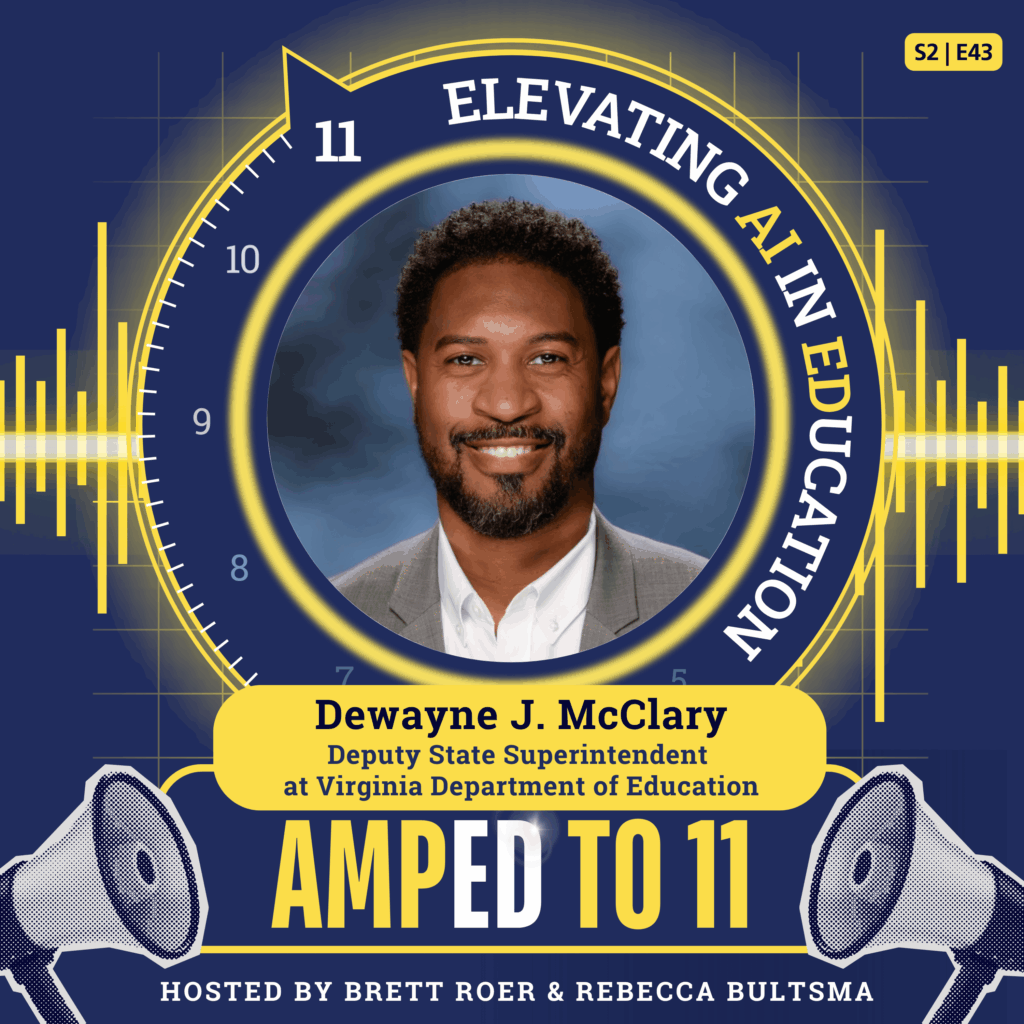
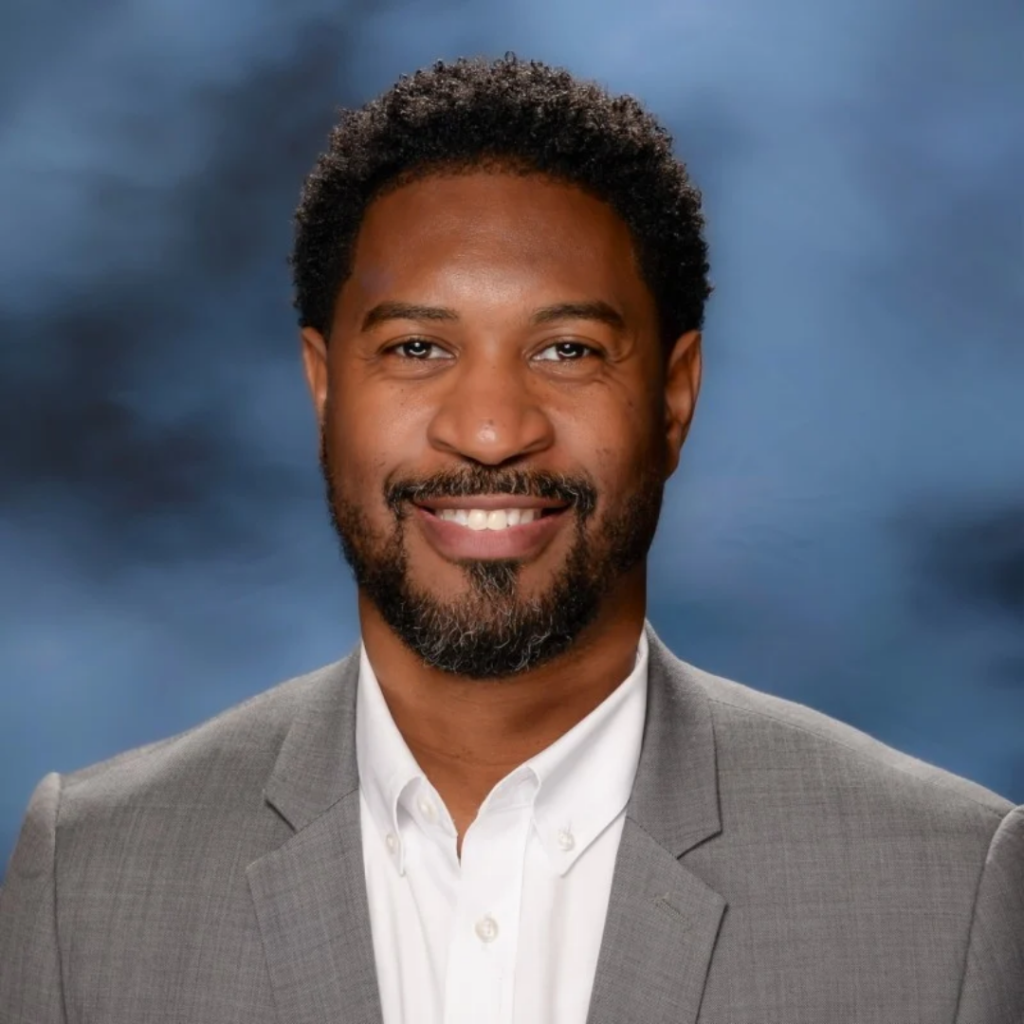
Brett Roer: We are live on the AmpED 11 podcast. We have a very, very special guest today, Dewayne McClary, who is joining us from Virginia. How are you doing today, sir?
Dewayne McClary: I’m good. How are you, [00:01:00] sir?
Brett Roer: I’m excellent. We are also joined by the incredible Rebecca Bultsma. Rebecca, tell everyone what the last couple minutes of your life have been like.
Rebecca Bultsma: Just stuck in traffic trying to get here for this podcast, and so happy to be here. I’ve been really looking forward to this. So I just wanna dive right in.
Brett Roer: Absolutely. So Dewayne, I’m gonna turn it over to you in a second, but for our billions of listeners out there, I have known Dewayne for about Five years, and I have watched him do really incredible things in a number of different agencies, and now he is doing incredible work for the G- Virginia Department of Education.
Brett Roer: So I’m gonna turn it over to Dewayne and let him explain to everyone his journey, how did the state of Virginia say, “You’re leading the charge on innovation,” and, you know, what brought you here, and kinda what fills your cup up on this journey in education and life. Take it away, Dewayne.
Dewayne McClary: Thank you, Brett.
Dewayne McClary: Thank you, Rebecca. It’s, it’s so good to be here. I started my journey in rural South Carolina, a small town called Kingstree. You probably don’t even know it, and it is, it’s where I was, w- was born and raised. Went to [00:02:00] s- you know, rural public schools all my life, and when it was time for me to go to school, I went to a local school 45 miles north of where I lived.
Dewayne McClary: Went and wanted to be a lawyer, but ended up becoming a long-term substitute after I graduated. And I was thinking about going to law school, but after serving as a long-term substitute for a couple of months, I decided I wanted to stay in education. And so I went back and taught in the same school, middle school that I attended, and taught alongside the same teachers that taught me, and actually progressed my way through the K-12 that way.
Dewayne McClary: Started as, as I said, a single-gender social studies teacher, so I taught all boys social studies. Uh, we were a single-gender school where our core area classes were separated by gender, and it was phenomenal. These gentlemen changed my life. I actually stay in connection with a lot of them now. Then transitioned into single-gender coordinator, a Title I coordinator, athletic director down south.
Dewayne McClary: Even in education, you know, you serve many hats but get one [00:03:00] pay . So I had multiple hats for a lot of years, for about five years, and then got an opportunity. I came up for a 21st Century conference actually in Maryland, and was given an opportunity while I was up here and was presenting, a colleague from Arlington Public Schools in, in Northern Virginia reached out and said, “Hey, I liked your presentation.
Dewayne McClary: Would love for you to come interview with us.” And I was like, “Sure.” “Can you be ready tomorrow?” So I had to quickly pivot to an interview. Did the interview. Within a week, I was hired. I was serving summer school and had to pack up my family from South Carolina, my two kids and my wife at that time, and hightail it to, to Northern Virginia.
Dewayne McClary: Did that for about three-plus years, and then was tapped to come over to Washington, DC, to DC Public Schools, where I stayed at five years for a, as a, around a, as a director of Ed Tech library programs. I tilted my hat after five years and went into the nonprofit world. It’s where I work, Brett,
Dewayne McClary: where I,
Dewayne McClary: I worked for Digital [00:04:00] Promise, and I ran the League of Innovative Schools, the most innovative network of school superintendents across the country.
Dewayne McClary: Uh, did that for about three and a half years. Did some contracting work for a couple of years, and out of the blue, I saw a position And I was like, “Oh, that’s interesting.” And I applied, and it was with the Virginia Department of Ed. And I went through the first process, first round, got to the second round, but didn’t get the job.
Dewayne McClary: Uh, then I got another call a couple of weeks later, said, “Hey, I think you might be best for this position.” And here I am. And, and I’ve been working and, and supporting the wonderful students of the Commonwealth of Virginia and the wonderful teachers, and we’re doing some great things. And you, you’ll be seeing them pretty soon
Rebecca Bultsma: Isn’t it fascinating how life just takes us where we’re meant to be and we don’t even see it coming, and doors close and doors open?
Rebecca Bultsma: Brett and I met in a similar way, just, you know, y- you just kind of end up where you’re meant to be, and it’s– I just think it’s so great that we’re all in this space together at [00:05:00] this time unexpectedly from such different places. Uh, so thank you for that story. I was on the edge of my seat trying to figure out what was gonna happen next.
Dewayne McClary: Ev- anything’s possible. A, a little tall, stringy, lanky boy from rural South Carolina is now deputy state superintendent- Amazing … with the State Department of Ed. Anything is possible.
Rebecca Bultsma: Agree.
Brett Roer: I think one thing, you know, again, from the times I met you many, many years and many computers ago, I used to have one of your, you know, one of your personal mottos and beliefs on my computer.
Brett Roer: Maybe you wanna share with our audience, you know, what has been that through line and what is the most, the belief you really have carried with you through all of these things?
Dewayne McClary: So my through line, my mantra, starting from when I was a teacher all the way up to where I am now, is very simple: Do right by students.
Dewayne McClary: Every day, no matter where you are, no matter the role or the scale, just do right by students. And so when I started out as a middle school teacher in rural South Carolina, I, I learned [00:06:00] early, uh, that equity isn’t a policy, it’s a practice, and it’s a lifestyle. And so each classroom, you know, each student, you know, each family taught me how s- how systems, success, and our failures are based around the leader’s priorities and real access to genuine opportunity.
Dewayne McClary: And so that belief, for me, has stayed intact throughout my whole career as I move from a school, you know, district leader, district innovation work, statewide strategy, and now serving as, you know, deputy superintendent. Um, even though the title’s changed, for me that all that means is that the scope expands, but the anchor remains.
Dewayne McClary: And, and, and if students don’t feel the impact of, of my decisions, then my decisions really don’t matter. And so that’s why I make sure that I, I keep that at heart. For me, it’s like everything that I do is to be, is to do right by the students that I [00:07:00] serve.
Rebecca Bultsma: We are so lucky to have people with that core in positions making decisions about AI and education, I think.
Rebecca Bultsma: Especially, like, you know, I work in AI ethics, and I just wish everybody making decisions about AI had that as their core, like doing what’s best just for people or children or future generations, right? If that was the core of everything, I wouldn’t be as worried as I usually am about some of the AI adoption stuff.
Rebecca Bultsma: I love that.
Brett Roer: Yeah. So Dewayne, maybe you can walk us through. I mean, think about this. You started as a substitute teacher in a single-gender school, and you keep in touch with those students and, like, you know those students, right? You know their lives, you know their families. Now you’re at the state level How does that look to you now?
Brett Roer: Like, what are some of the levers you now have to turn these equitable beliefs into practice? And also, how do you do right by all the students in the state of Virginia now? What does that look like at this, at this level?
Dewayne McClary: So tho- those, you know, that, that’s a great, great question because when you think about the s- the Commonwealth of Virginia, it’s a [00:08:00] vast array of, of, of, of different, you know, communities, different approaches, size.
Dewayne McClary: You have rural, the most ruralest areas in the s- in the western part of Virginia. You come into the most northern eastern side of Virginia, you have the Northern Virginia area, whereas, you know, the most densely populated area. And then you come down to the s- you know, southern area where it’s more, you know, more suburban.
Dewayne McClary: So there, there are multiple levers that we can pull. I think one is definitely just understanding what are the needs of our students, ensuring that we’re creating floors and not ceilings for divisions, but ultimately allowing divisions to, to lead. Because, like, every, every division is different. And so, you know, we can’t develop cookie cutter shape sizes for a whole state, but we can create guidelines and guardrails, but allow divisions to flourish and, and go above and beyond.
Dewayne McClary: So going back to that floor and not a ceiling, here’s the standard. This is the standard that we must have for [00:09:00] our kids. You can go above and beyond as much as you want. I think that’s the most important piece. I think the other component is, one, just being very frank that we value our teachers, we value our students, we value our communities.
Dewayne McClary: And, and, and, you know, understanding and helping people understand that AI will never replace a good quality teacher. I think that’s very clear for us. And so we lo- you look at AI, I’ve, I’ve used this analogy before, and, and we actually utilize it in our team. Um, we look at AI as a, it comes down to muffins.
Dewayne McClary: And, you know, when you look at a muffin, a muffin becomes a cupcake when you put icing on it, right? So AI is the icing, and everybody’s, you know, raving about the icing. “Oh, the icing’s good. The icing…” But what’s the substance of the, of the cupcake? It’s the muffin-
Rebecca Bultsma: Mm …
Dewayne McClary: quality teaching and learning. It’s the student’s social and emotional aspects.
Dewayne McClary: It’s the [00:10:00] equity. It’s the transparency. Like, that’s the core of what we do. We can’t forget the core of what we do just because we have icing on top of us. We have to always remember how we were made, what we were made for, and ultimately, how do we taste to students? Because how do kids experience us?
Dewayne McClary: That’s the most important.
Rebecca Bultsma: I love that. I talk about AI sauce sometimes, and just not everything needs the sauce on it, you know? Like, you know, sometimes there’s such a thing as too much sauce, and there’s places where the sauce just doesn’t belong. Uh, but yeah, I love, I love a good food analogy. Yeah.
Rebecca Bultsma: That’s fantastic.
Brett Roer: Yeah. Um, something you just said, I really wanna, like, in all the vantage points you’ve had in the work you’ve been leading- How are you trying to have people move forward together on AI? Um, what are some policies or best practices you’re trying to really shape and adopt? Where are you pulling them from?
Brett Roer: This is kind of, you know, leads into, like, who’s guided you? Who’s mentored [00:11:00] you? Who are people in the space that you’re looking to for guidance to reshape Virginia?
Dewayne McClary: Yeah. I, I think if, if, if we were to think about my people who are helping me rethink and reshaping the guidance for me, I, I have a long list of folks throughout my career that have helped me become who I am today and who I ultimately also look to for expertise or knowledge right now.
Dewayne McClary: And I have a close friend group, and some of these people are my close friends I can pick up the phone and call right now, or some of these folks that I can reach out to and, and, you know, associates that can, can connect back with me. I would say one is, is, is definitely my good friend Tiffany Galloway.
Dewayne McClary: She works now with, with Blue Engine. She’s the chief of product and partnerships, and the great work that she’s done single-handedly there in, in developing and getting them to where they are now. She has a great mindset around SPED, but ultimately universal design. Like when we really wanna think about what this looks like for, you know, tier one core instruction, she gets it.
Dewayne McClary: [00:12:00] She’s my go-to for, for, for that work. When it comes down to, you know, looking at, you know, equity, but ultimately looking at how do we build systems that are sustainable for, you know, for forever, I look to my good friend Kimberly Smith from Digital Promise. She’s, she’s the chief right now in, in– Brett, you know her.
Brett Roer: Got a good story about her after this one on equity, yeah.
Dewayne McClary: But right now she’s the chief for the, the Center of, of Learner Pathways. Recently just came and spoke to my team at the, at the agency a couple of weeks ago, helping us think about unbounded pathways for our students. Um, another person I would think about from a data privacy aspect is, is, is Keith Krueger from, from Cosine, CEO.
Dewayne McClary: Like, he’s really helping right now the nation think about how do we think about data policy and how do we think about does this work. Few other folks I’ll name, you know, Tom Murray, who could not love Tom and his work around future-ready learning. Uh, Ken Shelton, phenomenal brother, good friend of [00:13:00] mine.
Dewayne McClary: You know, really rethinking about how do we look at ensuring that AI is being designed, you know, with unbiased work en-en-entrenched into it. Kyra Henderson, my forever chancellor of DC Public Schools, who I went to DC for, like just her work around that work. And I could name many others like Tony Watling from Philadelphia Public Schools, Dr.
Dewayne McClary: McDade from, you know, Prince William here in Virginia, Dr. Jason Van Holcomb in Winchester here in Virginia, Darren Bradley all the way out in Compton, and, and even s- you know, Susan Enfield, who’s the, you know, who has been a forever person to really help us think about how do we support kids and know them by name, need, and strength.
Dewayne McClary: Like, you know, these are just phenomenal people that have really helped me become who I am today. And I have taken nuggets from all of them and carry them with me everywhere I go. And whenever I, I get into a place where I, I’m thinking like, “Hmm, how can I better do this?” I know who I can call. So [00:14:00] that’s my dream team.
Dewayne McClary: That’s my, my Ocean 11 crew. So-
Rebecca Bultsma: It’s a good team.
Brett Roer: I wanna be on that team. You understood the assignment. Yeah. Yeah. That was a real assignment. Uh, that was a real great answer. Literally, as you said, like Susan Evan, like Highline Promise. All of, and, and, and, uh-
Dewayne McClary: That, that’s forever living. That’s still there.
Brett Roer: I know.
Dewayne McClary: And many other divisions are picking that up.
Brett Roer: And I, I think about that all the time when I go to schools, I’m like, just that. Do you know what they’re, do you know them by name? And do you know what their purpose is, right? And what they value. Like, that’s, that’s about as good as it gets if you can do that.
Brett Roer: When you mentioned Kim Smith, it made me think of something I wanna give her flowers for, and it sounds like you’re obviously doing this work across the state of Virginia, and you were doing this at the league, and you were Calling people out in your role of, like, is what you’re doing actually innovative, and is it actually, actually equitable?
Brett Roer: And another great member of the league, Marlon Styles, you know, he always talks about that. If it’s not helping, you know, the lowest performing students, which are typically, you know, Black boys, then don’t tell [00:15:00] me you’re innovative or equitable. But I remember Kim Smith, the first time I met her, sh- I was on a call with her in an edtech organization, and she was just so blunt about it.
Brett Roer: Like, “Don’t tell me these buzzwords.” Like, “What does it really look like? How do you know that?” And, like, I just thought it was great to watch somebody just put people through their paces and not buzzwords. Just like, you’re not really about it if you’re not really about it. So great team you picked there, man.
Dewayne McClary: I don’t need a political speech. I don’t– That’s not helping kids. Like, I need, I need, need to know what, what’s the nitty-gritty, how are we supporting the most marginalized co- students? ‘Cause when you design at the margin, you design for everybody.
Brett Roer: Well, I wanna ask a, a question that’s gonna get a little in the weeds, and then this is, this is gonna get into some ethics and stuff that I don- I’m sure Rebecca’s gonna be able to steer after this.
Brett Roer: But, you know, when I met you at the league, so many schools, as you said, it’s the most innovative collection of schools in the co- in the country, and they were all trying to solve different challenges and kind of incubating different ideas. So I know, like, some of the things that I saw there, and I know you’re trying to [00:16:00] carry on here in, uh, in your role in Virginia, is, like, competency-based education, micro-credentials, seat time flexibility, just trying to think outside the box to serve all students and meet all their needs.
Brett Roer: What are some of the ones you’re most excited by? What are some of the things you’re trying to put in action that you can speak about with our audience?
Dewayne McClary: Yeah, no, in, in Virginia, innovation is becoming very tangible for our divisions and, and something you can see, touch, smell, taste. That, that’s how I articulate things to people in those realms.
Dewayne McClary: That’s why I talk about the muffin. I talk about like, I’m making it tangible for you because that’s prior knowledge, something that you know. And so for us, we’re really looking at, you know, seat time flexibility, so we’re looking at s- you know, so learning can happen anytime, anywhere. We currently have a seat time flex law in place where divisions don’t, don’t have to get our permission.
Dewayne McClary: They just alert us, and so we’re, we’re, we’re giving that power to divisions and ensuring that they’re not breaking any laws, of course. But that- that’s, that’s, that’s a power that lives with divisions. Competency-based [00:17:00] learning, you know, that, that looks at measuring and, you know, mastery, not lim- minutes.
Dewayne McClary: That’s also embedded in that seat time flexibility policy. Micro-credentials, you know, where, where students and educators, you know, can kinda validate their skills in, in alignment to workforce. Uh, we’re being very intentional about what that looks like for our, our students. We, we currently are, are looking at revising some of our credential lists to ensure that we’re, we’re, we’re revisiting them to ensure that they’re also ultimately meeting the needs of our kids to ensure that when they do leave us, they are prepared To, to, to, to live in a, a life that they can thrive.
Dewayne McClary: And so for, for me, that’s the greatest measure of K-12. It’s not when they’re with us, it’s when they leave us. And so we wanna make sure that, you know, they are prepared. We have a three E framework where you’re going to either en-enrollment, enlistment or employment. I wanna make sure when you leave me, you’re ready for all three because as you know, life can, can, can throw you a curve ball and I need to make sure my, [00:18:00] our students are able to, to pivot quickly into either of those.
Dewayne McClary: And if they choose to go into one, that they’re prepared to go into one and be able to stand amongst the, the, you know, the nation’s smartest students or the country’s smartest students or around the world. That’s what we’re preparing our kids for. Uh, we’re also looking and helping divisions, you know, really rethink in transforming some of their existing empty spaces and, and, and integrating innovation into, into those components.
Dewayne McClary: So we, we’re just integrating innovation everywhere because we want our divisions to, to really dream and think about what needs to change in their ecosystems to ensure that kids are able to thrive. We should not put a lid on top of education. That’s not where we are. We, this, you know, this world is ever-changing.
Dewayne McClary: We cannot say we’re gonna ban AI and then expect our kids to be prepared for a future and be able to thrive, because that’s what they’re gonna step into. So we need to learn ways of how to utilize it, [00:19:00] how to utilize it intentionally, but also prepare them to be ethical users of it
Rebecca Bultsma: I’m a huge fan of that.
Rebecca Bultsma: I-
Brett Roer: Rebecca, that’s like, I mean, he just passed you the rock. Let’s go. That’s all you.
Rebecca Bultsma: You literally said a- Yeah. Well, I, I’m a, I’m a huge fan of, of hearing that. You know, I’ve been– I was working with a, a district this week, and I was doing some research leading into it, and I was looking at what the Manhattan Institute’s put out about what they recommend for where AI belongs per grade band, right?
Rebecca Bultsma: For teachers, for students, um, for assessment. And I really noticed there’s these three kind of camps of, of parents, you’re probably seeing this too, and, and people who feel that, uh, kids should be exposed to AI really early because it’s gonna be part of the world they’re living in, and we need to integrate it into everything we do.
Rebecca Bultsma: And, you know, then a camp that’s asking for a little more moderation, and then another camp that just is completely turning against screen time and AI altogether, especially in the younger grades. Curious about your thoughts on that or what you’re seeing or the work you’re doing around how you’re making [00:20:00] decisions about where ethically AI like fits into schools and grades and classrooms, if you’ve had those conversations or what your personal opinions are.
Dewayne McClary: Yeah. We, we’re having those conversations now. We’re, we’re hearing from parent groups. We’re looking at research and data, and so we’re, we’re hearing, you know, a lot of folks saying, you know, there’s a age appropriateness of where things should be. Yes, we, we, I think we get that, and I think we’re, we’re gonna lean on what the data and the research tells us.
Dewayne McClary: Uh, but I also think we need to be very clear around ensuring that we’re telling the story and we’re, we’re telling the proper narrative. I’ve always been taught by my mother, who’s an educator of 38 years, she always told me that if, if you don’t tell your narrative or tell your story, no one else will.
Dewayne McClary: They will take the narrative from you, and you to get it back. And so I think it’s important that we prepare our divisions, our leaders, our teachers, our students to understand how do they tell their story? Because sometimes the narrative just, just runs away from us [00:21:00] and, and, and we let it run so far that we can’t, you know, pull it back.
Dewayne McClary: And so I think it’s important that we get out in front of, of, of what we need to say and, and be clear about what is really happening in our K-12 systems. Not what someone is saying not what one experience has been, but let’s really talk about assessments. You know, let’s really, you know, do an assessment or an audit on our systems to say, “Well, how much, how many hours, how much time does kids actually spend on devices in a day, in a, you know, or in a class or in a period?”
Dewayne McClary: We might be surprised um, what that number is. Um, and, and we have to be intentional about that because not all screen time is equal A- and we, we have to ensure that when we prepare our teachers, that we prepare them to u- to understand how to utilize technology in a meaningful way, that it’s not just being used just to be used, but it’s just intentional use, and we know they understand the outcome of where we want students to be.
Dewayne McClary: I also think we also [00:22:00] confuse people who, you know, who may have maybe a long-term substitute or substitute in the classroom, and if a parent comes in and they see like, like, the, the movie’s on, then they’re like, “Oh, see, screen time. They were doing this all day.” And so I think we have to be very vigilant about that to ensure that we’re preparing our educators, regardless if they’re a full-time teacher, they’re, you know, going through alternative route, or they’re a long-term sub, we’re, we’re, we’re instructing and providing the right training and supports for them so that they’re doing what’s best for our students.
Rebecca Bultsma: I love that you’re actually collecting the data. I think that’s what most people miss, you know? There’s these conversations about kids are spending too much time in front of a screen or these extremes, but I love that you’re being like, “Well, let’s figure out exactly how much time this actually is,” so that then you can refute the emotion and the polarization with actual facts and data, which I’m a, I’m a huge fan of.
Rebecca Bultsma: I love that approach, so that you can, gosh, point to what’s happening and where exactly the change needs to be, and then measure change. I just think that’s a part that gets missed. I really appreciate that.
Dewayne McClary: I [00:23:00] think it’s also important that you- most people just wanna be heard.
Rebecca Bultsma: Yeah. Agree. Agree.
Dewayne McClary: Figure, figure out the groups.
Dewayne McClary: Like, understand where they’re coming from because there may be some truth, a little bit of truth to it. And so we can’t be, you know, stewards of the public good if we’re not listening and hear what our constituents are telling us, and we’re not going and doing the research and the data ourselves.
Rebecca Bultsma: This is something Brett’s really great at with his wisdom collection.
Dewayne McClary: Very intentional about that with this administration and, and making sure we’re hearing and listening to what’s happening, doing tours. Like, we’re just not developing policies and procedures. We’re actually going out and seeing what’s happening in schools firsthand
Brett Roer: That’s great. That’s amazing. I’m glad you’re doing that.
Brett Roer: And both that and then something else that, you know, I know in your previous experiences you’ve really focused on, you know, we all when– we all know AI is an all-encompassing term now, but again, we’re thinking of it like what is it literally day-to-day for a student? But you, in your new role, and obviously in the work [00:24:00] you’ve done before, you’re also thinking about how AI can help solve a lot of the challenges that, you know, students have to deal with, like transportation, how are they getting to school, all of these logistics and operations that could really just have another great impact on the– how students are showing up and some of the other challenges like lateness and chronic absenteeism.
Brett Roer: What are some ways you’re trying to use AI in like the field of transportation and logistics and operations that are– you’re hopeful are gonna start showing some more impacts on the day-to-day life of students?
Dewayne McClary: Yeah. It’s so funny. I, I used to work for a transportation company, and they were utilizing AI in a way to develop tools that are able to guide, you know, the routes in a meaningful way that made sense.
Dewayne McClary: It also calculated, you know, traffic. It calculated how many kids are on the bus. It, it looked at what was the best route, minimum amount of time that kids should be on the bus. Like, it just, it did, did all of that great work. And, you know, one of their slogans was, “The same way we are able to track our [00:25:00] Amazon packages, we should be able to track our kids and make sure they get there on time.”
Dewayne McClary: And I think that that’s important. We have to ensure that w-we, we utilize tools that are able to help us optimize the amount of time that we have for our kids. Uh, how do we also utilize AI to take away the mundane tasks that, you know, we as humans have to you know, if we didn’t have AI, would have to do and, and ultimately miss out on opportunities and times to have experiences with our students.
Dewayne McClary: And so I think it’s important that we, we leverage these tools in, in a meaningful way, in a ethical way, um, in, and ensuring that, you know, it’s doing the, doing the best, giving us the best optimum opportunity to, to better benefit our students. But I also think it’s important that we keep humans at the center of all of the decisions that we make when it comes to AI.
Dewayne McClary: Um, and so I think with the state of Virginia, we’re committed to that. We have guidance that are in place that, you know, we, we have to ensure that humans remain at the center of the decision process when it comes to AI. [00:26:00]
Brett Roer: I’d love if you could actually, you know, we were talking at the state level. Now let’s bring it as literally close to home as we can, right?
Brett Roer: I remember I took a lot of plays out of your playbook around, like, how to really merge work and life and balancing that with your own children and, and your family. And, you know, if you wanna give an update, like how old are your kids, and what do you– like what is an ideal experience for them look like?
Brett Roer: Uh, and I’m making the assumption they’re in, you know, some of them are still young enough that they’re in, uh, like Virginia, Virginia schools. What do you hope that looks and feels like at that level?
Dewayne McClary: Yeah. So I have three kids. I have a 19-year-old who’s in college. Go LSU. Go Tigers. I have a, a senior this year.
Dewayne McClary: He’s a senior in, in Virginia public schools, and then I have an eighth grader in Virginia public schools, and so middle and high school. And I will say what I want for them to, to, to, to, to be able to approach, I want them to be able to approach AI with [00:27:00] curiosity and courage. You know, I feel like these tools are powerful, but, you know, they’re, they’re, they’re most powerful in your hands when you use that, utilize them to e- to explore ideas, you know, possibly create, you know, new things or even solve problems that, that, that matter to, to them, to their community.
Dewayne McClary: Uh, and so I think, you know I hope they’re, they don’t be passive users consumers of AI, but active shapers. A-and, and, and I hope they utilize the tool in a way where they’re, they’re asking questions, they’re, they’re experiencing and, and, and staying rooted in their values. And I think technology, you know, technology evolves quickly, but I hope their creativity, you know, their empathy, their integrity, what makes, you know, for them, I think that’s what makes, makes everything work around innovation.
Dewayne McClary: So I hope for them, I hope that they, they keep that intact, and I think they are, [00:28:00] but, you know, they have to also be able to learn how to leverage tools in a meaningful way that will set them up to be, you know, competitive i-in this global world.
Rebecca Bultsma: I think that’s fantastic. One of the best quotes that I’ve heard in a long time, and your, your vision of curiosity and being courageous really reminded me of this, and it’s, uh, from the Center for Humane Technology, which is one of my favorite organizations, and they say that clarity creates agency.
Rebecca Bultsma: And I just think as we teach kids and prepare them, that creates agency in them to decide whether AI acts upon them or they act with it, and how they’re impacted by it and what the future looks like. So all of those ideas together, I think we’re very aligned in our vision for the future and for the students and what that looks like for them.
Brett Roer: I mean, I’m gonna just turn it over, Rebecca. I’m gonna let Dewayne take over here. So Dewayne, you are now the official host of the AmpED to 11 podcast. You can ask Rebecca and I one question that we both have to answer, one [00:29:00] separate question. You get to pick who goes first. Like, you’re in charge. Take it away.
Dewayne McClary: Oh, man, this, this is fun.
Brett Roer: You know, that’s why we do it.
Dewayne McClary: Um, I would say if you, you know, the, the– for me, I think it’s important for, for us to really think about this in a meaningful way. So if you were a teacher today, how would you utilize AI to best support the most marginalized students in your classroom?
Dewayne McClary: ‘Cause I think that’s something that teachers are thinking about, and I know it’s not the hotspot, so I just wanna, I’m gonna put you in the hot seat. Like how would, how would that… what would that look like in your classroom? ‘Cause I think teachers think about this daily.
Rebecca Bultsma: Yeah, that’s one of the kind of top questions we get.
Rebecca Bultsma: I was just reading the latest Microsoft report on how teachers are actually using AI, and leaders and students and stuff, and I j- you know, the top things are the [00:30:00] things that we would all expect, using it to, uh, differentiate and create materials and brainstorm ideas, and I really think those are still the best solutions.
Rebecca Bultsma: And I love that they’re all still behind the scenes. You know, like, I’m not sure we’re to a point where we should be just, like, working with AI with students directly, but I love how it can support people in the background, and just easily come up with creative, interesting, engaging ideas, or, you know, tools or systems that help you align materials to whatever meets a student’s individual interests or needs or passions, or rewrites word problems with Minecraft themes, or, you know, takes a ton of really complicated material for one kid who’s just not engaging and turns it all into, like, a basketball themed podcast to help them understand uniquely the concepts, but in their own language and through the lens of their own interests.
Rebecca Bultsma: So I think there’s just a lot more opportunity to connect with every type of students in a way that doesn’t burn teachers out. [00:31:00] Um, you know, come up, “Well, my class loves Mr. Beast, and we’re studying digestion, and so let’s come up with a challenge that’s engaging and interesting,” and makes it so that kids remain curious and engaged, uh, instead of just, you know, factory and banking model of education where everybody gets the same thing.
Rebecca Bultsma: Uh, so hopefully it gives a chance for teachers to know their kids better and meet their needs better. ‘Cause often teachers know that this kid’s into this, but they’re just stretched so thin. I just think this creates opportunities to personalize. Brett, I’d love to hear your ideas. I know you’re really close to this work.
Dewayne McClary: I actually have a different question for Brett.
Brett Roer: Oh. Okay.
Rebecca Bultsma: Yes, I can’t wait for this.
Brett Roer: Okay. Go ahead, Dewayne.
Dewayne McClary: I’m the host. I’m the host, so you gotta follow along.
Brett Roer: I mean, I could be the guest who just goes off, but yeah, sure. Let’s find out.
Dewayne McClary: I just logged off. What’s, what’s the bold change we’re avoiding in K-12?
Dewayne McClary: What, what’s the thing you know would dramatically expand [00:32:00] opportunity for students and educators?
Brett Roer: Oh, okay. I thought you had a hard one for me, man. That’s easy. Um, so everything I’m about to say, I’m gonna pretend, I, like, I’m gonna d- I’m gonna, I’m gonna be Dewayne and pretend I had the agency at a state level to say, “These are, these are facts, these are truths,” and then everything I say after that is what I hope to see.
Brett Roer: So one is, um, doesn’t really matter what tool, but it’s safe, it’s ethical, you have the cover at the district level or your building level to do the following things, um, with full consent and agency I think the most important thing is AI in the background, as Rebecca said. So when we talk about personalizing learning, I’ve done this in classrooms, again, with full consent and all the protocols in using the district technology, is just asking kids, and instead of that all having to live in your head as a teacher, having it be in a central repository that is safe, and it’s all about learning who kids are.
Brett Roer: And I think the hardest thing about being a teacher for all those years, and [00:33:00] especially like, you know, as you mentioned, I was in a CTE school, 99% of those students were Black and brown boys. It was an automotive school. Nobody wanted to be mechanics except for a handful of those boys. That’s not a good situation.
Brett Roer: And they could hold such high-level conversations about their lived experience, and you could have, at that time being a history teacher, now with AI, related that to them and really understood who they were, and brought it right back to their lives, and done it, you know, almost instantaneously. But the part that we couldn’t do then is take all that and really transform what that experience looked like to them, and we can do that now.
Brett Roer: And I’m working with so many districts now who are actually listening to the people, and we’re finally collecting all that wisdom. And we don’t have their personal information, but we can notice trends. And then to take what you were saying, Dewayne, if, if AI is the, the icing on the cake or the, the cupcake or the muffin, uh, sprinkles.
Brett Roer: So now imagine if when you teach a class, you had all that repository of knowledge every time you use whatever AI tool to generate your next lesson, and you [00:34:00] keep building upon that, and it’s really hyper-personalized, not just from a survey, ’cause that’s not how kids want to express who they are. They want to talk to you.
Brett Roer: They want that human connection, as you said before, Dewayne. Like, that’s what we’re not using. We have the technology. We can make it safe. We can, you know, de-identify the information and, like, that’s what I wish people were using it for, and you could do that s- from the state level to a single classroom.
Brett Roer: Like, that’s what I hope people start using AI more for, is not barriers to collect information, but it’s truly to hear. And as long as we’re doing it safely and ethically, like, that’s what I hope people are using it for, to make better decisions.
Dewayne McClary: Drop the mic, Rebecca.
Brett Roer: I’m out.
Dewayne McClary: Just jo-
Brett Roer: I’m
Brett Roer: out.
Rebecca Bultsma: Nailed it.
Dewayne McClary: Y’all solved all the K-12 problems for That’s not bad
Brett Roer: Tip of the cap. Thanks, Dewayne. That was a great question. Um, I mean, do you wanna maybe get introspective for a moment and, and flip the mirror on yourself? How would you answer either of those questions? If you’d like to. You don’t have to. You’re the host.
Dewayne McClary: Yeah, I think for me [00:35:00] it, it’s, it’s all about, you know, how we really think about how students are experiencing school. I’ve always thought about, you know, you know, when we think about changing things, I’ll ask, you know, much around the conversation around AI and, and innovation, but the, the friction point I think is often the, the, the cultural, you know, how we, we define success and how we manage risk, and how comfortable we are about letting, letting go of, of, of legacy structures that no longer serve all students equitably.
Dewayne McClary: And, and I would want, I would, I would want the field to kinda wrestle with what we really know, what we already know, um, but haven’t yet act on. And, and, and, and, and what it would be if we were to take collectively and move from [00:36:00] kind of ad- a- adoration and, and admiration of problems to really transforming systems.
Dewayne McClary: Like, I think that’s where we get stuck.
Rebecca Bultsma: Yes.
Brett Roer: That is definitely the place. And so maybe, you know, with the time we have remaining, right, I mean, you sit at this place where I really can’t imagine how you’re– Maybe I would love to just get in your head for a second. Maybe you could share with people, like, what does it really feel like to- To think about all those things you’re talking about, let’s get unstuck and let’s bring it.
Brett Roer: Like, how do you think through that at the state level? Like, how do you think through that in your current role? ‘Cause that’s something that, you know, very few people have to grapple with, and you, you get the opportunity to, but it also comes with… That must be an interesting way to have to approach systemic change.
Brett Roer: Love for you to just share what-
Dewayne McClary: Yeah. I know it, it, it may sound harsh, but you sometimes have to go with the willing, those who are ready to go, those who are willing to move forward. I think it’s also, [00:37:00] it’s important that you articulate your purpose and your vision clearly so that people understand where we’re going, how we’re gonna get there, and who’s driving the bus.
Dewayne McClary: Do I, do I, do I trust you to drive my bus not off the bridge, but down the lane? And I think when people can understand who you are, what you do, your, your, your ethics, they understand, you know, you’re, you mean what you say and you, and you, and you do what’s best for kids, I think people start to build trust with you.
Dewayne McClary: I think the biggest thing is just understanding what the needs are and just building on, you know, kind of the excellence that’s already there. There’s so much that’s happening in across the, the Commonwealth of Virginia, so many great opportunities, but most times we only hear the bad. You know, when we, when we drop test scores or when, you know, you know, data comes out, we always focus on the bad.
Dewayne McClary: And I go back to what my mother taught me, like, if I don’t tell my story, nobody else will. [00:38:00] So we need to tell our story. We need to get out and start looking at storytelling, really sharing the great things that are happening in our divisions. But ultimately, how do we share that with other divisions to ensure that they’re able to see and understand from our flaws or our mistakes so that they’re not making the same mistakes?
Dewayne McClary: A lot of times we, we see the great things that are happening in division, like I wanna be that division, but they never see the underlying failures that have happened. And so I think, you know, going back to baking cupcakes and muffins, yes, it’s great to see the muffin or the cupcake at the end, but I also want to see what the ingredients were, how long it took, you know, what was the pressure, you de- developed the dough and the, and you know, how long did it stay in the oven?
Dewayne McClary: Uh, did you add any special ingredients? Like the things that go into making you excellent, what were they? Like we have to, we have to work with divisions that are, you know, at that intersection that are willing to go from good to great. Like they’re at a pivotable point, and they [00:39:00] need, you know, that information about what ingredients did you put in to get you to where you are now.
Dewayne McClary: And I think we’re, we as K-12, so we sometimes forget that. We just always talk about the end results
Rebecca Bultsma: I think I love what you’re saying about the bus and who’s driving which direction we’re going. I feel like something that’s missing in a lot of like broad organizational adoption is like how do we know when we get there?
Rebecca Bultsma: Like, what’s the destination? How will we know when we’ve arrived, right? We, we talk about this like vague great future, um, but like how do we know when we’ve arrived, when, when it’s done, when the cupcake is, is complete? Um, I think that’s– I don’t know, I’m just thinking out loud, that that’s part of the problem is, is the goal isn’t seen all the way through to the end, and we don’t have metrics in place to measure, uh, success and what that looks like, and how do we know if we’re being successful or on the right track.
Rebecca Bultsma: It’s one thing to kind of say, “Here we are, uh, here’s where we’ve been.” What do you think about what that looks like and how [00:40:00] we know when we’ve gotten there?
Dewayne McClary: We have to ensure that we’re putting in the right opportunity, the right ingredients at all levels of the stage. When kids are coming to us from birth To kindergarten or pre-K.
Dewayne McClary: Are we investing our time, our money? Are we investing to ensure that they are prepared and ready to come to school? Virginia’s doing that. We have a phenomenal superintendent who led that work, and now is thinking about that from a K, from a, from a, from a birth to pretty much 12th grade and beyond approach.
Dewayne McClary: So how do we ensure that we’re, we’re providing the right opportunities and space for those kids? And then when they do come to us, how are we ensuring that we’re preparing them with the right tools, the, the, the right metrics, the right application to ensure that they’re able to read, they’re able to add and subtract, ’cause those skills build upon each other.
Dewayne McClary: And if we’re not i-integrating and doing the right things at the right time, that’s how [00:41:00] we get kids at, in 12th and ninth grade that can’t read or do math. Like it, it’s not a, “Oh, when they get to 12th grade, I’m gonna do my best to make sure…” No, it, it starts when they were born. So it’s a process. So, you know, will we ever get to the where we wanna be?
Dewayne McClary: No. We, we have to continuously change. We have to ensure that we’re providing the right tools, right metrics, right resources, right people in front of the kids at the right time. That’s, that, that’s where we’re going. And, and, and if we’re not ever-changing and have an open mindset to move with society and move with, with structures, we, we’re gonna be left behind.
Dewayne McClary: I, I feel like sometimes K-12 is the most stagnated, slowest moving part of the nation than any other, you know, any other sector when you look at it. Like everyone’s moving. Health, moving. You know, I, I think we– [00:42:00] The way that education was designed and built, we, we still feel like that’s, that’s the way it should be, and we-we’re stuck in that mindset of this is, this is the way that education should happen, and this is the way that it always has to be.
Dewayne McClary: I think we’re, we’re stuck in that. How do we get out of that? We’re gonna have to partner with, with, with… It’s, it’s not– We can’t do this on our own. We have to partner with for-profit, nonprofit business. We have to partner with communities. We have to partner with parents. Like it’s all or nothing. We cannot continually put kids in roles and expect them to learn like they did in 1950 And we, and we have to think about, yes, you know, Bloom’s Taxonomy, great.
Dewayne McClary: This like– But what are, what are the new systems and structures that we can utilize to, to make l- learning meaningful? What does the data and research tell us? This is different.
Brett Roer: You know, Rebecca asked it, [00:43:00] and you kind of, you know, you, you’re right. Like, we always have to be evolving, and we gotta figure out how to evolve quicker in this, this specific field.
Brett Roer: But one thing, you know, you said like let’s tell the stories, right? If no- if you don’t, if people don’t– If, if you don’t tell your own story, no one else will. But in Virginia Maybe tell us a story about one community district school teacher who, with the conditions they have right now, they are really doing it right.
Brett Roer: Like, who is someone that’s getting it right right now with the challenges they’re currently facing and trying their best, and it’s, it’s actually showing that they really do care about all students all the time?
Dewayne McClary: See, Brett’s gonna get me in trouble.
Brett Roer: Oh, wait, hold on. Listeners. No, no, I got you. I got you. I know how to do this.
Brett Roer: Uh, Deputy Commissioner Virginia McClary is, has a shar- has a heart out because he’s gotta get back to serving his students and the communities that he leads. So he’s only gonna take one question, and then we’re gonna hard cut him off. So, um, it’s not that he doesn’t have millions of these. We’ve confined him [00:44:00] to that ’cause the work never stops.
Brett Roer: Work don’t stop. Go ahead.
Dewayne McClary: No, there, there, there are multiple. I can name a few. One of them is, is, is Hampton Public Schools. They’re doing a great job when it comes to pathways. They’re rocking it out. We went and visited them during our, our listening tour, and just to see the amount of investments they’ve made, the, the opportunities they’ve built for their students.
Dewayne McClary: Like, all of their students are, are able to go to an academy and actually enroll in a pathway, and when they leave, they’re ready for, for, for whatever that pathway is. Like develop- working with community, working with their mayor, working with their city council, like, that’s what it’s all about. Another one I would say is Winchester.
Dewayne McClary: They have a great innovation cen- s- uh, center that, where they’re really thinking about seat time flexibility, thinking about education differently. I, I think those are just a few to name that I think we’re doing some, some great opportunities, you know, for, for kids, uh, differently than the traditional K-12 education.
Dewayne McClary: Uh, there’s [00:45:00] multiple other, you know, divisions across the, the great Commonwealth of Virginia that’s doing great work, but those are just a few that come to mind ’cause I don’t have much time to share all of them. But, you know, th- these are some that, that’s really thinking about meeting the needs of kids and putting them first and not worrying about, you know, this is the way that it’s always done and we’re gonna continue to do the, the same old way, same old, old fashion.
Dewayne McClary: But if you continue that, you’re gonna get the same old results. And so once divisions get to that point where they’re, they’re tired of the same old results and we gotta change the system, state of Virginia, like I said, we’re creating opportunities for divisions to do things differently. And I think having leadership that is willing to help divisions dream and, and build systems from the most marginalized up, I think that’s where we’re, we’re in a, moving in the right direction
Rebecca Bultsma: I would say so.
Rebecca Bultsma: I hope every state gets leadership as good as the leadership that you’re providing there in Virginia. Thank you so [00:46:00] much for being with us today and sharing all the great work you’re doing.
Dewayne McClary: I appreciate it. I thank you guys for inviting me, and, and Brett, good to see you, man. We have to catch up.
Brett Roer: Um, sounds like there’s a lot to, but y- you know, the role comes first, Dewayne, so whenever you have a moment for me, I give it all to Virginia, but we will find time.
Brett Roer: And for all our listeners, I hope you really took a lot away from today’s episode. Dewayne, thanks for everything you’ve done in your illustrious career, and right now for the Commonwealth of Virginia. And to our listeners, uh, do right by students every day, and have a Jumbo Cannoli Day out there. Take care, everyone.