Patrick Fogarty: [00:00:00] Finding out what people want out of it, finding out what their aspirations are for their own children as it pertains to artificial intelligence is, I, I, it’s so important because our communities are diverse and unique. You know, each, each town may have a unique flavor, unique desire, a unique interest, unique way
Patrick Fogarty: they wanna approach how to use these tools.
Rebecca Bultsma: What do we need to be talking about more when it comes to like governance and accountability? Like, if anyone can just release something and then it gives parents wrong information, or it does something that’s deeply offensive, who’s responsible for that? And how are we ensuring, uh, there is oversight when it’s so easy to build, but we may be missing thinking about some of the other things.
Daniel Friedman: I can’t honestly recall a time in my career where a teacher stopped me in the hallway to thank me for the professional development we just had. It’s just not one of those things that happens.
Brett Roer: All right. Welcome everyone to the AmpED to 11 podcast. [00:01:00] I am joined as always by my incredible host, Rebecca Bultsma. Rebecca, how are you doing today?
Rebecca Bultsma: I’m good. I, I’ve spent my whole morning trying to find an in-stock MAC Mini, uh, but I’m having no luck still. I’ve been looking for the last few weeks.
Rebecca Bultsma: Everything’s at least a couple months out, so I’m, I’m looking for one to be able to run, um, all of my cloud agents and cloud bots on an external server, which means they can be working all the time. Wherever I am in the world, I can be talking to them. So if anyone has Mac Mini for sale, they should gimme a call.
Brett Roer: I was just about to say, tell me you’re using Claude all the time without telling me you’re using Claude all time. It’s, it’s only got a Mac Mini for sale, but. That is, that’s a great use of it. I hope you enjoy it, and that’s just the kind of innovative talk you’re gonna get today on the AmpED to 11 podcast, because we’re joined by two incredible leaders in the field of artificial intelligence, innovation, and education.
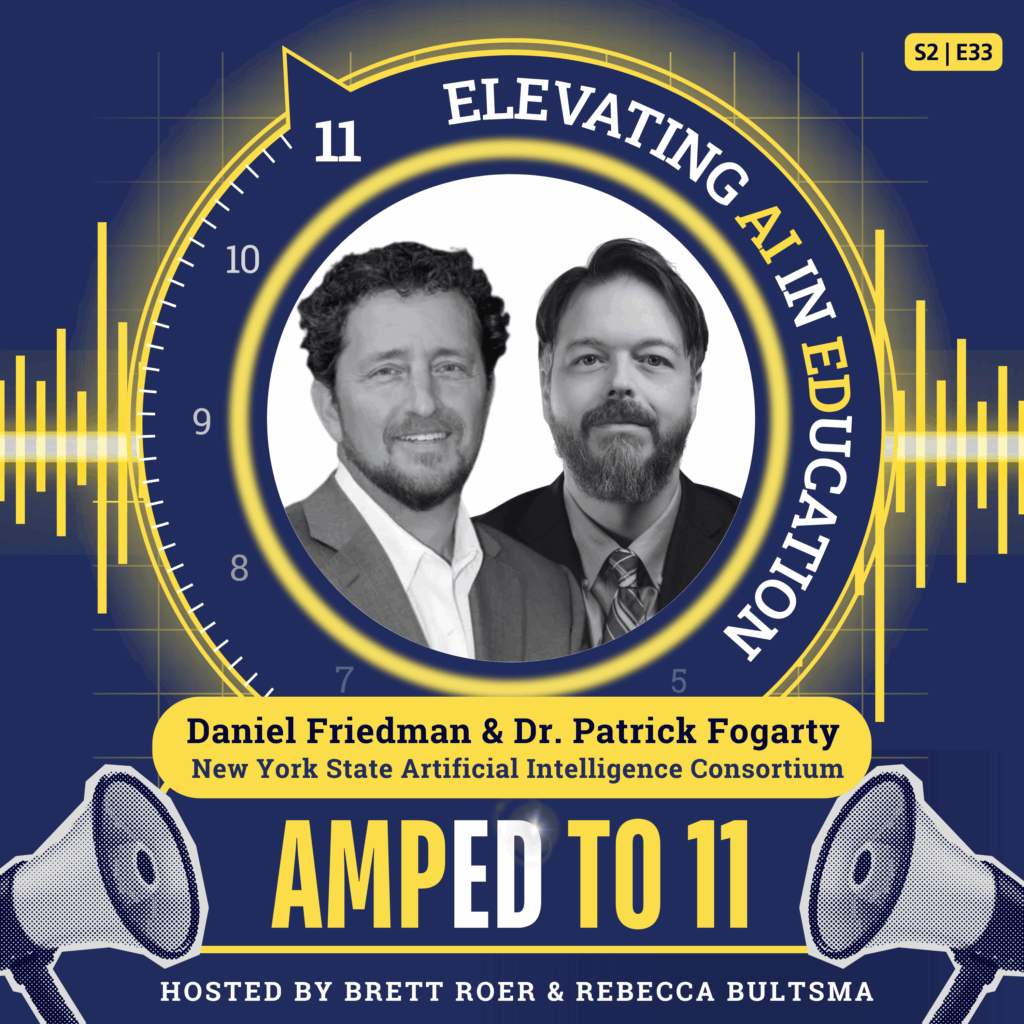
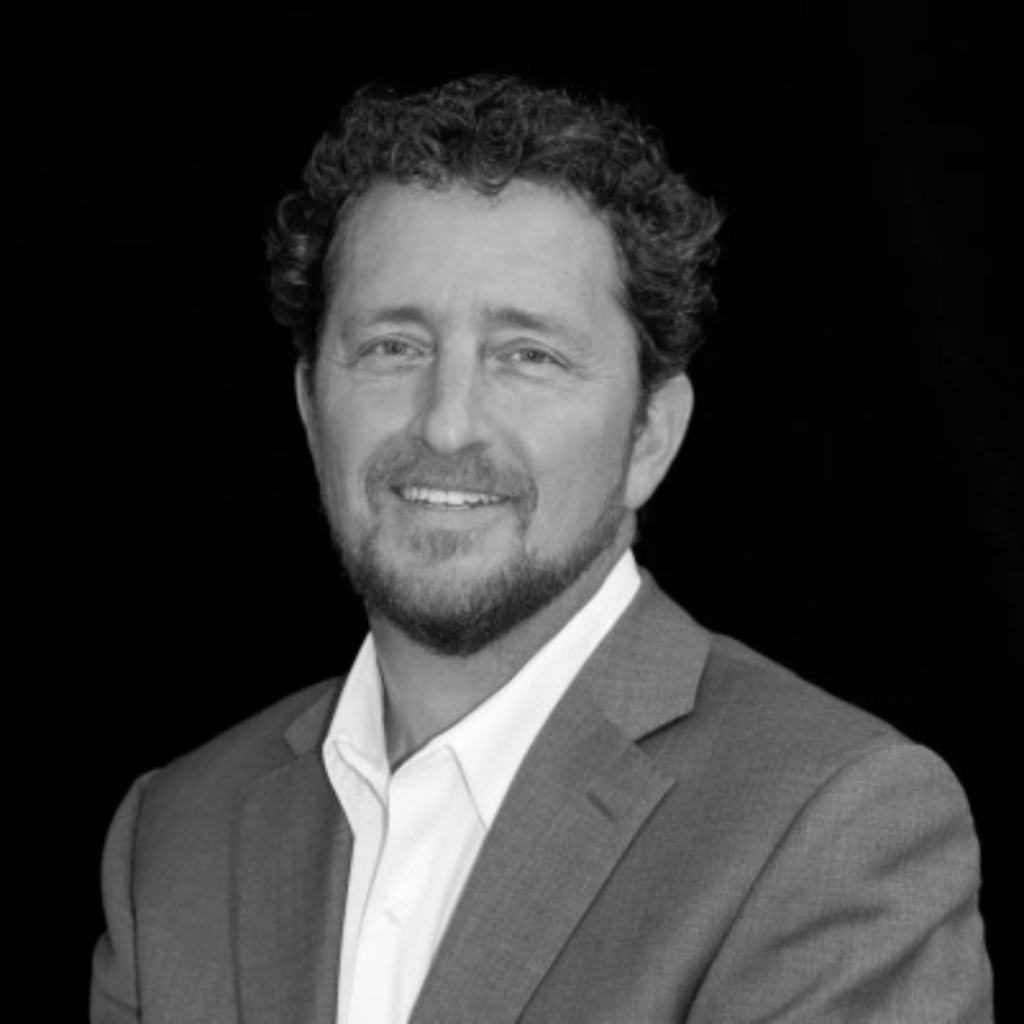
Brett Roer: I’m gonna introduce each of them, and then I’m gonna let them introduce themselves First, we are joined by Dan [00:02:00] Friedman, the Director of Technology for Hicksville Public Schools. Dan, welcome. Thank you for joining us today.
Daniel Friedman: Thank you so much for having me. I’m, I’m, I’m so flattered to be here. We met at FETC just, just a few months ago, and it was really great of you to reach out and invite Patrick and I to join you.
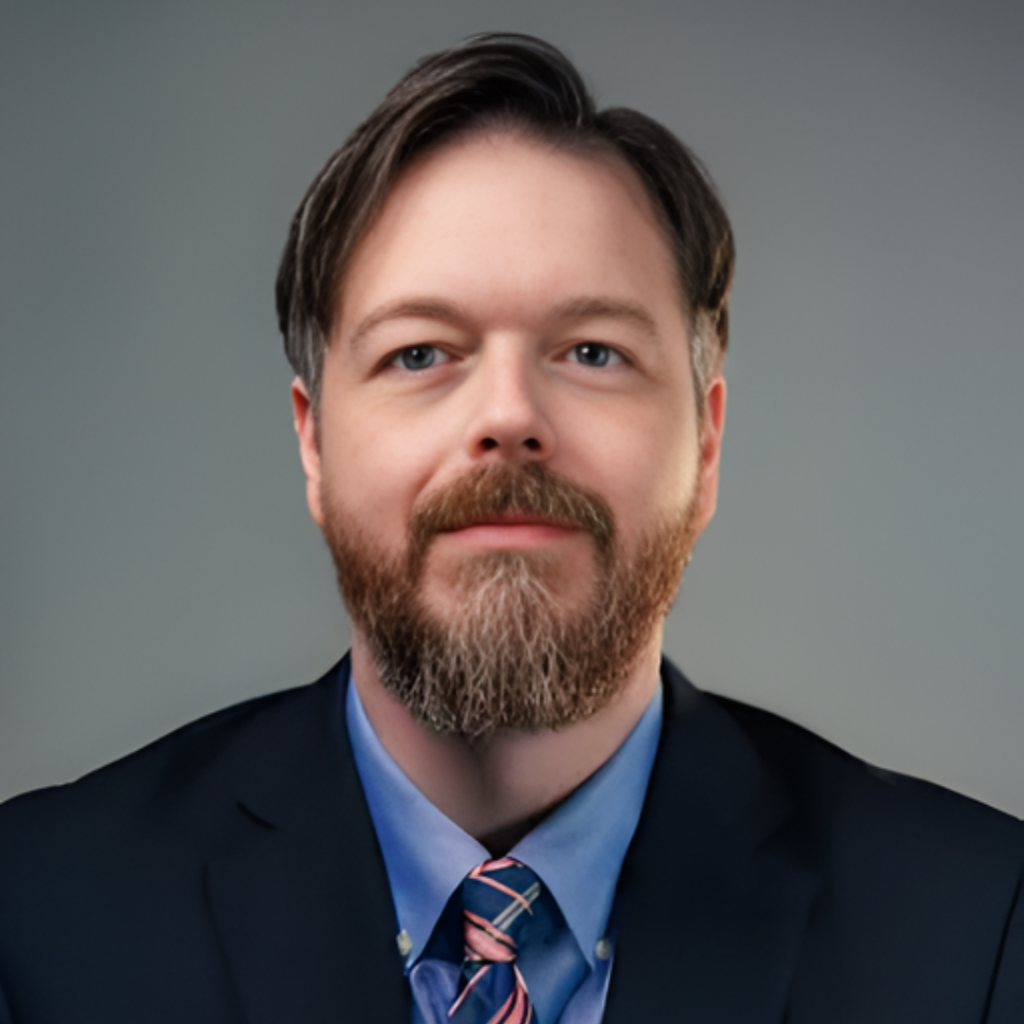
Brett Roer: Absolutely. We are also joined today by Dr. Patrick Fogarty, who is in this order, the Assistant Superintendent of Curriculum Instruction and innovation at Hewlett Woodmere Public Schools, as well as the founder of the New York State Artificial Intelligence Consortium, also known as NYSAIC, Dr. Fogarty, thank you for joining us today.
Patrick Fogarty: Thank you so much for having us, Brett and Rebecca. Very much appreciated. Great to be here.
Brett Roer: Yeah, so we’re so excited to kick this off. What we love doing first is just letting our guests introduce themselves. You know, how did we wind up talking today in 2026, about artificial intelligence on [00:03:00] that, on the today’s podcast, but more importantly, your journey.
Brett Roer: How you got where you’re today, what you’re most passionate about in the field of education and innovation. Dan, we go way back three months. So you get to go first, a little bit about yourself again, your journey, and then when you’re done, Dr. Fogarty, off to you.
Daniel Friedman: Thanks so much, Brett and Rebecca. So yeah, I’m the director of technology here in the public in the Hicksville Public Schools.
Daniel Friedman: This is finishing my 30th year in public education, which is kind of wild to, I don’t, I don’t feel old enough, but my driver’s license says I am old enough. So I took on of an interesting road to get here. Um. I was a music teacher first, just up the road. I say kind of my whole career has been on this kind of one stretch north south on Long Island.
Daniel Friedman: I was a, a music teacher in the Jericho schools, and then a music and art supervisor was my first admin role. And this was quite some time ago. Um, districts didn’t necessarily have directors of technology, so it was kind of like, you know, Dan seems to know about technology, so here you can do this job [00:04:00] also.
Daniel Friedman: So with music, art, and technology, you know, kind of career moves along. And, and I’ve been here in Hicksville for 13 years where we’ve gone from, you know, from one-to-one iPads to one-to-one Chromebooks, to kind of where we are today with, with AI and, and this innovation. And the, the iPad story is funny and maybe Patrick will get into it in later.
Daniel Friedman: That’s, that’s where Patrick and I first met was in the, in the iPad rollout. Patrick was working for a company called East. It’s Wild to kind of, if you told us we were gonna end up here together today, I think neither one of us would’ve believed you, but. It’s really been a joy to, to know Patrick for these about 15 years, 12, 15 years, and, and to work with him just to kind of get to understand the way his mind thinks and the directions that he’s going, and just literally try to hang on for dear life and, and follow him because he’s always up to such exciting things.
Brett Roer: That’s incredible. Thank you, Dan. And, uh, Patrick, when you sell your story as well, please let everyone out there [00:05:00] know, um, what the New York State Artificial Intelligence Consortium is and how that also came to be, uh, in the past, uh, in the past, uh, recent history.
Patrick Fogarty: First off, thank you, Dan. That was so nice.
Patrick Fogarty: It’s good to have good friends. I appreciate you brother. I’ll say so I, I got my started a long time ago teaching, I’m old. I taught in Brooklyn then I, uh, we decided in two th I think the iPad came out around 2010, 2011. My boss, great man named Deacon Kevin McCormick, uh, we literally jumped on the train and went out and bought iPads and started handing them out to teachers and students.
Patrick Fogarty: So we were the first, or allegedly the first iPad, one-to-one school in Brooklyn. I’m sure there’s 15 others that are saying they’re the first one-to-one school in Brooklyn. Now, whether or not that was a good thing or a bad thing, we can discuss later, um. So I, I was a teacher, became a director of technology for a bunch of districts, including Jericho, where Dan also worked briefly or no, for actually for a little while.
Patrick Fogarty: And then I, I became an assistant superintendent for curriculum about three years ago, 2023. December, 2023, I contacted Dan and a few other [00:06:00] friends and I said, I’d like to start talking about ai because I had rolled out a couple of tools and I had, didn’t really have anyone to talk to about it except for the people I was talking to in the group chat.
Patrick Fogarty: And I thought eventually other people are gonna wanna have these conversations. So I started calling, you know, guests and asking them to come and say, Hey, would you just talk about your product? And we had Armand from Brisk right off the bat, and he, you know, it was amazing to get an audience. And then we had some truly dreadful products as well.
Patrick Fogarty: Uh, you know, where, because it was the very beginning and it was sort of the, the, the rush. And so Nice really became a place for everyone to come together and talk about artificial intelligence in education, the platforms that we’re using, pedagogy, best practices, et cetera.
Brett Roer: Incredible. Thank you both so much.
Brett Roer: Um, Dan, I’m gonna start off by asking you to share what I found in January at FETC. When I spoke to you, probably the first person who had ever brought this up to me, that someone that was working in a public school, I’d love you to share with the audience this vision you have and you could explain it better than [00:07:00] me.
Brett Roer: This idea of, you know, your school district and others have sound apparently are trying to think the way you’re thinking about how do you protect your own data and how do you potentially even form your own data centers. I’d love you to share with people like how you got to that point and then I’m gonna open it up for a, a bigger discussion and dialogue.
Brett Roer: And I think this is where, you know, I’m sure Rebecca and Patrick, you’d have you, I’m sure you have amazing insights as well. But Dan, could you start us off with that, uh, topic please?
Daniel Friedman: Sure. So that’s that whole idea of, of building our own local l lms ’cause we need one more L-L-L-L-M, the local LLM. It really came as a splinter of from NYSAIC.
Daniel Friedman: Uh, you know, we were talking, we were talking about Mac Minis earlier. You know, the even beefier solution is the Mac Studio. We have members that have kind of stripped down a PC and literally have a, an NVIDIA card sticking out the top of it and downloading alama and trying to just experiment to literally go under the hood and see how these things work.[00:08:00]
Daniel Friedman: You know, that, that’s just that infectious curiosity, that infectious enthusiasm that our Nicea members have. They’re, you know, they’ve been doing this many, many of us for a long time. We’ve been through kind of all the trends and phases. This is the first time we can really just look under the hood and like build it ourselves.
Daniel Friedman: And, you know, that excitement of, you know what, look what we can build, look how we can augment our capacity. And then for a couple of our members in particular, look how we can make these. Robust models available for our students to work on, to, to build with, to experiment with, to do some of their research with, but inside a walled garden, inside a safe place.
Daniel Friedman: So it, it literally just was like a, an image on a slide from a presentation we did a few months ago about this kind of, this a, you know, education AI net where, you know, could we be working with state and local organizations to have our own compute space where, you know, we cannot worry about where the data [00:09:00] is, where it’s, you know, where, where it’s being interacted with and ultimately, you know, does it, does it get deleted?
Daniel Friedman: Um, so yeah, it was, it was just kind of that, it was just kind of, a bunch of people got together and started throwing wild ideas around and, you know, the group chats going until 2:00 AM and people just couldn’t back away from it because they wanted to solve this problem. It’s just been very exciting to be a part of.
Brett Roer: You know, uh, Patrick.
Brett Roer: And you’re, you’re part of these conversations. What has that led to in terms of your thoughts on, uh. Where your district could go or things you’re seeing, like those trends, part of the consortium you’re part of?
Patrick Fogarty: I think there’s incredible opportunity. I think there are also concerns that I have about the what, so I’ll tell, one of the things that I immediately took to doing was, you know, we, we transitioned in New York to a different type of, or a new style of Regents exam for our science classes.
Patrick Fogarty: So we don’t have, you know, the prep materials we have available to us aren’t as strong or as robust or as deep as we had in the past. So I took a whole bunch of regions and actually this was a nice, a practicum project I asked people to help out with. [00:10:00] So, and what I did was I basically took them, took the questions and the picture responses that you get from New York State.
Patrick Fogarty: Them up into files and created like what amounts to a Live Regents generator for students that generates clusters of questions based on existing questions. Then the next phase, and that was something we worked on in the nice practicum. I was asking people and what’s really amazing to me about working with such an interesting group of people and, and bringing people together in such a way is that what we found is that your problem becomes everyone’s problem.
Patrick Fogarty: So one of the people who would be one of my good friends is a guy who worked with me at East where Dan and I met and he helped me crack how to turn these things into reasonable Jason files. And then we had someone else, Jason Lopez in our group who worked with me and was emailing me back and forth with the actual files and all a sudden it did, took a village of people to come together and figure out the best way to do it.
Patrick Fogarty: But now we’ve got a repeatable. [00:11:00] Software piece. Um, so I think that has, for my money, I think that’s one of the best things we could possibly have done, is bring people together in such an, an interesting way. And that’s where I hope we continue to go. And I hope we continue to do a lot of outreach and a lot of, you know, number one, I hope we’re doing work for those who don’t have the same level of opportunity to explore these tools as we do.
Patrick Fogarty: So that’s a big part of what NYSAIC intends to accomplish as well.
Rebecca Bultsma: Dan, I have a couple questions just about the, the building of your own local models. What was your training corpus? What does that look like? How did you determine what to include?
Daniel Friedman: So to say, to honest? Honestly answer that question. I’m a great storyteller.
Daniel Friedman: Have, you know, I, I don’t have the same level of skills that some of my colleagues do who, who know Java, who know Python, who can, who can really, and, and, and Patrick and one of our other colleagues, Alex, they, they bust my chops all the time to tell me that I, I [00:12:00] certainly do have the ability and the skill to do this, especially along with an AI agent.
Daniel Friedman: So it, it kind of really depends on, you know, what we’re trying to achieve. So we’ve always been given like a tool, like here’s a tool that does this. Here’s a tool that solves this problem, but. What we’re finding is that we, we have like the whole toolbox. It’s like, what do you wanna build today? Kind of that, that builder mentality.
Daniel Friedman: So it’s really tackling problems. You know, one of our members uses, needed a, a better way to report, pull a report from their, their SIS so that the ma high school master scheduler could see how many sections were filled into what capacity. And just by, you know, could he have written a SQL query?
Daniel Friedman: Absolutely. Did he get it done in about 15 minutes with a nice web interface that kind of, you know, he can run locally and solves that problem. Yep. You know, Patrick’s was about, you know, Regents Review. I had a, an, an idea, I think probably around 2008 I was, I was doing Regents Review [00:13:00] websites, trying to kind of, to beat that, you know, beat that model of, you know, series of questions and wrong answer, explanation and sort of all of that.
Daniel Friedman: And this was like pre, this was pre iPhone apps, so it was web-based and. It worked, but I did it all manually. It was all by hiring science teachers and doing these question sets and, and all of that stuff. So I, I kind of knew about that process even though I, I, you know, I don’t know how to, you know, parse PDFs and get those JS files like Patrick was talking about, conceptually understand like what we’re trying to accomplish and sort of connecting the people and doing what I can.
Daniel Friedman: But, uh, I’m not like, I’m not the builder myself, but I like hanging out with them.
Rebecca Bultsma: I think my question is more along, did you train at using like student data or like, you know, how does that work with consent and, uh, people knowing that they’re part of your data system? Where did you get your content from?
Rebecca Bultsma: How are you making sure that it’s, uh, student data’s like protected
Daniel Friedman: y Yeah. None of our [00:14:00] systems, you know, none of the things we built really incorporate student data. You know, the region’s exams are not secret. They’re, they’re published on the, the Department of Education website, so. Our systems, you know, when they’re being used by students, you know, that’s where, like you’re talking about your Mac mini or sort of inside this walled garden of why we would want, you know, commercial level compute space is that we, you know, we, we have it internally.
Daniel Friedman: It doesn’t ever leave, you know, our little safe, safe place. But by and large, the projects that we’ve worked on are not, are not meant to be, you know, PII collecting, you know, I think the, you know, one of the applications we built is, is our NYSAIC website and it uses Google, SSO for our members to log in or, or the, you know, the office equivalent.
Daniel Friedman: Um, but yeah, it’s not really something that’s PII collection.
Rebecca Bultsma: Okay. Does any like private data or anything flow through it at all, or it’s all just housed there within your district? I’m just trying to understand. People are building all different kinds of things. Sometimes when people say they built their own [00:15:00] LLM for their district, they mean that they’ve trained it on student data or student work or teacher work or, um, you know, graded materials.
Rebecca Bultsma: I’m just curious how yours might be different and what it’s used for.
Brett Roer: Well, I met Dan in January and actually I’d love to hear the progress. This was something I think you were proposing maybe to your community is that you’d like to build a walled garden and a data center, or have you actually gotten to that point yet?
Daniel Friedman: No, no, we haven’t. It’s, you know, it’s, it’s a cost, it’s, you know, when we met in January, kind of, my budget was already kind of set for the year. So, you know, maybe squeezing out a, a high powered Mac mini or something, but that’s not really scalable. These are just, you know, dreams for the future, I’d say.
Brett Roer: Yeah, and I just wanna add, I do think where Rebecca, I think is. Project this to is, as you’re building this out, is, uh, I’m sure you know, just based on the fact we’re talking on this podcast, you were the first district leader who shared that with me. But I’m sure there are pockets of this happening, these dialogues and thoughts that you might know about through Nice.
Brett Roer: This does seem like [00:16:00] the next frontier for the frontier leaders of like, how do you do this ethically, safely and effectively or cost effectively? Like there’s something here, um, that in a year from now we might be back on this podcast talking about how did you do that? Or how did you, what was the thought process of taking people on your journey?
Brett Roer: Because that’s, that is a really exciting next step for, uh, you in Hicksville.
Daniel Friedman: Yeah. This is kind of growing organically. It’s almost getting bigger than we expected. Faster than we expected. Certainly the interest we, we’ve kind of been making our way around the state and, and collecting friends, if you will, finding other districts upstate New York that are.
Daniel Friedman: Are doing similar things or are on their way to doing similar things. And, and really we’re, we invite them to come to NYSAIC to kind of see what we’ve done so far and sort of, you know, join the, the Mad Sciences workshop.
Brett Roer: Yeah. Patrick, I think I what you were describing, uh, before about the Regents curriculum, I think this [00:17:00] was one of those really cool events that I was fortunate enough to attend.
Brett Roer: It was a virtual event and there was a handful of people presenting like what they built. And this was a month ago. And I just started to really understand, you know, some of the ways they were building those and they were sharing it. And some of it still felt like, I kind of get it kind of how Dan was describing before.
Brett Roer: And just yesterday I had one of those first like epiphany breakthroughs where I was using Claude and it provided me something in HTML instead of like a Google doc. And I was like, what do I do with this? And then when I learned how to publish it, I was like, can I share this? And then today I was like.
Brett Roer: Can this just go on my website? Can I just like create a a page and a button? I was like, oh. So now like I can just redesign my whole website like one HTML page at a time and this is better than like what I could do. And I was just interacting with Claude and all of a sudden it’s like, right, think of like your web designer now as the person who places things on your website, not necessarily who creates the things because you can just talk to it.
Brett Roer: So just seeing that iteration in a month has been incredible. And do you wanna highlight maybe some of the other amazing things people [00:18:00] built like that really helped districts? Like I think there was like one for parents or.
Patrick Fogarty: The one that really set the group on fire was we started poking around. I think this was something I was playing with a few months ago, just kind of on a weekend thinking through things that I could build.
Patrick Fogarty: And one of the things was a parent hub with just very, very simple parent hub. Here’s the apps that we use. I have, you know, I’m a parent myself. I have an amazing 12-year-old boy, Colin, and my daughter Kira 14. Both always complaining or I’m always complaining to them, I dunno what’s going on, I dunno where to go for your school.
Patrick Fogarty: I dunno how to see this or that, or I know how to get your grades, but I dunno how to refill your lunch balance. Or I can refill your lunch balance, but I don’t know where the calendar is. So many different things I didn’t know. And I thought to myself, what I really want is to go somewhere and type in how do I do this and get an answer.
Patrick Fogarty: And then I started building a website that could do some of that. Uh, it was, it was effective to a degree. And then I built the chatbot and appended [00:19:00] that to it. And the chat bot was really kind of, it gets into Rebecca’s earlier question, which was about PII training sets. We initially, I trained the chatbot on the entire existing Clet Woodier website.
Patrick Fogarty: That was a mistake because it ingested a whole bunch of names, but it also ingested a whole bunch of names from 2009 and 2010. And so you would ask it, I have a concern for the assistant superintendent, how do I contact them? And it would say, you can contact Dr. Anzalone. Dr. Anzalone is my boss. She’s the superintendent.
Patrick Fogarty: I would hope people are not contacting her when they have problems that should be directed towards me. So we realized it. One of the many issues that we see in these tools that we build is that it’s a ton of data, but it’s a fire hose and it’s not necessarily directed in any kind of meaningful way.
Patrick Fogarty: That led us to a practicum about parent apps. And of course, soon as I started. Everyone else in Nice who’s better at this stuff than me started one-upping me and doing way better versions of the same project. And so we had our friend Alex Goldberg, who’s a nice member, had a much better parent [00:20:00] hub than anyone else.
Patrick Fogarty: And then they just kept stacking. And so that was a really cool example of a very simple idea that we were all able to put into practice. And I think the really helpful thing about SA is that there is a level of technical knowhow. Not everyone’s a programmer or a coder, but you know, like Dan, you can ask the right questions.
Patrick Fogarty: You don’t always need to have the right answers, but you need to know how to ask the right questions. So NYSAIC, you know, the practicums are an opportunity for us to teach, but the meeting that you attended was just an opportunity for people to share out what they had been working on and building. We had Lindsay, one of our friends from now OSI, shared out something really impressive that, about PD that she’s been running.
Patrick Fogarty: Uh, we had someone from model schools earlier this year show us a compendium of apps that she was building for her district that was. In many ways the impetus behind my parent app. So it’s really good ideas feeding each other and people working on them together to build something more interesting than maybe we could have built alone.
Patrick Fogarty: We’re a lot of siloed people. It people and tech people, or tech [00:21:00] oriented people. You know, I, we like to be alone. We like to sit in and kind of do these things on our own. I like to build on my own. I don’t wanna be bothered. So taking me outta that and into this room full of really smart people has been energizing for me.
Daniel Friedman: I start to, uh, like when I, I watch my own kids, like, watch other kids play video games. I’m like, what are you doing? Like, you’re watching other kids play games. But here I am sitting at a NYSAIC practicum, watching my colleagues build things. So I guess I get it. Like, it’s, it’s so, it’s exciting to just kind of be along for the ride.
Rebecca Bultsma: I have a question ’cause I’m always the wet blanket. Sorry about that. I probably should have let you know that I’m an AI ethicist and researcher, so I always have questions about some of the backends of things, but I’ve noticed as you probably have, how easy it is to build now, right? Like you can just tell something, you can build an app, you can build whatever.
Rebecca Bultsma: And now that like your teachers can be doing that and people can be doing that everywhere. What do we need to be talking about more when it comes to like governance and accountability? Like if anyone can just release something [00:22:00] and then it gives parents wrong information or it does something that’s deeply offensive, who’s responsible for that and how are we ensuring, uh, there is.
Rebecca Bultsma: Oversight when it’s so easy to build. But we may be missing thinking about some of the other things, like the bias that it absorbed maybe from your website or it found one rogue thing, or it’s giving hallucinations, things like that. Who’s ultimately responsible for that? How are you guys thinking for that?
Patrick Fogarty: As of today, there’s a Chrome extension that can clone an entire website, right in Claude, right? It can just generate a clone of an existing site. So theoretically, someone could, in about three minutes, clone a perfect copy of my district’s website, come up with a reasonably close spelling. You know, this happened at my, at one of my previous districts where we ended up spending thousands of dollars to purchase every domain within, you know, 10 letters of our domain.
Patrick Fogarty: I think the responsibility is going to lie with the individual at the, you know, ultimately we, we we’re all responsible for our own actions. If someone clones a website does something they shouldn’t have [00:23:00] done, that’s on them. I think the bigger concern that I have is rogue. Well-meaning actors, teachers putting up websites first to get contact from parents, you know, PTA organizations putting up signup sheets, which is something we used to happen in an age where anyone can create an app.
Patrick Fogarty: Uh, I don’t think anyone can create a SOC two compliant environment. You know, I, I think there’s a lot of things that people, it’s great to democratize these tools. It’s, it’s one of the best things that I think could conceivably happen to programming. The downside is that you’re handing a lot of people, you know, loaded weapons without necessarily telling them how to use them.
Patrick Fogarty: That cleanup will fall to the districts the same way when we had lots of public, uh, you know, PII posted on the internet when, you know, if, if you looked up your local PTA, you could find every parent and every address from the last 10 years on their PTA website that fell to the district to clean up, even though it wasn’t a district issue.
Patrick Fogarty: I suspect this will land in a very similar place.
Rebecca Bultsma: [00:24:00] I always think about the Air Canada case. Uh, I’m from Canada, right? Where, uh, it, there was a case where a chatbot gave wrong information to a customer and it went all the way to the Supreme Court of Canada. And the groundbreaking ruling was anything, uh, that your chatbot does or says your company is completely responsible for.
Rebecca Bultsma: And not that it’s going to be the same down here, um, but those are things I think about. So what messaged what messages do we need to put out to staff knowing that they can do this, but what the hoops are, what they should know about? Obviously, uh, it’s all things to be thinking about on every level, but interesting, interesting discussion because it is so easy to build, but then it’s hard to manage all of those new toys and, uh, come up with centralized rules.
Brett Roer: Yeah, actually that would, that’s a great segue, Rebecca, because while there will be individual responsibilities, and as you said, we don’t know in the United States or in New York state for this example, where. Are gonna, so right now, at least with the [00:25:00] knowledge you do have, how are you trying to shape practices, policies, um, trainings for your, you know, for the stakeholders in your communities, parents, students, educators, like, what are you seeing that’s really working effective that seems to be well received and implemented?
Brett Roer: And what seems to be like the next steps or chapters that, uh, you’re recognizing We gotta, we still have to, we still have our work ahead of us.
Daniel Friedman: So one of our other NYSAIC members, Patrick Kiley-Rendon and from West Islip and his superintendent, Paul Romanelli, they, what they presented to the group and to some other, at some, some conferences here on Long Island is about this idea of like a core beliefs and values.
Daniel Friedman: So it’s really, it’s a process that any district can repeat. And, and Patrick has shared it with, with, you know, at nice meetings. So it’s it, the outcome is essentially, you know, a framework that, so Hicksville went through this process and what we came up with [00:26:00] is our six pillars, things that are kind of important to us right now.
Daniel Friedman: And they look almost identical to all of the frameworks that are being published out there. But the thing that makes it unique is that it’s ours. So when I talk to my teachers about our core beliefs and values, it’s, it’s truly theirs. And it’s a simple process of kind of collecting feedback from teachers through a Google form and then, you know, through a series of prompts and using a Google gem, my, my personal choice.
Daniel Friedman: But other folks have used other, other LLMs. You know, we kind of sift through all that information and we came up with these six kind of pillars. So it was teacher feedback, it was parent feedback, it was student feedback. And once we have these six pillars, all of the PD professional development we’ve been doing this year, we try to focus in on at least two of those six pillars.
Daniel Friedman: And then we collect more feedback from our teachers. So our core beliefs and values are pretty, you know, pretty firm, but they’re also, they’re work in progress because you, every two weeks, every month there’s something different. [00:27:00] So understanding kind of who we are and how we feel allows us to, you know, to frame all of our decision making, the platform we use, how we’re utilize, utilizing, and giving students an experience with ai.
Daniel Friedman: How we as, as professionals, as administrators and teachers are using AI to augment our capacity. They all come back to this framework, which is ours. So again, something that we took away from and something that really any district can replicate and then, you know, then it’s yours, then, then it’s your foundation.
Rebecca Bultsma: And did you build those separately related to ai or are those just kind of your foundational, um, mission, vision, values, core principles that kind of exist?
Daniel Friedman: So, no, these, these are our specific AI core beliefs and values. The district went through a very similar process, kind of, but more grander scale for our blueprint for excellence, which is our kind of overall strategic plan.
Daniel Friedman: But, you know, our [00:28:00] core beliefs and values kind of fit into, you know, two or three of the, of the bigger picture ideas, you know, about a future ready education. Um, you know about the things we know parents want for their students when they send ’em to school here. So it, it, it very much fits.
Rebecca Bultsma: It’s a great idea.
Rebecca Bultsma: I’m gonna work with a district tomorrow where we actually just took their guiding principles that their board had developed, you know, 10 years ago that don’t really change, and, uh, developed statements related to AI that fit exactly under each of their existing, uh, guiding principles and core values.
Rebecca Bultsma: That, so it all aligned. So I, I like what you’re saying and I love the idea that you’re involving the community in it. I think that’s great advice.
Brett Roer: Yeah. Patrick, is there any, um, similarly, you know, the work you’re leading, you mentioned your, I guess predecessor is now the superintendent. How are you trying to bridge, you know, the community values, the wisdom that’s already been put in place, best practices that you wanna sustain?
Brett Roer: How are you ensuring. Your role, curriculum, instruction, and innovation. I think I said that right this time are all following [00:29:00] the pathway of AI and, and innovation safely and ethically.
Patrick Fogarty: It, it feels, uh, Ian, because I left the di, you know, I was at a district and we launched our first AI tool in 2022. We were very early adopters.
Patrick Fogarty: We had it rolled out for students, did the trainings, talked to every parent, every PTA, and it was great, but it was a three year process. And at the end of that three years, I left to start this job and looked up and said, oh, okay. Time to, you know, roll that boulder back up the hill. And when you start at the beginning again, you really can retrace your steps and figure out what the most essential pieces were.
Patrick Fogarty: And, and number one has been, like Dan said, uh, and like you asked about in your question, the community piece, finding out what people want out of it, finding out what their aspirations are for their own children as it pertains to artificial intelligence. I, it’s so important because our communities are diverse and unique.
Patrick Fogarty: And my, where I live, a town over can be a completely different universe. And as so far as what they want and Long [00:30:00] Island is divided into little fiefdoms, right? So that, you know, each, each town may have a unique flavor, unique desire, unique interest, unique way they wanna approach how to use these tools.
Patrick Fogarty: So I found that, you know, what Dan is describing is the same playbook I think a lot of us are running now, which is establishing core beliefs, developing policy around those core beliefs or not, or rolling the beliefs into existing policy. Um, so for example, we don’t have a new plagiarism policy. We’re just continuing to utilize.
Patrick Fogarty: The plagiarism policy that we’ve always had now with artificial intelligence as a consideration. The, we’re not rewriting a rule book, we’re just adapting it to the present day. I think in a lot of ways, community outreach, talking to families, and of course, above and beyond anything else is, is having a good relationship with your teachers, your teacher’s union, and making sure that you’re all working together and pulling in the same direction.
Patrick Fogarty: Because if you’re not, that’s the easiest way to make the year miserable for everybody.
Rebecca Bultsma: So, [00:31:00] whatcha most excited about that’s happening in the AI space right now? Or future looking? What are you using? That’s cool.
Daniel Friedman: I, I gotta, what I’m most excited about is how excited my teachers are, especially my veteran teachers.
Daniel Friedman: People with 20 years, I can’t honestly recall a time in my career where a teacher stopped me in the hallway. Thank me for the professional development we just had. It’s just not one of those things that happens, but they’re excited. Like the teachers are stopping me in the hallway Yes. To say thank you, but then to also like, I was doing this and I found this, or I tried this, or let me show you like what I did.
Daniel Friedman: I can’t believe what I created. Teachers who see what, what they can accomplish and mounds falling open, just jaws literally dropping open in pd. Um, like I joke, you don’t get a lot of big wins as, as a tech director, you [00:32:00] deal with a lot of headaches. You deal with a lot of cyber, cyber concerns and certainly plenty of damaged Chromebooks.
Daniel Friedman: So, I mean, that’s, for me, that’s, that’s been the most professionally rewarding to just see some of my teachers, like, especially folks that through the pandemic, like it was rough. Those years were rough and just kind of like, kind of shaking it off and kind of getting your groove back on. Like to see people like excited again about the craft, their craft, about their, their practice as teachers that, yeah, that’s been the best.
Patrick Fogarty: I have a similar answer I think, which is enthusiasm. I thi I actually, I’m, I’ll say this. I think one of the things I’m starting to sense is that we’ve learned from some of our mistakes, education is very resilient in that we often can’t learn from our mistakes because we are bound to all sorts of curricula that are not our choice.
Patrick Fogarty: Uh, all sorts of decisions that are being made out of our hands from how to spend the money to where to spend the money to whether we have the money or [00:33:00] not. I think from what I’m hearing right now, at the same time that AI is on the rise. I’m starting to hear a pushback against devices, especially for kids in the lower grades.
Patrick Fogarty: I think that might indicate some healthy reflection happening in the sphere of education technology. I think we certainly are beholden to the devices to some extent for standardized testing purposes and all sorts of other reasons, and I think there are good reasons to have them in the classroom. But the thing that I feel most hopeful about is that we’re having conversations about the fact that we made a lot of mistakes there.
Patrick Fogarty: We didn’t necessarily assess the impact on student psychological wellbeing, which I think is something we’re very much doing as we begin the transition to ai. It’s certainly being discussed whether or not we’re doing a good job. That’s probably another question of discussing it, but it’s being discussed and it’s very much front of mind for us if we adopt a more reflective posture here versus how we’ve handled some of [00:34:00] the tools in the past.
Patrick Fogarty: I think it has a better chance of long-term success as part of being embedded into a classroom.
Rebecca Bultsma: And where do you think that responsibility lies? This is a conversation I have a lot. Um, you know, with all the social media judgements that are coming out, uh, there’s always this question of, well, is it the government’s job to like regulate this, to protect kids?
Rebecca Bultsma: Is it a school leader’s job to like proactively ban or embrace ai? What role do parents have in this and, and kids, and what are we teaching them? I know it’s a complicated question. It’s just something I think about a lot. Uh, it’s reminiscent for me of like some of the, you know, other big debates that happen with big, potentially harmful things like firearms and then social media and, you know, all of these things.
Rebecca Bultsma: Uh, what, what are your initial thoughts, either of you on. Where the responsibility lies. Obviously it’s shared, but how do we share it?
Patrick Fogarty: I’m gonna answer that. The responsibility lies with nice sake. I, I, the responsibility lies with [00:35:00] people like us coming together and creating organizations that will inform the decision making processes that happen above us.
Patrick Fogarty: I, I think far too often we look to state, local, federal governments for solutions to problems that we are empowered to answer ourselves. If in the absence of a directive, that’s a directive in and of itself. If no one’s telling you you can’t, that means you can’t. Uh, and of course there are boundaries and there are limitations as to what you can do.
Patrick Fogarty: And we talked a little about p ii and student information on these servers and of course, are considerations. It is. Ultimately in the pa, in in the hands of educators. And, you know, we, we have these great jobs and we get to make these really great decisions, and we get to go to our community and share with them what we think and hear what they think and, and draw conclusions based on that.
Patrick Fogarty: So I think it’s in the hands of the schools, the districts, to do the outreach to the parents the same way that many of us did for one-to-one programs, but many of us didn’t. You know, for a lot [00:36:00] of parents who, you know, 15 years ago devices just showed up in their kids’ classrooms and, and there wasn’t, you know, they weren’t meetings or referendums or discussions.
Patrick Fogarty: It just happened. So I think, I feel very strongly that were at least in, in that regard, considering things a little bit more thoughtfully and, and approaching it in a, in a more thoughtful way.
Daniel Friedman: So the cell phone ban here in New York, you know, the, the law came, you know, from the, from the governor, from the state legislature, and it was helpful.
Daniel Friedman: So when you’re trying to have those difficult conversations, trying to, you know. Make whoever needs to understand, understand that the cell phones have been distraction. They’ve created, you know, this issue and that issue. So having, you know, that, that that broad support at the state level, it gave us cover to make the hard decisions to just say like, cell phones are not in our schools anymore.
Daniel Friedman: And you know, here are the other ways that you can get in touch with your child during your school day. We can make those. So, you know, while I don’t look for regulation, because [00:37:00] like Patrick said, you know, kind of no decision is, is the decision, we have permission. You know, sometimes the regulation helps because, you know, we can, we can get through the business of our jobs without getting lost in, in the endless battles that are just unwinable.
Rebecca Bultsma: Yeah. With and on. On both sides, because you’re right, we can’t wait for the, the governance necessarily all the time.
Patrick Fogarty: And a lot of times the governance isn’t great. You know, it comes and it’s, uh, the, the thing about the cell phone ban was that any school could have been instituted a cell phone ban. It was just, it’s a, a lot of times it’s a matter of like m and willingness to be unpopular and to do unpopular things.
Patrick Fogarty: So I, I think, you know, it’s great that they come in and make a rule, but then we also have to now have how many carve outs for the rule. You know, I’m on a committee where we discuss, you know, carve outs for cell phone rules. So, in a sense, creating the, the framework is really just a way to more [00:38:00] fishers and, and gaps in the framework that we then have to respond to.
Rebecca Bultsma: So, I know it’s tough to make predictions, but I’m curious, you know, let’s say even 11 months down the road, a year down the road, do you see things being much different than they are now? And if so, how?
Daniel Friedman: So I, I, I actually just had a, this conversation with somebody the other day. We used to go to the computer lab, right?
Daniel Friedman: So we would, we would go, we would compute and then we’d come back to the classroom and we wouldn’t compute anymore. Now, you know, our students have a Chromebook and iPad or another device kind of at their disposal all day long. So right now we go to the ai, right? We go to the, to, to the LLM. We go, you know, we go to Canvas, we go to Gemini.
Daniel Friedman: We’ll, we’ll see that that embedding kind of across all of our workflows sooner than later. I don’t think we’re going to be you going to the AI for much longer. I think it’s gonna be woven into kind of all [00:39:00] of the things that we know and do every day already.
Rebecca Bultsma: What about you, Patrick? Any predictions?
Patrick Fogarty: Uh, yeah.
Patrick Fogarty: I think software is, you know, over. I think that’s a big one. I think. You know, the, the whole idea of plugins, you know, off the shelf plugins. I think you’re, I, I, here’s what I would say to anyone who is thinking about building something with ai, do it today because for a hundred dollars a month, you can get 10, 15, $20 worth of compute.
Patrick Fogarty: And it, they are, they are figuring this out and they are right sizing it as we speak. And I’m hitting my claw limit every time I ask it, whether it’s gonna be rainy tomorrow, because they’re starting to figure out that they’re giving way too much for what they’re charging. And so you are in this delta right now.
Patrick Fogarty: Everyone is in this delta where you can extract the maximum amount of BA value out of these tools for a very, very brief window. And then you’ll be paying for the tax plugin, and that will [00:40:00] be $129 a month or whatever. And then you’ll be paying for the art plugin and the image and the Photoshop plugin, and you’ll essentially remember how streaming worked, right?
Patrick Fogarty: It was so cool when we just started paying for Netflix and got rid of cable. Now you pay more than you paid for cable and you get worse service. So that’s where this all ends up. That’s there’s, there is no technology in the history of mankind that doesn’t follow this trajectory, at least in the modern age.
Patrick Fogarty: So while you have this window, I, I’m really urging people to build and build and build because I think in the, I think in the next 12 months, I don’t know if the model will change that quickly, but it’s certainly going to change in the next two or three years. I would say be very prepared for that. And a lot of, and I also would say that it’s great to be training people in all these wonderful tools and magic school.
Patrick Fogarty: I like all of them. I have great things to say about all of them. I would just say most of them amount to a wrapper around an LLM, right? So if your product is a wrap around an [00:41:00] lm, LLM and LMS are more accessible and people can build their own tools, I think there may be a limited, you know, finite market for those.
Patrick Fogarty: I think Copilot and Gemini will probably end up rolling the numbers.
Brett Roer: I wanna, I agree with those predictions. Uh, not, not knowing exactly how it plays out, but the idea of, um, I think that I’m still struggling with, right, and I’m sure you’re all seeing this, it’s like in education in general, it’s so stratified, right?
Brett Roer: There’s not a whole lot of people that we could have on the podcast and have this level of deep conversations with. Even those that have your current titles and roles, right? Many of them, just what you’re talking about is still a little bit beyond their grasp. So it is still so fascinating and we’re all doing this, we’re all on the ground floor talking to educators, teachers, leaders, and seeing just how, how large that gap can still be with people in the same roles that have access to the same tools.
Brett Roer: That part of me wonders like [00:42:00] kind of what you said, how long is that tail like for an ed tech company? Like sometimes I’m like, it’s long because there’s always going to be a next market that’s like finally learning about this. And then there’s the other side where these are gonna be obsolete in some districts, like in the next 12 months because they’re like, we could just build all this and build it in-house and protect our data.
Brett Roer: So that’s the curious thing to me is like, we know things like chat GPT had said it was the biggest, I mean I’ve learned this from Rebecca, right? It’s the largest expansion of a technology tool ever at the size and scale it went. Um, and yet. It’s like, it’s still not really ubiquitous in terms of how people use it effectively or impactfully in education, so, so curious about where that goes.
Patrick Fogarty: Uh, GPT in particular is teetering on the brink of oblivion, right? I mean, they, they’re, uh, they, they’re, they have a lot of money, but at any point something could happen, you know, a contract could go or, and they could be in trouble.
Brett Roer: Well, it’s interesting and like, to your point, and I mean, hey, readers sound [00:43:00] off in the commons.
Brett Roer: I mean, listeners, like so many people now use, um, chat GPT as the default the same way Kleenex means tissues, Chat GPT means ai. And I do think there’s gonna be a number of years until that like shifts personally, because that’s like what you first associate with. So yeah, I’m curious about how long these trends take, but I do ultimately agree with your predictions in terms of we’ll get there.
Brett Roer: I’m so curious as to how and, uh, when, but. You know, that’s, that’s why we gotta have you back on maybe 12 months from now for, uh, where what we get right, what we get wrong. This is the part where we, uh, allow karma to play its role. Rebecca has been, just hit me with one twos, you know, haymaker after haymaker question.
Brett Roer: So, Patrick, Dan, it is your turn. You are now the defacto host of the AmpED to 11 podcast. Let’s see if you can, uh, let’s see if Rebecca can get as good as she gives it. What are some questions you have for us that you’d like to ask as the newly founded co-host of the AmpED to 11 podcast?
Patrick Fogarty: Well, first of all, thank you very much for making me the [00:44:00] co-host of your podcast.
Patrick Fogarty: I’m thrilled to be joining as co-host. My first question is, convince me not to take out my Chromebooks, my one-to-one Chromebooks from my K through five school. I’m a school district administrator. Why should I not remove one-to-one Chromebooks from my classrooms?
Rebecca Bultsma: Near future and future? I’d say near future.
Rebecca Bultsma: You’re safe because Google Gemini. I think is going to exist. I think other ones are going to be come and go, but Google already has the securities built in. It’s kind of like copilot. It’s already trusted. It already has access to information that your district already has access to and your, um, administrators, right, your, your technology administrators.
Rebecca Bultsma: So I think that’s probably the safest thing that you could keep in right now because you can still keep an eye on how your kids are using sandbox. I personally think you don’t even really need anything else other than Gemini. I’m not a fan of paying [00:45:00] thousands of dollars for external AI tools that are, like you said, a wrapper.
Rebecca Bultsma: I’m more a fan of teaching using subscriptions and things that you’re already paying for. So if you’re a Google District and you have Chromebooks, use what you have teacher, teachers, and your students to use it effectively in a sandbox that you still can monitor. And I think that anything you teach using those will be transferable How you interact with ai, yeah, you build a gem, but it’s like building a project.
Rebecca Bultsma: It’s like building a GPT, whatever. So I would say, um, hang onto them for now while they figure it out. And I think one point down the road I. I don’t know how long down the road, maybe more of a flipped classroom. In an ideal world where kids go home and they use AI however they want because their parents understand it and they have access to it and come back and there’s no devices in the classroom, we’re just fully interacting with each other in the moment present, having a human experience.
Rebecca Bultsma: Um, I hope that’s what happens, but we’re not there yet. So I think just to keep kids learning about it and experiencing the [00:46:00] technology, keep the Chromebooks.
Brett Roer: Yeah. I’m gonna borrow Rebecca’s web blanket for a second because I have 2K five kids. So what I hope happens, right, what Rebecca just said is, I mean, that’s the dream, that’s the goal.
Brett Roer: We lead parent workshops. You all I’m sure, have accessible parent workshops. And again, adoption is, it’s the same stratosphere, right? You have some people who think they know it, but they don’t really understand how it can help their kids. And you know, a number of different permutations about parents’ feelings.
Brett Roer: What I hope happens is we use some shared frameworks and understandings and all the research that’s coming out about the harmful uses of. AI and or technology in general. And we really have a clearly vetted the same way. You would ask a teacher like, why is that the best instructional practice, if that’s what you’re gonna teach tomorrow?
Brett Roer: Agnostic of technology. Well now if you’re gonna implement technology, why is that the best way to present that instructional material resource? What are the objectives? Is it to teach kids, you know, some of those literacy and digital literacy skills that are so important for them in [00:47:00] their future? Is it just a worksheet on a laptop like that?
Brett Roer: We get better at evaluating good use of technology and AI versus it’s just because like we have these laptops and we have one, we get to say we have one-to-one devices. So that for me is we just become more nuanced and just clear about why we’re using the tools we’re using when we’re using them and how we’re using them.
Brett Roer: But either way, we’re either training all the parents to be champions at home, we’re training teachers to be more critical in how they use technology. They’re both heavy lifts, but yeah, they both need to happen as soon as possible. Great question.
Rebecca Bultsma: What do you think, Patrick? What do you think? What’s your read on it?
Patrick Fogarty: I think the end of one-to-one computing would probably have already come if we hadn’t decided to do all the testing on the devices. I don’t see, I don’t feel very good when my son is now in sixth grade, but when he was in third grade and he was coming home every day and talking about what he did on his Chromebook, I didn’t love it.
Patrick Fogarty: Uh, I really didn’t. I, [00:48:00] and I don’t think, that, doesn’t mean there isn’t great value in using a device in class, but what you said, Rebecca. Really like raise the hair on my arms and you’re like, human interaction with people. You know, it, it might, that’s what my kids need. My son is gonna be good with technology.
Patrick Fogarty: Uh, really regardless of whatever happens in school, what I need him to be good at is sharing and learning parts of speech and the things that he isn’t necessarily gonna get from home. And then I don’t necessarily think he’s gonna get from an iPad. And I wrote a book in 2012 called Going one-to-one iPads and mobile Devices and Education.
Patrick Fogarty: So I’m probably the last person, 14 years later who should be sitting here complaining about them. So I’m not, I’m just proposing that there might potentially be some changes coming and I’m hearing it from not just parents in my own district, from from parents elsewhere. It seems to be one of those things that’s catching fire in a particular moment.
Patrick Fogarty: Maybe not always for the, for the right reasons. I know some people are selling books and that’s, you know, no, no harm and shame in that. But I, I do think it’s something I’m hearing more from [00:49:00] parents generally. So that’s why I thought it would be interesting to hear from you.
Rebecca Bultsma: I always think about, um, the importance of that human part and interaction where in our own local district, during the pandemic, when kids were all masked, the kids who were in preschool and kindergarten didn’t learn how to communicate and read properly because they couldn’t, they didn’t have that FaceTime to learn how to form words with their mouths and see people’s mouths uncovered to understand some of those elements of communication that are now having long-term impacts.
Rebecca Bultsma: So I think that just tells us, sure, like just because we technically could do things over a screen doesn’t mean that’s the best possible thing. And I think we’ve overcorrected so far to things like that, that I’m, I’m looking forward to an education experience where kids are learning. What some people call soft skills, which I don’t like that phrase.
Rebecca Bultsma: I like the, the idea of durable skills, right? These things that are the most important things that kind of need to be done in person. We’ve seen firsthand through social media, it’s really hard to develop empathy and, uh, [00:50:00] and care, you know, through social media. You know what I mean? So, uh, again, yeah, that’s, I think we all have a common vision.
Rebecca Bultsma: Dan, you got a question for us?
Daniel Friedman: So, yeah, actually Patrick kind of stole my, the idea I was getting at because I, I was a music teacher, so like those durable skills, like, but I’m gonna pivot to here. So, so everyone, every organization is throwing frameworks and certainly products and platforms at us right now.
Daniel Friedman: Not dissimilar to when the iPads first hit classrooms, and there was this kind of broad explosion of like, here’s how you use it, here’s what you can do with it. So I, I guess what I would wanna know from the broader field is like. Like what, what do you really need today to take the risks you need to take to, to, to find success?
Daniel Friedman: Like what do you really need to help your students be [00:51:00] successful for their careers? Which we don’t quite know what they are.
Brett Roer: Thank you. That’s a great question. So, okay, so when we, when I do workshops with parents, no matter what we’re talking about, their fears, their hopes, doesn’t matter what the topic is.
Brett Roer: At some point you kind of get to this idea that parents really just care about three things. That their children are happy, they’re healthy, and they’re successful. And those are aspirational, not really like defined, but what I find is when you talk to them more, like really ask them, like imagine your kid in the future, what are they doing?
Brett Roer: Like, what makes them happy now? And like Rebecca said, you dunno what that job is gonna be, but you know, kind of what those values are and those are transferable to the future. We also know. While it’s ever changing what right now workplace are valuing are overwhelmingly these durable, transferrable skills.
Brett Roer: Some are data-driven, some are tech skills, but the overwhelming majority are not. So we already know that. [00:52:00] So what I do a lot, and I think this is what communities should be doing, is finding the statistically significant number of people you need to go deep with in interview. And I just did this with 10 districts and there were some math people in the room, teachers and I said, if you have this many people in your community, does anyone know?
Brett Roer: Like what is the statistically significant number? And there was 50 people in the room and not one person had any clue what that number was. And I didn’t either. I used math beforehand, uh, used AI beforehand. But go deep with that amount of people and then explain to your community that basically like, like interviewing this many people.
Brett Roer: We’re like 99% sure we got it right, or we interviewed the interviewing this many people, 99 times of a hundred. We captured the wisdom of the community to a good enough extent that we can say these things with confidence, because then you know what people in your community actually want. You know what the skills are.
Brett Roer: Then you can build all these frameworks that are best practices right now. Obviously, you’re going to the right iste, you’re going common Sense media. You’re finding all the right nonprofits that are mission [00:53:00] aligned to your work. You’re grounding it in your community. You’re interviewing your teachers, your students.
Brett Roer: Now, when you wanna build your next CTE pathway, it’s based on those trends, what’s actually happening outside of your communities and what the values are inside your community. Now you can build out the next sequence, and it’s relevant for the foreseeable future. So ultimately comes down to listening to people and then taking action and using the tools at your disposal to show people how you’re listening to try to get it right.
Brett Roer: The best you can. That to me is what people should be doing. And we know once you have that, you can go back and refine other frameworks and resources that are still relevant. You’re just updating them and you’re showing your community things that you wrote 10 years ago are not just sitting on a shelf, they’re living vibrant, breathing documents that you’re gonna continue to iterate on.
Brett Roer: So that to me is how you move the work forward.
Daniel Friedman: Now, Brett, do you feel like there’s, you know, the, the parents that are engaged, the ones who are kind of responding, who are giving feedback, you know, there [00:54:00] might be a statistically significant number, but is it, is it really, I, I, I don’t know. I feel like we, we hear from the parents that are engaged, but they’re not necessarily our target audience.
Brett Roer: Okay. I’ll say that. This is how I’ve been engaging with a district here in New York. Okay, wait, I’m gonna tell two parts to this. We worked with 10 districts in Ohio, and we went through, okay, what do you do next? And basically everyone, 99% of them were like, who are you least excited to try to get the next.
Brett Roer: And it was parents because they’re worried about both sides to be like overly involved in one way and people who are overly expressive in another way. And I said, but you need both and you can get people to show up if you frame it right. So like with the district I’m working with here in New York, we’re intentionally promoting some of our ones as like, you know, implicitly like, we need you to vent and tell us what’s going on.
Brett Roer: Like, and they’re like, oh, we know how to get those people to show. I’m like, get me those people. Because you need to be able to show that you listen to all parties and there are ways to bring those people [00:55:00] out and you probably know how to do it, you just don’t wanna do it, do it. And bring in third parties.
Brett Roer: That can just be reflective boards for them because once you capture it and show them back like, is this what you really want? And they say, yes, you have that information. And if that is the major majority of your community, then you need to acknowledge that and figure out how do you move forward with that.
Brett Roer: If it’s not the majority, but it’s a vocal minority, you need to also express, we do hear this a lot from our community, however, this is what we hear even more. Show that because, um, you don’t want it to be an echo chamber. You don’t want people to be siloed, but there are ways to bring a diverse group of thoughts and opinions together without it feeling like people weren’t heard.
Brett Roer: And so anyway, that’s, that’s my own thoughts on it. But Rebecca, I, I’d love to hear from you.
Rebecca Bultsma: Yeah. I, I spent like 15 years working in public engagement, so I’ve, I’ve seen a lot of things that work and that don’t, and I think to your point, Dan, um, I think often when we run these community sessions. We are catering to people [00:56:00] who have free time in the evenings, people who are engaged enough to come out, people who are already arriving at, from a position of privilege who aren’t having to work two jobs.
Rebecca Bultsma: And sometimes we’re missing some of the more marginalized parts of our community, and we have to make very specific efforts to get feedback from them as well. And sometimes it takes extra work and sometimes it takes thinking outside the box. Um, but I find that in just the regular sessions we run, we don’t get a good cross section.
Rebecca Bultsma: And if we take that as the majority, then sometimes we risk, um, missing some of the perspectives that we want. We’ve had to do that in a lot of different ways, um, that are really unconventional. But it ends up being really, really valuable to what Brett said, right? Like having a diverse stakeholders and everyone feel like they’re reflected in the process because obviously, you know, a mom who’s working two jobs who can never make it to any of these things has ideas about how much she has to do at home as a parent or has different ideas.
Rebecca Bultsma: Um, anyway, so that’s my first thought. But to your question about like what should people be doing right now? I have a couple of different lenses on that. I have, like from an individual perspective, what just like regular people [00:57:00] should be doing, figure it out. Like be curious, get some ownership over your own AI learning, and sit down and invest time.
Rebecca Bultsma: The only way to get good at using these tools is to start experimenting with AI and make it your problem. I, I personally have a problem with when I hear from people who are like, well, I haven’t had any PD on it. No one’s showed me this. Well, you know what? This is an important skill for the future.
Rebecca Bultsma: Probably no one taught you how to use email, but it’s critical for your existence in the professional world today, right? You have to sit down at some point and figure things out. So invest your time in future proofing your career and your future by figuring out, because you’ll be able to better serve your students and yourself professionally if you figured out.
Rebecca Bultsma: I think on an individual level, I think on an organizational level. Give people permission to fail. Make it safe for people to talk about what they’re doing, what they’re learning. Create opportunities every week for, what’s the biggest thing you learned? What was your biggest failure and what did you take away from it?
Rebecca Bultsma: And making that space very safe for people to talk about what they’re [00:58:00] doing, ask questions, share ideas. That’s like a real culture thing that I think leadership has control over that will eventually serve everybody. So I think, and then doing that on a student level too. Figure out what they’re doing, talk to them, figure out what’s working, and you’ll learn a lot.
Rebecca Bultsma: So that would be kind of my next steps. Advice.
Brett Roer: One more thing I’d just like to add, because, and I’m not, this is, I think Rebecca just shared her biggest frustration. I’m gonna share mine because it’s the, to me, the easiest thing to fix if the mindset shifts. So I’m agreeing with everyone, like when we think of the parents who show up, it’s the privilege of having time.
Brett Roer: But when I keep pushing districts, and really my biggest unlock is people. Listen, but they don’t do anything with what they heard. So a good example is I’m helping a school use AI to help with chronic absenteeism, but ultimately at the end of the day, calling the parent and or bringing the parent in is ultimately what helps the most is like building a community supports the child [00:59:00] and they’re good at getting people on the phone.
Brett Roer: They’re pretty good at documenting it in some system that we’re never gonna see, but to like cover themselves and for compliance reasons. What they’re not doing is taking that and like taking trends and then saying like, well here’s, we know the sturdy skills or durable skills kids need. We can be putting this right into our curriculum.
Brett Roer: We now know kids that struggle, struggle with these things. Let’s reverse engineer our advisory curriculum. But when I actually push them to be like, well, when do those parents actually show up? It’s like, well, once a year we have this great cookout. Everyone shows up. And I was like, okay. What if you just asked them on the way in before they get that plate of food, like, Hey, tell me one thing you like about what we’re doing at this district.
Brett Roer: Like, tell me one thing about blank, and it could be a holistic blank, or it could be about like, what’s one fear you have about AI or et cetera. Same thing when you call people. I was, I, I trained this whole team. Just be like, before you end that call, just ask them this question. And this was trying to solve chronic absenteeism and what skills they wish their kid had who could help us build this new [01:00:00] advisory, um, curriculum.
Brett Roer: But it could be anything like what’s the thing you’re, that keeps you up at night when you hear about AI with your kids and now you know their fears. So like what we keep shifting peoples to is you have these interactions, just try to get one thing out of it that goes to a central repository that’s safe and data protected of like, this is where we put all our call logs.
Brett Roer: Maybe it’s Google, maybe it’s Microsoft, maybe it’s another protected tool, but you have it and you have those conversations so much more than you think PTA meetings. Those are the same people, but like there’s so many times where you have access to different stakeholders that we’re not capturing it and putting it somewhere to like collect all this insight.
Brett Roer: So, uh, just wanted to. Just wanna like really highlight that, that like we have the power to repurposing the power or just taking that and putting it some one place so everyone can reflect on it.
Rebecca Bultsma: And Yes. And to that point real quick, Brett, ’cause I’m doing a keynote on this in September, we now have the capability to sort through mountains of feedback and data that we never had before.
Rebecca Bultsma: It was easy to collect it before, but the [01:01:00] reason we never did anything with it is because we just didn’t have the bandwidth or the capabilities. And now we can go back decades and look for trends and we can actually put that data to work and show our community relatively quickly how we’re listening, which I think will be instrumental in building trust and making decisions for school leaders moving forward.
Patrick Fogarty: I think just, I, I wanna, I wanna add to that Rebecca, I think the big, one of the biggest things that AI has done is sort of unlock the ability for us to finally make something outta all the data we have because it’s been very easy to say. I mean it’s, it’s one thing to look at, one student’s record over the course of five or six years, or five or six weeks.
Patrick Fogarty: It’s an entirely other thing to look at a profile of every student you’ve ever encountered who’s similar in performance or SEL or whatever else you’re tracking, and then be able to say, well, these interventions work for these children. They’ll probably work for this child. That is, you know, the, the telemetry, the level of data that we have now is so beyond what we’ve had in the past and our ability to actually process it and crunch it is finally there.[01:02:00]
Rebecca Bultsma: Yeah. And that’s the promise and peril, right? Like that’s great. But then there’s also the other things to consider about how that data is used and stored and collected and, um, used in the future. Y’all, this data that’s collected about kids that was never collected about us growing up, right? Like up, nobody has my full like browsing history from when I was, you know, nine years old and everything I ever watched on YouTube and every grade I ever had and every online test I ever took in one place.
Rebecca Bultsma: And so again, it’s just this whole like balancing act that’s interesting to talk about and think about what it’ll be in the future.
Brett Roer: Well. All, all, we better watch our back. Those are excellent questions. Very, you two are both amazing and maybe, uh, maybe nice, safe needs to get its podcast going. I think I just found two, two amazing, amazing founding.
Brett Roer: So look out for that listeners, what just happened here. But would you sincerely thank you, right both sides, you really went deep on what you’re trying to do to transform your communities, how you’re building a larger community, not not just here in New York state, but you know, I know these are people who present [01:03:00] around the country, yourselves included on this kind of work.
Brett Roer: So thank you for doing that. You’ve highlighted so many amazing people doing great work that are part of your NYSAIC community and beyond. We always love to end with just, you know, highlighting and sharing some of the amazing people in the field that others should know about. By no means do you have to add anyone else.
Brett Roer: You’ve named so many great names, but if there’s anyone that you just wanna really make sure get the flowers and praise they deserve. If you wanna take a moment, just think about anyone else out there in the space people should know about today. Doing great work.
Daniel Friedman: I, I thought about this before the podcast and since we’ve talked about a bunch of them already, I’m trying to think of who we have it named.
Daniel Friedman: I’ll tell you, I’ll tell you one who comes to mind is Jamie Haug. I think that’s from Pearl River because Ja, Jamie’s a NYSAIC member as well. She has been kind of, she was one of the first off Long Island members I think we had, but her, her, her drive for advocacy for, you know, get, bringing the conversation to the big, into the, the bigger [01:04:00] arena, to the Department of Education, maybe to the Board of Regents.
Daniel Friedman: So, yeah, I, I think we’ve talked about a lot of NYSAIC members, but she’s one that I, I know I’m, I’m very glad to have actually finally met in person. We’ve, we’ve been online together for a couple of years, but I met her in person just, just, uh, not that long ago. So, yeah, that’s my choice.
Patrick Fogarty: I’m gonna shout out Steve Richards from Garnet River.
Patrick Fogarty: Garnet River is a really good company that I had a very bad experience with many years ago, and no company has ever gone further out of their way to right a wrong, and I now find myself relying at times on their CEO for council on ai. He’s, you know, very smart guy, and I think if you’re looking for help, I, I don’t work for them or anything.
Patrick Fogarty: I’m just talking about, well, I think he’s a great guy and they do a lot of good work, so very grateful to have folks like that. Steve seen kind of every iteration of EdTech, even more than me. So hearing his feedback on that stuff, I think if, if you can, he’s a great [01:05:00] person to listen to.
Brett Roer: Well done. I’m gonna just shout out one person who, I just wanna make sure I was saying their name right.
Brett Roer: Mike Davola from NYSAIC
Patrick Fogarty: Yeah,
Daniel Friedman: Mike Davola. Yeah, yeah, yeah, yeah, that’s right.
Brett Roer: So I got to meet him in person in San Diego, and immediately he was, I heard about Rhithm Project from when we were on NYSAIC and he’s like, I built this tool. And again, at that point, this is like January and I hadn’t seen anyone like do that on their phone and just show it to me like that quick.
Brett Roer: And I was like, whoa. And in my head I’m like, that seems really hard. But now it’s it. You had to be one of the early adopters, but it was just so cool how proud he was of it and he was just, he’s just such a genuinely good person and he is always kind like little things like that to build and make life easier for people and he’s excited to share it with others.
Brett Roer: So that’s someone, uh, whose values I really align with and especially he was doing it to make a game that I really believe in more, uh, accessible for others. So, shout out to Mike Ola.
Patrick Fogarty: Mike is great and he was aided in his presentation by Mike Larkin, who’s the third leg of the NYSAIC stool who I should definitely mention as [01:06:00] well.
Brett Roer: Closing the, closing the circle of praise. And three and two and one. Alright, we’re closing. So again, on behalf of the AmpED to 11 podcast and all our listeners, I wanna thank you both Patrick and Dan for joining us. Rebecca, thank you as always for bringing your insights and, uh. The best questions I hear on any podcast, and I truly mean that.
Brett Roer: But thank you everyone for listening. Thank you to our amazing guests. And for everyone out there, go make today a jumbo cannoli day. That means live your best life and earn all the good things you deserve in life by leading with, uh, amazing values. Great, great job, everybody. Have a great day.