Donna Housman: [00:00:00] It never gets tired. It never goes to sleep. It never gets cranky or irritable. That it is so much always available that when children are really struggling with things, they’re turning to the least resistance. They’re turning to AI today as a companion, as a friend, for mental health.
Brett Roer: And we say we want to solve it, but we also don’t want to bring it into our schools.
Brett Roer: But I do want adults modeling how and when and why they might use it so that kids hear that stuff from someone who’s trained in it. But as a teacher, we know that’s not always the case. You don’t have control of everything outside the classroom.
Donna Housman: Children develop in relationships. They don’t develop in the cloud.
Donna Housman: And that’s real. Children are relational. All right? AI provides the efficiency, but children are relational. So we need to be aware and looking at [00:01:00] both.
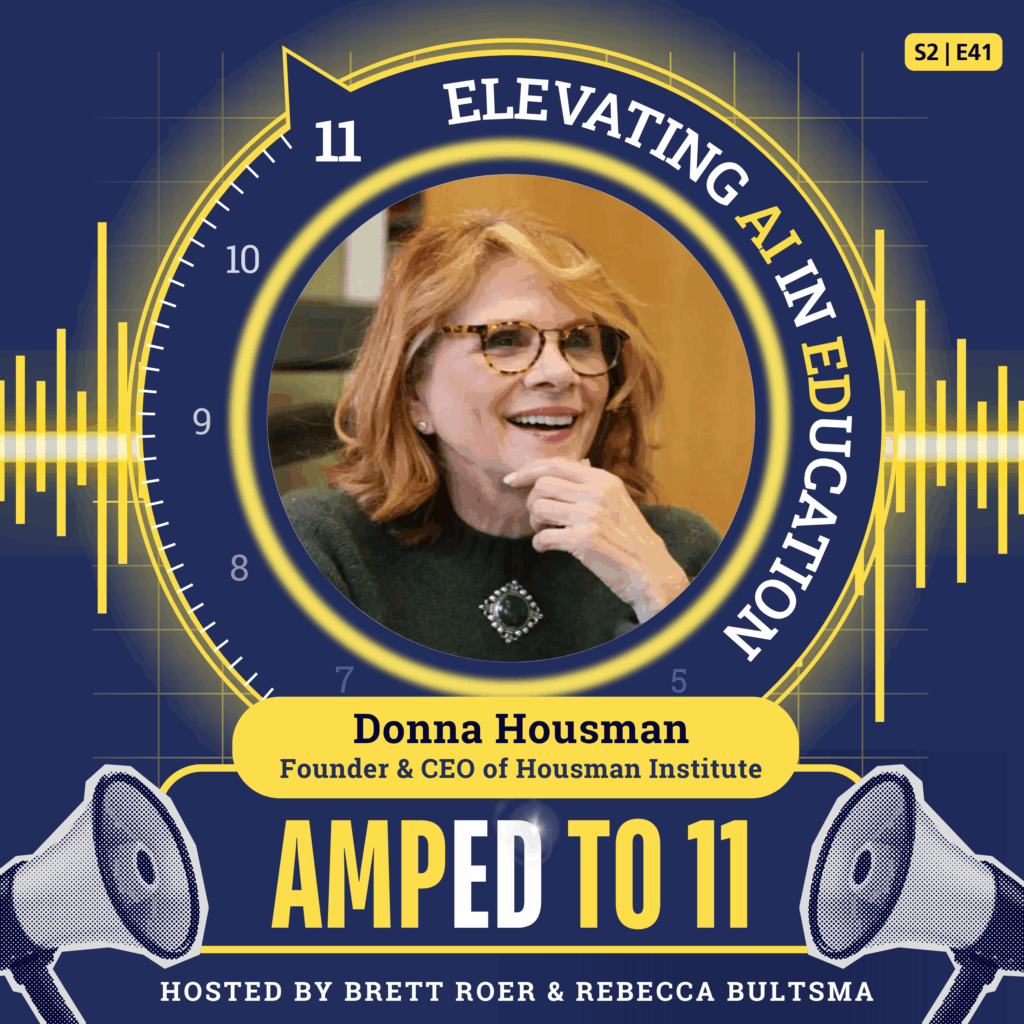
Brett Roer: Welcome everyone to today’s episode of the AmpED to 11 Podcast. We have an incredible guest here today, Dr. Donna Housman, and I am so honored to be joined by our incredible co-host, Rebecca Bultsma. Rebecca, share with the world what you’ve been up to since our last episode.
Rebecca Bultsma: Oh, so many things. So many new AI models to experiment with, so little time, so few tokens to do all the things I wanna do.
Rebecca Bultsma: I hit my rate limits all the time. Uh, but I have just, uh, wrapped up a f- big final research project, uh, specifically on deepfakes in K-12, which was fascinating, and leadership implications. Probably fascinating only to me, but I’m excited to talk about broader, more universally interesting parts of AI in education and childhood development with Donna today.
Rebecca Bultsma: But before we do that, what have you been up to, Brad? I know you’ve had a few very interesting side [00:02:00] projects on the go. I don’t know if you’re waiting for a big reveal on those, but, uh, what have you been up to?
Brett Roer: I have been traveling this great country more so than I thought I would this summer, but they’ve all been really incredibly meaningful visits, mostly to school districts.
Brett Roer: Really spending a lot of time and going deep in some very rural school districts and very rural towns, and learning, like, so much about their community, the impact, especially that AI’s having, and how some districts are finding ways to really integrate it, and some are really seeking more answers. But the thing that’s been most encouraging when we build these AI playbooks around the country is just how much people want to have a voice and to feel seen and heard, not just in AI, but in education in general.
Brett Roer: And if you can use AI to do that, that’s a pretty good use case. So excited to share all those learnings in the near future with everybody and keep powering those districts. So thanks, Rebecca. It’s been a really good couple weeks. Another thing that I’ve been really excited to do is introduce Donna Housman, the founder and CEO of Housman Learning, to the AmpED to 11 audience.
Brett Roer: So [00:03:00] Dr. Housman, thank you for joining us today.
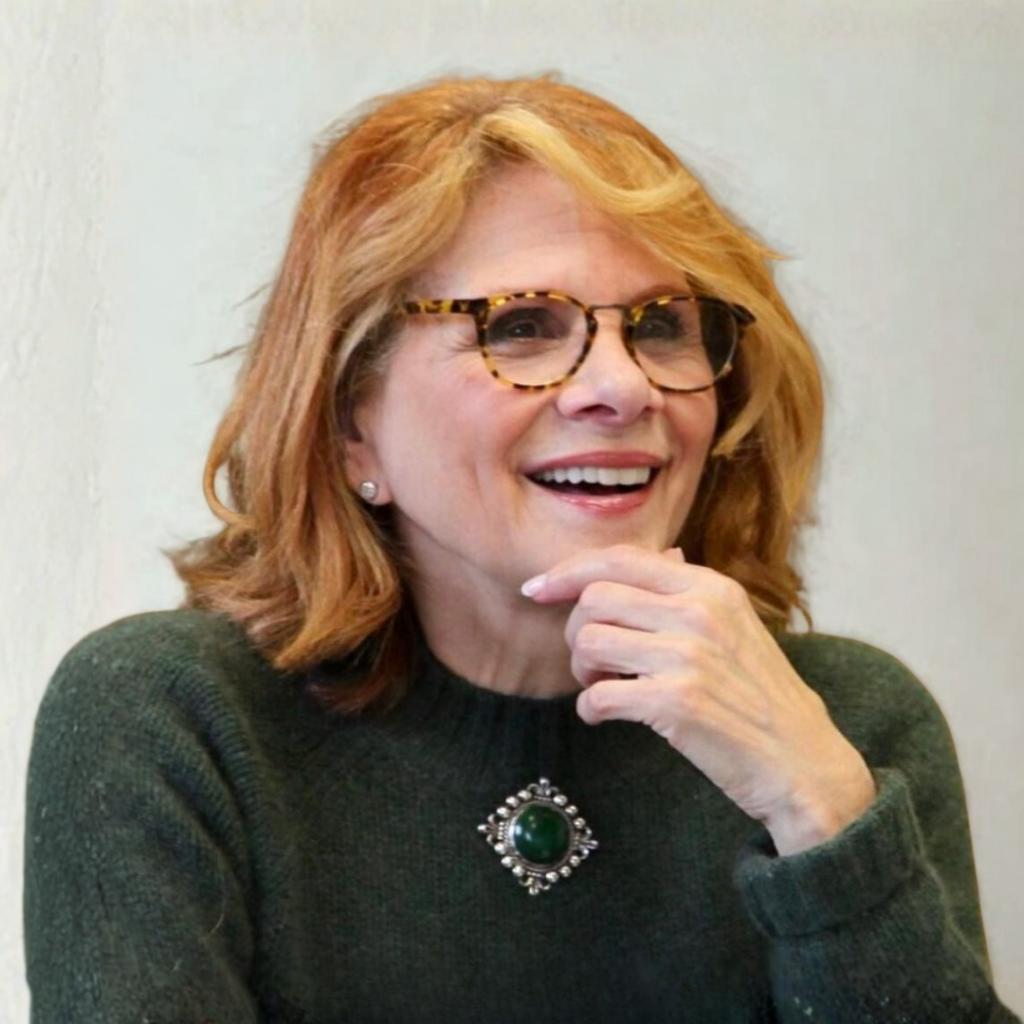
Donna Housman: Well, thank you for having me. I’m delighted to be here, and I’m really looking forward to this really important and meaningful conversation. You know, I’ll tell you a little bit about my journey getting here. I started out as a clinical psychologist working with children that were very depressed, suicidal.
Donna Housman: My first patient as a doctoral student, I was young. I was 23 years old. His name was Billy, and he was referred because he had tried to take his own life. He was four years old And Billy was the first of many. In the first, in many years that followed, there were a stream of children depressed, suicidal, out of control, and underneath every one of these kids was a common thread, and that was an inability to manage big emotions.
Donna Housman: And so I thought at the time, I was [00:04:00] wondering if we could teach children very early, from birth, when the brain is developing very rapidly and can be informed and shaped by their daily experiences and relationships, and help children begin to manage their first universal language, which is that of emotion, learning how to manage their emotions and understand the emotions of others, and at the same time, support the adults in helping them become more aware of their own emotionality and how to manage their triggers and stresses, because we know that children develop in the context of relationships, then we could really change the trajectory of children’s development and set them on a path of healthy brain development and success in learning and in life.
Donna Housman: And that’s what we did. The seeds that grew into Hausman Learning and knowing that it’s far [00:05:00] easier to prevent than repair, and Billy is where it started. And for over thirty-five years, I’ve been asking and studying one question Which is what are the emotional foundations that children need in order to grow, learn, and thrive?
Donna Housman: And I founded, many decades ago, an early learning school called Beginnings, where we built and we practiced and we researched and implemented this evidence-based model that was created, which we call Excel. And Excel is an acronym for Emotional, Cognitive, and Social Early Learning. And it was proven through extensive research that it worked very significantly.
Donna Housman: And when we compared the children that went through the program to the children that were the control group, the numbers were very [00:06:00] significant, showing that the children outperformed significantly the control group in emotional intelligence, self-regulation, empathy, executive functioning, and learning.
Donna Housman: And so that led me to then launch Hausman Learning as it is today, and to bring this to as many children as possible, all children, because we know all children, their first language is that of emotion. And what Hausman Learning really does, it’s a, an organization for children from birth all the way up through second and beyond, second grade and beyond.
Donna Housman: And we provide solutions in really promoting both the educators’ emotional wellbeing and the children’s mental health and learning. And we help teachers and leaders learn how to manage their own emotions first so they can model and guide and support children in developing these [00:07:00] same competencies.
Brett Roer: Oh, that’s incredible.
Brett Roer: You know, before we dig in even further, you know, as someone who has, you know, someone who falls in that age range, I have a six-year-old daughter, and as a former educator, I’d love to hear, like, what’s something that is really well-intentioned that maybe an educator might say prior to going through your learning that maybe would be, like, a shift after your learning?
Brett Roer: Like, what, what would that look or sound like as just, like, an anecdotal example for folks out there?
Donna Housman: These children are really out of control. We need to get them to really be in control. And, you know, we’re doing time out. We’re, we’re, you know, trying to tell them that this behavior is bad. It’s not okay.
Donna Housman: This is what we really need to be doing because you’re not learning, and you’re here to learn. And so what we would do is we would come in and totally understand the frustration and stress of the educator, because they’re under a [00:08:00] tremendous amount of stress, and also carrying their own stress as well, and having to deal with these children that really can be off the wall at times.
Donna Housman: And what we really do is we really then begin to help the educator begin to understand what their own emotions are, their own feelings are in response to what they’re having to deal with, and then help them begin to understand what they can become more aware of in terms of what’s triggering them, what they think is going on for the child, so they can start to begin to become more curious about what’s causing these children or this child to be out of control.
Donna Housman: And when we can start being curious about what’s going on, then we can start to begin to be more with the child and helping the child begin to become more aware of their own emotions and how it’s getting expressed and the [00:09:00] impact of what is created by how they’re expressing this out-of-control behavior, and begin to help the teacher help the child understand those reasons that’s causing this to happen for them.
Donna Housman: Learning about what these reasons are really gives a child more information to be able to, with the guidance and support of the teacher, to begin to start to work out, “Well, just because I’m really angry that I wasn’t included in this group discussion with some of my friends, that doesn’t mean that I have to act out.
Donna Housman: There are other ways for me to deal with this problem that’s going to help me have a much better outcome and make me feel better.” And that’s where we’re helping the teacher learn how to help children develop problem-solving skills with the support, again, of the teacher to come up with different [00:10:00] solutions that allow them to work through the problem so they can continue to move forward, engage with peers, play, learn, all the things that kids need to be able to do.
Rebecca Bultsma: Donna, let’s talk about the intersection of the work that you’re doing with kind of this evolving AI technology a little bit. What have you noticed about your work and where these intersect, and how do they intersect, if at all?
Donna Housman: Well, the– l- let me start with this, that both are very important. In terms of the work, emotional intelligence is critical, and I’ll explain a, a little about that in a moment, and AI also is very important in terms of what it provides as a tool, as information, as knowledge, as efficiency.
Donna Housman: All of that is critical, but if you don’t have [00:11:00] the emotional intelligence foundation, the ability to be able to manage and deal with your own emotions, understand the emotions of others, be able to problem solve, develop critical thinking skills, be able to collaborate, communicate, you know, self-regulate and, and be empathic, all of these skills that are not downloadable, then those skills are not going to be developed in time before AI gets layered on top and becomes a thinking substitution for children who haven’t developed those skills to be able to do that on their own and be able to develop the skills to allow them to question things.
Donna Housman: You know, not just to accept the information that’s being fed to them, [00:12:00] but to really be able to have a strong enough sense of self that they can then say, “Well, that’s interesting, but I’m questioning this, and, and why are you saying this versus that?” And that is a skill that is so important when you’re interacting with AI, so that AI doesn’t become the substitute for children’s thinking.
Donna Housman: And the other part of it is, is that it’s also because it is so available to, to people, it never gets tired, it never goes to sleep, it never gets cranky or irritable, that it is so much always available that when children are really struggling with things, they’re turning to the least resistance. They’re turning to AI today as a companion, as a friend
Donna Housman: for mental health, and also at times [00:13:00] just to escape away from what’s real. And we’re not just talking about a small number of children. We’re talking about children in the 42% range today of children are turning to AI for those kinds of, you know, experiences that really require a person to fulfill And not a machine
Brett Roer: One of the biggest takeaways I’ve had in doing wisdom collection with, you know, usually young adults like teenagers in some of these rural communities is I ask them questions like that of, you know, have you interacted with AI tools or chatbots in the way you just described, Donna?
Brett Roer: And most of the ones that speak to me about it, they do talk about advice. It’s much more– It’s usually technical advice, like how to navigate, like, a situation. But when we ask– I ask them, “Do you have, like, friends or have you heard of this?” et cetera, they all, they all definitely have heard of [00:14:00] this or have friends that use it.
Brett Roer: And when you really teased it down to, like, well, why do you think you don’t use it and they do? A lot of the times they bring up, like, these might be personal problems that they don’t feel comfortable going to their friends, the counselors, their teachers, or a parent. And so, you know, when I share that back with communities, that’s really what I focus on is like, I don’t– It doesn’t really matter to me how you feel about the students using it, but let’s acknowledge that’s a very valid reason why someone would use this today, right?
Brett Roer: It’s not the best choice. I’m not saying it’s the best or worst choice, but I’m saying let’s acknowledge at least why, and maybe we work backwards as a community to figure out how do we get them to feel like there is that caring adult they can go to with these really difficult teenage situations. So Donna, it sounds like that’s one of the ways that you’re trying to mitigate this is making sure that educators have those skills to make the students feel like they’re a trusted, caring adult that they can go to for these kind of situations.
Brett Roer: Is that-
Donna Housman: Right. And [00:15:00] absolutely, that’s spot on because, you know, for children that, that have that foundation, that have that ability, that they have stable relationships that, that are available, they, they can go to these relationships. But for children who are feeling more isolated or dysregulated, those children are tending more so to go to the machine.
Donna Housman: And we need to really take a look at this because this is, you know, front and center today and, and children are letting us know that, you know, and, and, and at times they’re feeling less connected with not only the teachers in the classroom with, with AI being available, but also their peers. And it’s making them feel, as I said a moment ago, you know, more [00:16:00] alone and more isolated and more disconnected and feeling depressed about it.
Donna Housman: And again, that’s not the direction we really want to encourage. We want to be able to put enough protection in there so that AI can be used as a wonderful tool because it is a really amazing tool. But again, not as a substitute for a relationship
Rebecca Bultsma: Donna, I, I’m thinking about a little bit more about how whether or not this is like an AI problem or if it’s like a just a shortage of good adult access for kids. But is there an opportunity if, if these tools get more reliable or better guardrails or whatever that looks like That the AI might be a good option as opposed to nothing?
Rebecca Bultsma: Like, do you see us getting to a place where, let’s say, [00:17:00] kids who do not have access to adults like this in their life, can you see it getting to a place where there are tools, AI tools like this available that can help support kids who don’t have a better option in the midst of like a loneliness epidemic or, uh, you know, all of these things kids are struggling with?
Rebecca Bultsma: I think, I think that the reality of there being a, a responsible, caring adult, uh, for every child when they need one, you know, not to be a pessimist, I just think that’s something we’ve been struggling with as a society for a really, really long time. Um, is there a world in which this can offer us somewhat of a reasonable substitute, uh, as opposed to just giving kids nothing?
Donna Housman: And, and Rebecca, that was what I had been struggling with too for so long. That, I mean, in terms of the question about, you know, how do we provide this to children that aren’t as fortunate as maybe another [00:18:00] handful of children that are? And, and that was one of the reasons I was so passionate about starting this program to train all teachers and caregivers and leaders that are the main people on the front lines that are working with children, how to help children develop these foundational competencies so that they can benefit from and utilize these amazing tools without having to end up feeling disconnected, alone, isolated, and, you know, kind of give over their author of being, you know, having the, be the author of their own thinking.
Donna Housman: And, and that is what we do. Because we want all children to be able to have this foundation, to [00:19:00] be able to learn how to, you know, manage and regulate these emotions, how to problem solve, how to engage in real fostering critical thinking and collaboration and cooperation and, and, and problem solving. All of these things that we need before we go and have a machine, you know, help us continue to learn about things that are really important.
Donna Housman: So like for example, with a, with a young child, you know, people ask me, “Wow, are you saying that young children shouldn’t have a device?” And I’m saying, “No, I am not saying that. What I am saying is how it gets used.” So that, for example, when a young child is curious about why is the sky blue, going to the device is, is perfectly natural [00:20:00] and, and can be great in terms of helping the child with their curiosity about understanding this.
Donna Housman: But if child is going to the device with frustration or anger or sadness or fear, that is not going to be able to give the child what they need, because what they’re needing is they’re bringing these big feelings to a machine when they need to be bringing it to a person, so that the person can be the one to help respond.
Donna Housman: That serve and return kind of response. The child says something, the adult says something back in order to continue that conversation and work through whatever is being discussed. That is what requires a person to be able to do. And so when that can happen, [00:21:00] then the adult needs to be able to understand that’s their cue to lean in.
Donna Housman: When the child is bringing their emotions to the machine, that’s when the adult needs to lean in
Rebecca Bultsma: I have kind of a, a gray area question for you, Donna. Um, in my experience with these models, they’re getting really good at doing that, that back and forth. They’ve been highly trained to read, um, voice cues and tones and things like that.
Rebecca Bultsma: Is there a- again, a scenario where an untrained, more like emotionally dysregulated adult might be, uh, less of an ideal option than a specially trained AI that’s good at coaching, I don’t know about a child, or, you know, through it sounds like this, you know, s- that is could be potentially trained on your full system depending on how unethically these models were trained and [00:22:00] absorbed your system.
Rebecca Bultsma: Is it a highly trained, specialized AI tool or a dysregulated human adult?
Donna Housman: Um, I don’t think it’s an either/or like that. You know, I really think that both really need to be looked at, you know? A- and it’s not one or the other. It’s really talking about a sequencing, period. And, you know, again, I’m not banning or saying let’s ban AI at all.
Donna Housman: I’m saying let’s just look at the sequence. Let’s make sure that our kids have those foundational skills in terms of education, in terms of learning. You know, we talk about math and science and, and reading and all those critical skills, but unless we build that foundation where children, you know, have those skills that we’re talking about, you know, the [00:23:00] curiosity, the, the ability to sit with frustration when they’re learning about something new and they’re not getting it, but they can sit long enough in order to learn it and, and be able to deal with all of this, that is what we wanna be able to provide to the children first so that they can then enjoy and benefit from all of the wonderful, you know, opportunities that the tool can do now.
Donna Housman: And it’s changing so quickly, and like you’re saying, Rebecca, who knows what’s going to happen, you know, two weeks from today or two months from today? People used to think that, oh, this is years away. Well, it’s not. It is changing so rapidly. And given that, we really need to keep our eyes also on our children to make sure they’re prepared to deal with what is [00:24:00] happening, and that’s our responsibility, and we have the opportunity to do that.
Brett Roer: Well said. I mean, this is the fun– I mean, this is the fun part of really interacting with both of you. It’s not- There’s no easy answers or easy solutions. If there were, we would’ve probably solved it by now. But, you know, having these deeper conversations and letting our audience hear that, you know, there’s really passionate people who’ve dedicated their life to this type of research and development are trying now to take what is possible with the use of an AI tool and try to scale it.
Brett Roer: And Donna, actually I’d love if you could share a little more about that journey that you’ve had with Housman Learning, right? You said you s- it starts with Billy. It starts with a single school. Maybe share with people over the past 30-plus years where that growth has now taken you and, you know, kind of where you’re looking to do next
Donna Housman: Well, you know, my dream, my goal, my mission is to have as many children as possible [00:25:00] benefit from this program, because we see the results.
Donna Housman: We see what’s happening. It’s been proven multiple times with very significant outcomes. Because, you know, it’s one thing to say something is working and it’s working well, and it’s another thing to research it really heavily to make sure the numbers are showing it, and you have the numbers as the foundation to really be able to show that this is working, and to continue to track children when they’re learning and, and involved in this, this program, and that is what we’re doing.
Donna Housman: And really being able to work with children in all areas. You know, we’re working with children that, you know, in terms of on the socioeconomic spectrum from, you know, children that are really, you know, struggling fin- you know, families are struggling financially, in [00:26:00] Head Start, you know, broken families, to families that may be broken still, but they’re, you know, in higher middle class environments.
Donna Housman: It works with all children. You know, the school we had, we had children from all over the world at the school. They were speaking 11 different languages. And we had some cultures that were saying, “Emotions? No, emotions are a weakness. You know, that’s a soft skill. You know, what are you doing here?” And so we would share with them, we would explain, and then, you know, they listened.
Donna Housman: But then when they started to see the changes in their children, they were in, and they really then want to see, “Okay, what is this? I’m seeing, you know, my interactions and with my children at home are so much easier. We’re talking about things. It’s not just, you know, getting into tantrums or slamming doors or walking away.
Donna Housman: We’re really having [00:27:00] conversations about things and feeling more connected. And then the times that, you know, we can be together are more joyful as well.” And so they, you know, those kinds of, of skills that, that children are learning are meant for everybody, and we’re seeing it across the board that it works with all children, and it’s working with the adults too.
Donna Housman: And so, you know, we’re in Palm Beach and, you know, with the Early Learning Coalition there, and, you know, they are very excited about what they’re seeing in terms of the changes, not just in terms of the children, but one of the things that most of the programs were in love about it is that we really focus on the educator and on the leader.
Donna Housman: We are really working with them first. It’s kind of the oxygen mask rule, really helping them become much more aware of their own emotions, and we’re doing [00:28:00] that kind of reflectively because we do, you know, live coaching with them as well, as well as, you know, the, the courses that are very engaging and lots of videos and, and, and so forth.
Donna Housman: Um, and they are really learning how to become much more aware of their own emotions, what sets them off, and how to respond in different ways that are better for them and the people they are in a relationship with, and whether it’s at school or they’re also talking about how their relationships at home have improved dramatically because they’re learning different kinds of ways to communicate.
Donna Housman: We all typically, in the heat of the moment, we all typically either do one of three things We either shut down when we’re in a, you know, a conversation, let’s say, with someone or, and it becomes a disagreement and, and the emotions are really, really rising, and it’s at the heat of the moment. We shut [00:29:00] down, we walk away, or we f- explode or feel as if we’re going to explode, and that’s normal.
Donna Housman: Those are the responses that happen when the brain gets overwhelmed with emotion, becomes really dysregulated. The brain no longer can think, reason, or learn, and it sets out certain stress hormones that put us into this one of three-way reaction. It’s called the fight-flight-freeze response that I’m sure you’ve heard a million times, and that’s typically what happens.
Donna Housman: What we’re doing is we’re coming in and helping them relearn ways that don’t leave them shutting down, walking away, or exploding, but give them tools so they can work through the problem and get to the other side and feel better, and then be able to engage in learning and discovery and [00:30:00] exploration and not have the emotions control them and take over.
Donna Housman: And oftentimes we tell the children, “We’re going to help you become the boss of your own emotions.” And if you’ve ever told a child that, and instead of their emotions being the boss of them, kids can’t wait to get involved in this. “You’re gonna help me become the boss of my emotions?” And they’re engaged, and they wanna learn, and they wanna talk about their emotions, and they are s- excited that adults wanna hear about how they’re feeling and wanna help them with this huge backpack that they carry into school every day filled with big emotions.
Donna Housman: That’s what they’re looking for, so that these emotions don’t have to stop them and get in the way from them being able to access thinking and reasoning and problem-solving, [00:31:00] those executive functioning skills that are critical for learning. And emotions prevent that from happening because, as I said, an overwhelmed, dysregulated brain cannot think, reason, or learn So this is something that the program really is trying to help the adults and then also help the children.
Donna Housman: And we have tools for the children to practice on, to practice these skills, and they love them. Going to the peace table, which is a problem-solving tool, being able to work it out. You know, kids are getting into conflicts a million times a day, and when they have the ability to know that they can go to, quote, “the peace table” and work it out, and there are steps they follow to be able to have their feelings, but be able to learn how to m– you know, calm down so [00:32:00] they can access their thinking, so they can say what the problem is and what they’re feeling and what are some ideas we can come up with to work it out, and then choose a plan and follow through, and then revisit how they’re feeling and know they’re feeling a lot better now than they did when they first entered the situation.
Donna Housman: That leaves a child feeling not only great that they were able to solve the problem, but they’re feeling a sense of agency and self-control, and they’re no longer dependent upon the adult, the teacher, the parent to say, “You go do this. You go do that.” They’re starting to learn how to do it on their own, and this is going to be critical in all aspects of their life.
Rebecca Bultsma: I like that idea of agency. I think that, like in my field of AI ethics, that agency is something we talk about a lot, uh, just in terms of, you know, how reliant we become on these tools or, or kids become on these tools. And, you know, if a machine’s [00:33:00] syncretic, do you– are you able to discern that and determine, uh, your own, uh, how you’re feeling about something or what’s really happening in reality and making your own decisions and things like that?
Rebecca Bultsma: Especially when even as adults, these AI tools can be very persuasive, these algorithms, and we need to be able to think independently of what we’re being told or fed by these machines. So I appreciate the work you’re doing. I think this is that idea of developing autonomy and agency and self-regulation will be so critical as we increasingly interact with these machines that are so, um, persuasive and good at reading things and telling us what we wanna hear, um, or, you know, maybe what we don’t wanna hear, but we don’t know it.
Rebecca Bultsma: And so I, I think that’s– those are important skills for everyone to develop. And it would be ideal if everyone could develop them in, in childhood, um, you know, prior to relying on AI. [00:34:00] Um, so-
Donna Housman: And, and, and that’s the hope that if we can start now in feeding these children and, and supporting these children and the adult in helping, as you’re saying, Rebecca, to develop these so critical skills that will be critical in their interaction with AI as well, then, you know, that is what really needs to happen so that it really then becomes part of the architecture of the brain for life.
Donna Housman: And it’s no longer… You know, we can, we can teach kids later on, you know, and we– and as adults, we can learn things, but we know that it’s different when you have to unlearn something first and then relearn something that it’s not as easy as it is if you start in terms of at the beginning as a prevention instead of as a repair.
Donna Housman: And so, m- you know, [00:35:00] that is the goal, is to be able to do that. So as you’re saying, Rebecca, those skills are really present within the child, within the adult, so they can interact in wonderful ways and hold onto who they are. You know, I’m, I’m so reminded of, of, of E.E. Cummings in this because, you know, he had said that, and I’m paraphrasing, that he had said, “One of the hardest battles we’ll ever fight and have to keep on fighting is holding on to who we are, because the world around us is continually trying to make us into everyone else, and it’s the most important battle we’ll ever fight.”
Donna Housman: And that has been something that’s been with me my whole life.
Brett Roer: That was an amazing closing because it, y- obviously highlighted someone who [00:36:00] you value their thoughts and opinions on this field. And, you know, as you know, one of the things we do here at AmpED to 11 is we try to highlight those people who have, you know, inspired you, you know, the people that, dead or alive, are leaders in this field that you would want either their thoughts or their current practices as part of, like, your dream team to continue this important work in early childhood education and development.
Brett Roer: Who are some of those people that come to mind, you know, when we, when we ask a question like that to you, Donna?
Donna Housman: Yeah. And, and that is a really interesting and important question because there have been so many people from different areas that have impacted me in my thinking, in, in, in my world, in my life.
Donna Housman: You know, w- if I’m thinking, obviously, in terms of this conversation right now, I’m thinking of, of one person immediately that comes to mind. His name is Dr. [00:37:00] Gerald Steckler. Um, and he chaired the, uh, Department of Child Psychiatry at BU Medical School, and I was on the faculty then, and I was there with him.
Donna Housman: And he was my mentor, he was my friend, and, you know, he was so important in my life, and he was also on the board of the school. He’s now gone, but he was the person who taught me how to sit with a child instead of solving a child And that really resonated s- so much with me, through me. Because if we think about what that says, being able to sit with someone when they’re distressed, when they’re upset, when they’re angry, instead of trying to quickly solve it or, or move on or say, you know, “What do you have to be upset about?
Donna Housman: You’re fine.” You know, to be able to sit with a [00:38:00] child, or even with an adult, who really has an important, you know, struggle that they’re, that, that they’re dealing with or emotion or whatever, that is the gift. We’re not there to solve it for the child. The child needs to know that it’s safe enough to have the person be with them and be supportive of them as they’re having this problem and not give them a message as if the emotion is very bad or negative or something is wrong with them for having it So he was one person that comes to mind.
Donna Housman: You know, another person is Dr. Howard Capraro, and he also, he heads the biostatistics program at VU Public Health, and he is head of biostatistics and research. And he is a colleague and a friend, and he was on all the research papers with me, and he is an amazing person [00:39:00] and w- who kept me really honest, to the point at times where I was pulling out my hair because there were so many things.
Donna Housman: He was saying, “No, you gotta get rid of this, you gotta get rid of that.” But he was also very instrumental because he understood that in doing research, you have to learn about the person. He was not the type of researcher that just looked at numbers or graphs. He really wanted to understand the person, and he had his grad students who were collecting data during the time really engage with the students so they had a sense of what the numbers were going to mean.
Donna Housman: And that is unusual for a researcher. And then th- one other person that comes to mind to watch, and I think this is something that is really, you know, quite important, um, is Dr. Ed Tronick, and it’s called the f- Still Face Experiment. And I don’t know if either of [00:40:00] you have ever seen it, but it was-
Rebecca Bultsma: I have.
Rebecca Bultsma: That one’s fascinat- fascinating.
Donna Housman: Isn’t it fascinating?
Rebecca Bultsma: Do
Donna Housman: you wanna say a bit-
Rebecca Bultsma: I think about it a lot, actually. Well, if, if I’m thinking about the correct one, it was, uh, you know, children looking to their mothers for regulation, and they had, was it the mothers or the caregiver stay completely, um, stone-faced and not give the child emotional cues, and it caused all this confusion.
Rebecca Bultsma: Is this the experiment that
Donna Housman: we’re talking- Yes, you have it pretty much correct, but let me just add a couple of things. It was a baby and a mom, and the baby, you know, they were engaging, they were interacting, and then the mother was told to turn her face away, okay? So she turned away for about 60 seconds, okay?
Donna Housman: That’s a long time. Yeah, 60 seconds, and the baby st- at first started to reach out, you know, like, “Where [00:41:00] are you, Mom?” Reaching for her. Started to squeal, started to s- you know, cry, started to unravel, and just became unraveled at that point. And the mother turns back and starts to reengage. And in very short order, the baby started to come back, started to reengage and connect with the mother.
Donna Housman: But what that was, was so fascinating about that is that the baby You know, didn’t unravel because the mother left, but the mother turned her face away, okay? And that turning of the face and that lack of response, really it was a lack of response, it was causing the rupture. And when you notice that, and when you [00:42:00] watch this video once, as you said, Becca, it was fascinating.
Donna Housman: You will never again believe a screen is the company for a lonely child.
Rebecca Bultsma: Yeah. It also makes me think of distracted parents who are present but have their face in their own screens, um, when their children need their attention, and what that does to emotional regulation for a child, and how they attempt to engage.
Rebecca Bultsma: And then eventually, like I, I believe in that experiment too. There was some discussion around the more that happens, how kids then cope with, you know, how they just give up or how they find other ways to comfort themselves and they stop relying on the parents.
Donna Housman: Exactly. And, and that’s not an unusual, if this were to happen for longer periods of time, because we’re talking about a minute here, and most ruptures can, you know, happen, you know, in, in a short order.
Donna Housman: There’s, there’s a conflict or a disagreement, but then that [00:43:00] can be repaired. But when you’re talking about ruptures where parents are unavailable for long periods of time, that is something else, and that’s really more about what you were, I think, referring to, is that extended period of time. And these children, their coping mechanism is…
Donna Housman: And typically what happens is they, you know, they start to turn away. They start seeking out other means to get their needs met. And, you know, sometimes it can lead them down not a great road of getting their needs met through things that can make them feel better, whether it may be alcohol or drugs or whatever it may be.
Donna Housman: And, and that’s not what we want to have happen.
Brett Roer: Yeah. Donna, I wanted to share, obviously not, not from a research-based perspective, but I would love to know, and I might just start doing some of this research on my own for the book we’re writing about, you know, being a present papa. [00:44:00] But also in this recent work I’ve been doing with Wisdom Collection, I’ve been working with some student athletes and talking about like what’s the, what’s the load outside of, off the court or off the field.
Brett Roer: And when we talk about dynamics with their parents, this one student athlete, she said something like I love my mom and she’s my best friend, but it is so hard to have a conversation with her when she’s looking at her phone. And we were talking about like, I mean, that’s the parent workshops we really need to be talking about is how to be a more present parent.
Brett Roer: I think if there was data or statistics like the one you just brought up about, you know, very young babies and how that leads to these outcomes, I think if parents heard just that, I think that would just be like such a stop you in your tracks have to make you reflect on your practices, and then I guess whatever tools you would need to start.
Brett Roer: But I think that would be like the most eye-catching fact that could really help people start to shift, like, where we are in this culture with screen time for [00:45:00] parents?
Donna Housman: It, and, and that’s such an important point, Brett, because parents are so important. Again, as I said earlier, parents are children’s number one teacher.
Donna Housman: First teacher, I should say. And the other thing about being a parent is that it’s probably the hardest job we’ll ever do in our lives. There’s no manual how to be a parent, and so typically what we do is either we, you know, adopt what we had as children growing up, or w- we do the reverse, and neither may be the best thing for our relationship with our chil- children.
Donna Housman: And we don’t have, you know, any kind of training, if you will, and, and these things that we’re talking about. And so parents do need what you’re talking about, Brett. They do need that support. They do need that information. They do ne- need that knowledge because they are seeking, and, and they are hurting as well.
Donna Housman: And if they had [00:46:00] more information too, to be able to support them, that would be very helpful, not only in terms of their engagement with their children, but just in terms of their own sense of self.
Brett Roer: I would love to pivot, and maybe you could highlight what’s a district out there or an organization that’s right, that’s recognizing how important this work is, you know, at the birth to e- early elementary stage that you’ve either partnered with or you’ve just seen that you really would love to highlight at this time?
Donna Housman: Okay. Th- the first system of schools in person that comes to mind is the Early Learning Coalition of Palm Beach County that I mentioned a moment ago. And we have been there, we started with them over a year ago, and the lead CEO of that Early Learning Coalition, her name’s Aruna Gilbert, and she is amazing.
Donna Housman: And what makes Aruna so very different from many [00:47:00] people that I have engaged with is that, you know, she, she looks at it not as just a different program. What she’s really tuned into, she’s tuned into all at once, she’s tuned into the children, she’s tuned into the educators, and she’s tuned into the parents.
Donna Housman: And most systems just really pick one, and they’re hoping that the rest sort themselves out. But Aruna is involved in all three, and she sees this program as being so instrumental in terms of making a real difference, again, not just in one of the, of the, you know, groups of people I was just talking about, but in all of them.
Donna Housman: And, and not in a very long time yet either. And, and the fact, in terms of what she talks about, that [00:48:00] again, is so important, is that this is the first, you know, approach that really looks at helping and supporting the adult. And the adults are hurting, and they need this, and they need the support, and they need the skills to be able to do the job that they went in, passion, mission, to really work with children and help children learn and develop, and they’re needing the support so they can do what they entered the field to do and do it well
Brett Roer: You’re, you’re laying out the blueprint for success, and so kudos to the West Palm Beach Office of Early Education.
Brett Roer: You know, here, right here in New York City, it’s a really exciting time. You know, I have many friends, former colleagues who h- are raising their families in New York City, and you know, they’ve experienced so many benefits, and hopefully it retains, you know, working families in New York because of [00:49:00] the initiatives around universal pre-K, then 3-K, and now we’re expanding to 2-K.
Brett Roer: Really exciting time. What advice would you have for a system like New York City as they’re rolling out these new initiatives to make sure they’re thinking strategically and, you know, getting it right the first time so we’re not causing things, I think you said before, right? We’re not, we’re not gonna have to be reactive, but we can be, like, proactive in, in getting this right.
Brett Roer: What would your advice be?
Donna Housman: Well, first of all, I think what New York is doing is, hats off to them. I think it is so important, so needed, so necessary, and so wonderful. And, and two, 2-year-olds really is exactly where the public money belongs. You know, you know, if they could do it younger, fine, but it, 2 year old is, is fine right now.
Donna Housman: It’s, it’s wonderful, and the most [00:50:00] upstream investment a city can make, truly. You know, and I, and I believe that the first year is around 2,000 seats that they’re rolling out, and then it’s going to be moving, I think, to 12,000 seats. And at that speed, that is amazingly quick. Um, and, and I… What I remember reading about, too, is that in the first rollout, I think three times as many families have applied for seats than exist, and that tells us about the need out there.
Donna Housman: And, you know, what, you know, I think about is the speed, as I said, about this, this rollout is, you know, the bottleneck. What’s gonna happen? What’s going to be the problem here? Because it’s happening really quickly. And I don’t believe it’s the seats that’s gonna be the bottleneck. I think the bottleneck are the adults You know, and, and when I listen to the adults, I’m talking about the [00:51:00] educators right now.
Donna Housman: You know, when I’m listening to, to the adults, you know, they’re talking about what they’re needing. They’re ta– and, and, and what they’re asking for. And today, you know, 65% of elementary school teachers are saying that they need more classroom management training. Again, back to how children are really so, you know, out of control today.
Donna Housman: And that’s up from like 50% only what? Back in 2022.
Donna Housman: And so that is really climbing, and that gap isn’t gonna close because we’re adding more seats. What we’re really needing in, in terms of really supporting this important and necessary initiative is really focusing on the adult and supporting the adult and providing the type of training that the adult [00:52:00] needs to prepare them to be able to work with young children.
Donna Housman: And, and it’s not the same– You know, sometimes people think, “Well, you know, I’ll take a kindergarten teacher,” or, “I’ll take a first or second or third grade teacher, and they, they know how to work with young children. We’ll put them in with these little ones.” It’s not the same thing. You need someone who learns about developmentally what’s happening with children because their development within these first five, six years is happening so rapidly and changing so quickly.
Donna Housman: And understanding what’s going on allows you to really help these children in promoting and fostering this growth and this development. So we really need to be putting money and resources into funding the adult and helping them have the skills, the support, and the capacity to be what, what they need to be and also to [00:53:00] bring to the children what the children need in developing and growing, and again, setting this foundation that is so important for children, and they have the opportunity to do that from the beginning, not as a repair, but as a prevention.
Rebecca Bultsma: Donna, I ju- our podcast is really, um, we try to really give solutions and support to people who are trying to navigate the AI and education intersection here. What advice do you have for this age group specifically, uh, parents of this age group, teachers of this age group about AI? We’re encountering a lot in classrooms of debates about whether or not AI or even technology even belongs in the classroom, especially at this age, but even all the way up.
Rebecca Bultsma: I’m curious what your opinions are on this. Personal opinions, whatever. Like, what do you think? As an expert, I know we’re trying to stay balanced with AI is good. You know, it’s– everything’s good in [00:54:00] moderation, all things balanced. But you’ve been doing this for a while. I, I wanna hear kind of your expert perspective on this.
Donna Housman: The reality is AI isn’t going away, so that is a given. It’s here. And the reality is that children develop in relationships. They don’t develop in the cloud, and that’s real. Children are relational, all right? AI provides the efficiency, but children are relational, so we need to be aware and looking at both.
Donna Housman: And, you know, when I, I talk to a parent, and they say, “Well, you know, should I– what should I do?” Mm, the same question, Rebecca, a similar question that you’re, you’re, that you’re posing. “And should I keep the devices away from, from my child? And, you know, is it bad that I, that I allow my child to have a [00:55:00] device?”
Donna Housman: And I say to the parent, uh, and, and, and I, and I hear their struggle, and I understand it because we’re all struggling with this. And I say, “You know- The device is fine as long as it’s being used to help support a child’s curiosity. And again, if a child is wondering, you know, how does a butterfly fly? Or, you know, what are the differences between, you know, a fish that fish– that swims in the water and a bear that, you know, goes through the forest?
Donna Housman: I mean, those kinds of questions, absolutely. But if a child is scared or f- or, or frustrated or angry and they have these big emotions, those big emotions are not what needs to be brought to [00:56:00] AI. Those are the things that need to be brought to you, to a person, so that you can work it out with the child and help that child begin to understand that their emotions are fine.
Donna Housman: It’s what we do with them that’s really important, and you’re gonna help me, you know, learn what I can do that’s going to be better and make me feel better and better for others too.
Brett Roer: That was th- excellent question and great response. I think even to take it a step further, you know, sometimes teachers especially, parents especially, like If we could almost turn that into what that feels like in current day practice.
Brett Roer: So like I’m thinking of like when I was recently on vacation with my family, and my daughter had so many amazing questions about like evolution. Like, you hear like a guide is explaining something, and like you watch her like– And then like an hour later she’s like, “So what is that? Like, how does that work?”
Brett Roer: And that’s a [00:57:00] great example of it. But like I also tell them all the time like, “Yeah, like keep storing all those,” or like, “Okay, I remember your question. Like later we’ll look at a screen, like, but keep telling me all the curiosity.” I feel like parents– that’s kind of the stuff parents or teachers need to hear of is like how do you make sure like are you scared?
Brett Roer: Like are you scared about like evolution and death, and that’s a fear that like we need to talk through? Or is it like you’re authentically curious? ‘Cause I’ve seen that go both directions. So maybe like how would you give someone like common sense advice if something like that were to come up? When to– what to mitigate, what to, what to navigate as a human, like as a parent or a teacher, and then when do you like bring in a tool to address the curiosity?
Donna Housman: The questions, that’s what you’re bringing, and they’re so important because it’s with the questions that we learn. It’s not the answers. It’s within the questions that we’re learning in terms of trying to answer the questions. And that’s what you’re talking about in terms of as a [00:58:00] parent. You know, if my child is coming to me, I want them to start to think about how to answer that question, you know?
Donna Housman: And to really support their critical thinking about that, and then to kinda even go further and tease apart, well, what’s beneath this question? Is the question really about wanting to understand more about, you know, the universe, or is the question really about it-it’s something that’s so unfamiliar that it’s scaring you?
Donna Housman: It’s, it’s causing you anxiety. And that’s, again, being able to even go those different levels, Brett, is what a person can do in terms of helping that child figure it out. And then when they figure it out, then they can decide who they wanna bring it to. [00:59:00] And again, that is the agency that, Rebecca, you were talking about earlier that is so important in building in children.
Brett Roer: That’s, yeah, thank you for explaining that a little more for our f- for our, to give more tangible evidence and, like, that’s, I think, what folks need to succeed because these questions are so big and they’re getting great advice from so many places. I think just that next step is so helpful, so appreciate that.
Brett Roer: Donna, we’re gonna give you the reins here. You are now, you are now following in Rebecca’s footsteps, and you get to ask the questions. Rebecca, we always hem and haw over who gets to go first, so Donna, you can choose who you’d like to answer it first as well.
Donna Housman: Okay. So my question would be Given both of you speak about AI in education with lots and lots of people, have you ever received a [01:00:00] story from anyone about a child under five?
Rebecca Bultsma: No But I, you know, like a lot of my work more centers on high school, college age, uh, kind of, uh, kids and students and a lot of school leaders, not necessarily elementary. I have very strong feelings about, um, what types of access kids under 15 should have to AI in general. And so, um, I, I’ve never had a conversation connecting AI to children under five.
Donna Housman: I, I’m not surprised. But, you know, m- my question from that is, so then what kind of protections would you put in for a child, [01:01:00] for a three-year-old child? And who would be responsible for defending it?
Brett Roer: Donna, are you also, just to make sure to clarify the question for Becca, are you saying, like, giving a child a, like a three-year-old child, like, a screen and saying, like, “Have at it,” or saying, like, even engaging, like, a parent or a teacher with it?
Brett Roer: Like, just what, what scenario are you thinking when
Donna Housman: you say that? Well, in, in fact, you’re talking about, you know, developing policies, for example. Yeah. Great. Yeah. All right? You’re devi- you’re developing a policy. What kinds of protections, just thinking out loud, would you feel were important to put in place for a three-year-old?
Rebecca Bultsma: I think any protections for three-year-olds would fall under the purview of a parent, right? I don’t think they’re governed by any external system at that point, and so I think the best protection, I think the best protection would be parent education. I think what, if parents truly understood implications and, um, how these different things work, I [01:02:00] think the best way to protect kids would be to educate and support the parent.
Rebecca Bultsma: And,
Donna Housman: and yet three-year-olds, you know, preschools are now under the auspice of the public school system. So any kind of policies the public school system are gonna be putting into place, they’re going to be also thinking about all the children.
Brett Roer: Hmm.
Donna Housman: You know, the K through 12, but they’re gonna be thinking about the pre- preschool kids, too.
Donna Housman: And so they’re gonna have to think about protections to be putting in place for all kids, because all kids are having access to it. It’s not just the older kids. Little kids are– I mean, today, what, the, you know, some of the statistics, one in four children own a, a cell phone under eight years of age. You know, I think 45% of toddlers have a tablet.
Donna Housman: All right? So this [01:03:00] isn’t just about kids who are K through 12.
Brett Roer: Yeah, I’m gonna share, so, you know, because my children are a little bit younger, I think about this very deeply. So two things. One thing that similar– like, that statistic is, I think both me and Rebecca’s eyes went up, but also I’m, like, not surprised because in the past two weeks, one of the things I saw that really jarred me was the hotel I was staying at, you know, it was like 105 degrees in Texas.
Brett Roer: Decided to go for a walk anyway, and I’m just right across the street from this giant Walmart. So I’m like, I forgot something. I’m like, “Let me go in there and, you know, continue my walk, buy this, and come right back on my walk.” I see, like, a fa- a very young family, and they have, like, a two-year-old in, like, a booster seat, you know, and they’re pushing the cart.
Brett Roer: I’m like, “Oh, that’s cute.” And then, like, once we, like, go a little further, they have, like, a screen literally, like, you know, that’s all the kid’s looking at, where they could be looking at all the, you know, like, all the stimulation around them or that could be an opportunity to ask questions to the kid, and I was like, that jarred me a lot.
Brett Roer: I’d never [01:04:00] had seen something like that. But to go back to your initial question, I have had a lot of conversations because a lot of the districts who I’m working in, when we make these playbooks or accompaniment guides or PD, they’re often like, “Well, that doesn’t apply to me. I’m an elementary school teacher.”
Brett Roer: But then immediately if I ask them, like, if they have young children especially or if they have grandchildren, like, “Hey, are your kids on, like, devices or tablets at that age?” And they’re like, “Oh, of course.” So I’m like, “Okay. So do you assume, like, your kids, like the students you have, are probably at home on these things?”
Brett Roer: They’re like, “Yep.” I’m like, “So maybe we should think about, like, things you might wanna model for them on how to use these.” And again, then they’ll be like, “Well, I don’t want them on it.” I’m like, “Neither do I, but you’ve just acknowledged they are. And so, like, at some point, maybe we could think about ways that, like, if they are on it and you can’t stop that, what do you want them to, like, notice, or what could you model from the front of the classroom?”
Brett Roer: And so that’s an area I really think is important. It’s, like, a, it’s, like, a very interesting [01:05:00] dichotomy to me that, like, we acknowledge this exists And we say we wanna solve it, but we also don’t wanna bring it into our schools, and I don’t want kids touching it. Like, I cannot say that more clearly, but I do want adults modeling how and when and why they might use it so that kids hear that stuff from someone who’s trained in it, ’cause their parents might not be.
Brett Roer: To Rebecca’s point, it’d be great if everyone gets trained at the adult level so they’re making wiser choices when they’re putting that in kids’ hands. But as a teacher, we know that’s not always the case. You don’t have control of everything outside the classroom, so why don’t we bring some of those best practices into the classroom?
Brett Roer: And that sounds like something, in addition to the emotional regulation part, you might be able to support with the work you’re doing at Housman Learning. Y-
Donna Housman: you’re spot on. I mean, that’s exactly, you know, what is so really important is, you know, a- and you s- and, and what you were talking about, Brett, one of the things you said is to help children really begin to understand the how and the why and, and, and the what.
Donna Housman: Because when children [01:06:00] understand the reasons behind why something is being said or decided, even though they may not like it, they’re much more able to digest it and accept it because there’s reasoning behind it than a just a blanket yes or no. And that will help children be able to adjust to and align with, hopefully, the guardrails or the, the boundaries get put in place with reasons as to why.
Donna Housman: And it’s not that we don’t, we wanna deprive our children of being able to explore areas that could be really exciting and interesting, but we wanna make sure they’re bringing the right things, and that they want– we wanna make sure that they’re continuing to develop and grow and become the best they can be in terms of who they are, you know, apart and separate from a ma- a machine.
Donna Housman: And so, you know, those are the conversations that are so important to have with [01:07:00] both the adults, ’cause they need to understand it as well, and the children
Brett Roer: There’s one other thing I’ve been doing, uh, because again, I’ve been, a lot of the places I’m going in different parts of the country start school already, and so we’ve been talking about like what are some engaging ways if you want to, and again, I wanna preface, like I tell people, “You don’t have to do any of these things I’m telling you.
Brett Roer: Like, it’s your community, it’s your values. But if you’re asking, like here’s some advice.” And so one of them is regardless of the grade level in elementary school, I said, if you wanna have a very fun, creative way to get students to try something that’s very low risk and you can align it to standards, I was like, tell the kids like, “I wanna know how you see me.
Brett Roer: Let’s draw a class picture of, you know, Mr. Roer together.” And you know, as long as you make it like a fun, safe space, you could be like, “How would you describe my hair?” And they’d be like, “You’re bald.” Okay. You know, “What color would you use to describe my skin? Like, what adjectives would you use? What would you compare it to?
Brett Roer: Like, what’s something you see?” And you know, again, these could be great conversations about how you talk about other people in a positive way, and you could [01:08:00] tie it to like communication skills and standards. And then you can show them the first iteration and like the kids will laugh and you’d be like, “What did we get?
Brett Roer: Like, what did we forget to tell it?” You know, like, “Where do you want me to be?” Like, “Oh, you want me to be in front of a classroom? How would you describe our classroom?” And like getting them to realize like this is like descriptive storytelling and, and adjectives or whatever grade level you’re at, and showing them like there’s no harm in this.
Brett Roer: There’s no risk. You’re not putting PII in. You don’t have to say the person’s name. You’re just describing and teaching them those skills. And I’ve gotten pushback from other people that’s like, well, but it’s good that students like, you know, find motor skills and occupational therapies would say like, you know, have them do the manipulation.
Brett Roer: Like start with that. Have them draw a picture of you and then do this or vice versa. Now you draw it and like what’s good about using AI if we wanted to make something for someone like a card, and what’s more valuable about doing it by hand or where does it mix together? Like, you know, getting them to think about like that’s the society we’re in today.
Brett Roer: You can make a card by hand and it’s special. You could also spend a really long time making a card with [01:09:00] AI and showing someone how long you spent makes it special. And so anyway, that’s something I’ve been teaching people. It’s like you’re not putting devices in front of kids. They’re probably already looking at the screen, like a, a smart board at some point during their school day, so it’s not really a different amount of screen time.
Brett Roer: It’s just a different use of it, and you can then show what they learned and demonstrated like communication-wise. So that’s something I’ve been trying to get people to realize.
Donna Housman: And, and what you’re talking about is so critical ’cause you’re talking about creativity, and you’re talking about fostering creativity within the child, and that’s what we wanna do.
Donna Housman: You know, we can’t depend upon a machine to foster creativity within us. We need to foster creativity within us, and time allows for that. Opportunity, questioning allows for that, and that’s what we wanna really support is helping our children be creative because what comes from creativity is innovation And [01:10:00] that’s what we’re looking for as well.
Donna Housman: I mean, and what we’re talking about are so many of the skills that are critical for a profile of graduate, and skills that companies today are looking for in terms of bringing in executive leadership. These are the skills that our society is really going and does need. You know, there was a point where, you know, we were working with Ken Burns on the possibility of doing a documentary on the school, and, you know, we had to go through all of these different, you know, a- approvals and permissions and, and with parents.
Donna Housman: Unfortunately, you know, it, it didn’t work out. But one of the things Ken said to me, he said, “Donna, what has been created here is the DNA of our civilization.” And I said, “Wow [01:11:00] I said, “Can, can I share that?” And he said, “Absolutely.” So it’s important. It’s really important, the creativity and everything that we’re talking about
Brett Roer: Way to bury the lead there.
Brett Roer: That’s like the most– I mean, like if Ken Burns said that to me, I’d get that probably tattooed on my forehead and just lead with that in every conversation. Donna, that’s incredible a- and a really poignant way to maybe conclude today. But I did learn one really amazing podcast skill that I just was on a podcast this morning, and they ended it with, “Donna, what’s, what’s one question we didn’t ask you that you think is really important our audience knows the answer to?”
Donna Housman: My goodness, I feel we’ve talked about so much. The question we all need to be asking ourselves is making sure we have our eye on the prize, which is really being [01:12:00] able to provide the gift to our children, supporting them in who they are, and helping them to become the best that they can be. And I think that is the, the best gift we can give to our children and the most important gift we can give to our children
Brett Roer: Can, can I ask maybe Rebecca for a final thought?
Brett Roer: And, and then Donna, I’d love to hear yours, is what is the prize? How would you define that right now, Rebecca, in 2026 to you? You know, you’ve raised children, you’re doing this work so deeply. And then Donna, I’d love to hear from you as well. What’s the prize?
Rebecca Bultsma: You know, I, I’m kind of a, like an abstract person, so I don’t… Giving concrete answers is, is hard for me. But I think, I [01:13:00] think the prize is just, I think it’s relational. I think it’s a lot of what Donna’s talking about. Everything that I study and I think about, I think about relationally. And I think there’s kind of like a, a fourfold relationality.
Rebecca Bultsma: There’s different versions of it in research. But just having good relationships, you know, with our spiritual selves, our inner self, and whatever sort of our broader, uh, belief system is. Having good relationships with ourselves as individuals, good relationships within society, and good relationships with, uh, nature.
Rebecca Bultsma: And, and those fo- that fourfold relationality, I think a win is when we all have good relationships in each of those areas, and those are the most important thing. And everything we do serves, um, strengthening those relationships. To me, that’s the prize, is balance and relationships. I, ever since I finished sort of like the bulk of my most [01:14:00] recent research, I, um, decided I was gonna read something for fun.
Rebecca Bultsma: And if you know me, I’m not very fun. So what I’m reading is, uh, a book called “The History of the World.” It’s from the BBC. It’s, like, this thick. But I, I’m curious about it because I’m– there’s been so many societies before us who have had different forms of technology, and I, I just wanna know, like, what’s the same, what’s different?
Rebecca Bultsma: Their societies, what was the be-all, end-all, and what– how did it all turn out thousands and thousands of years ago, and what makes us different, and are we different? But what makes us all the same is that relational fabric that connects us. Uh, we all have the same relationships with society and whatever our, um, higher spiritual belief system is, and with ourselves and with nature, and that’s what unites us across the history of the world.
Rebecca Bultsma: That’s what will continue to unite us. And so I think success should be measured by those things, and not necessarily reading scores or, um, AI advancements [01:15:00] or any of these things that end up being very, very temporary. So to me, it’s abstract, but I think it’s all connected to relationships.
Donna Housman: And can I say that I, I totally agree with that, and I would just like to add something in terms of, you know, you had said, Brett, you wanted me to respond to the prize as well.
Donna Housman: Because if we take the relationships that you so beautifully out- mind here in terms of it being the prize. In order to support those relationships, what comes to mind for me is communication. Being able to communicate. And oftentimes when we talk about communication, people think we’re talking about talking.
Donna Housman: And when I talk about communication, what I’m talking about is the ability to really listen and to understand, and the [01:16:00] ability to speak in order to be understood. And Listening is so important and, and when I’m teaching I always say that listening is much more important than talking. They’re both important, but listening is more important and that’s why God gave us two ears and one mouth.
Donna Housman: And so that communication, those skills, and communicating about anything and everything is what is critical in terms of relationships. Positive, successful relationships.
Brett Roer: Let’s put, let’s put all those together and make it one giant prize ’cause that’s, that sounds like an amazing win for society, so thank you both for…
Brett Roer: That’s a big question, but it’s what we’re all trying to do, and if we can’t define some work and s- something that we can find commonalities on, then again, we’re all just pulling in different directions chasing a different prize. So just wanna thank you both for, for [01:17:00] providing that insight. We are gonna conclude on that note.
Brett Roer: Donna, if you could just share with everyone where they can learn more about you, your work, where they can find that Ken Burns quote that you should have on every single thing you’ve ever made- … and, uh, how they can be engaged in this, in this incredible work you’ve dedicated your life to.
Donna Housman: Uh, easily go to our website, housmanlearning.com, and Housman is spelled H-O-U-S-M-A-N.
Donna Housman: And you will find lots of information, and if you’re interested in learning more, there are, you know, there’s information on the website who to contact, and we would love to speak with you and, and learn more about you and, and what they may be curious about.
Brett Roer: Amazing. Well, again, Donna, thank you so much for joining us.
Brett Roer: Rebecca, thank you as always for bringing the wisdom, insight, and perspective that truly only you can bring to these [01:18:00] conversations. And wishing everybody a great day and thank you for listening and learning alongside of us. Take care all.